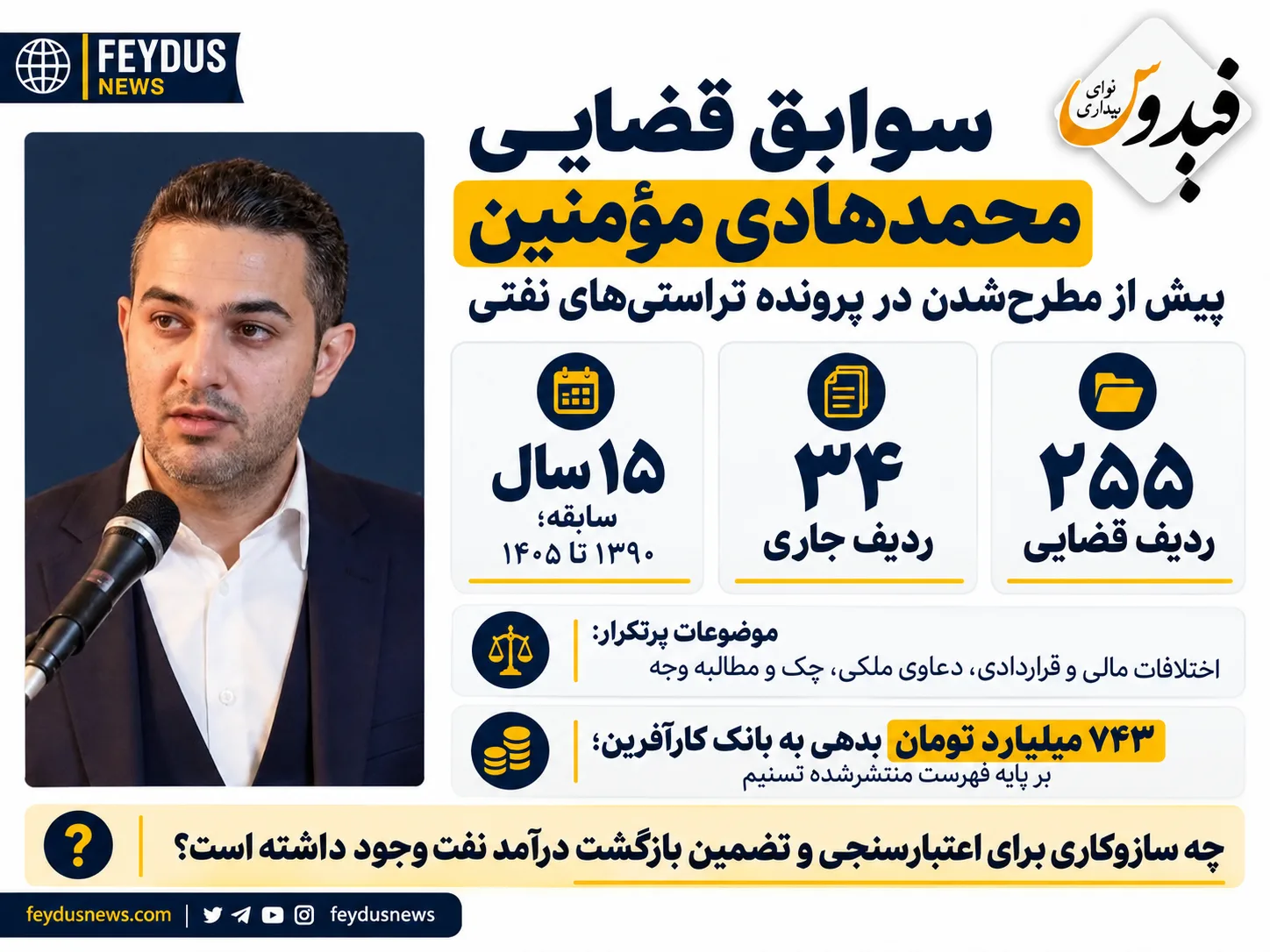
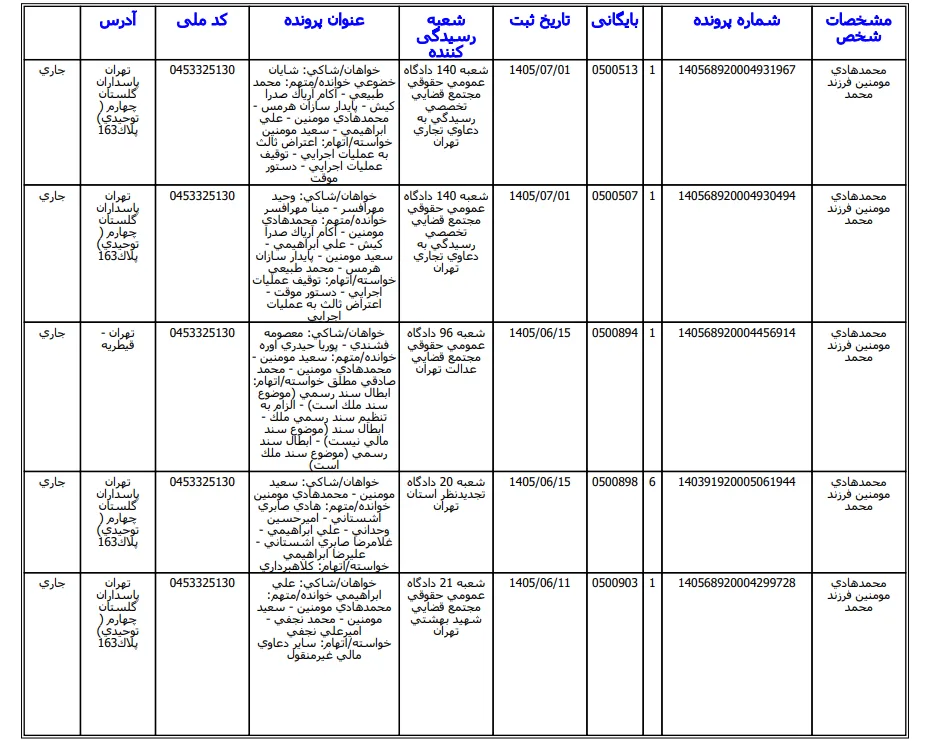
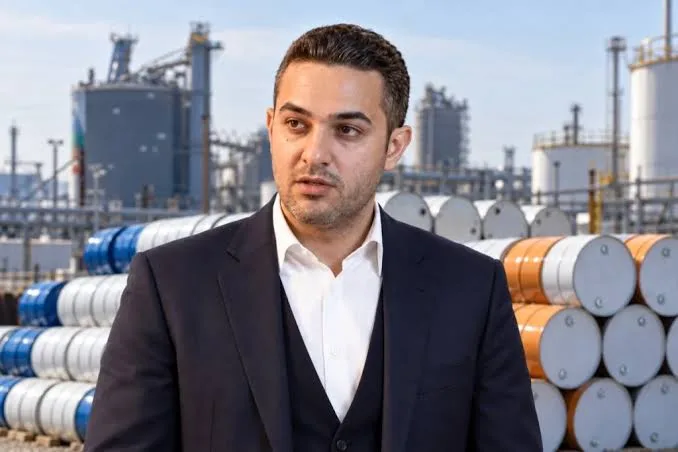
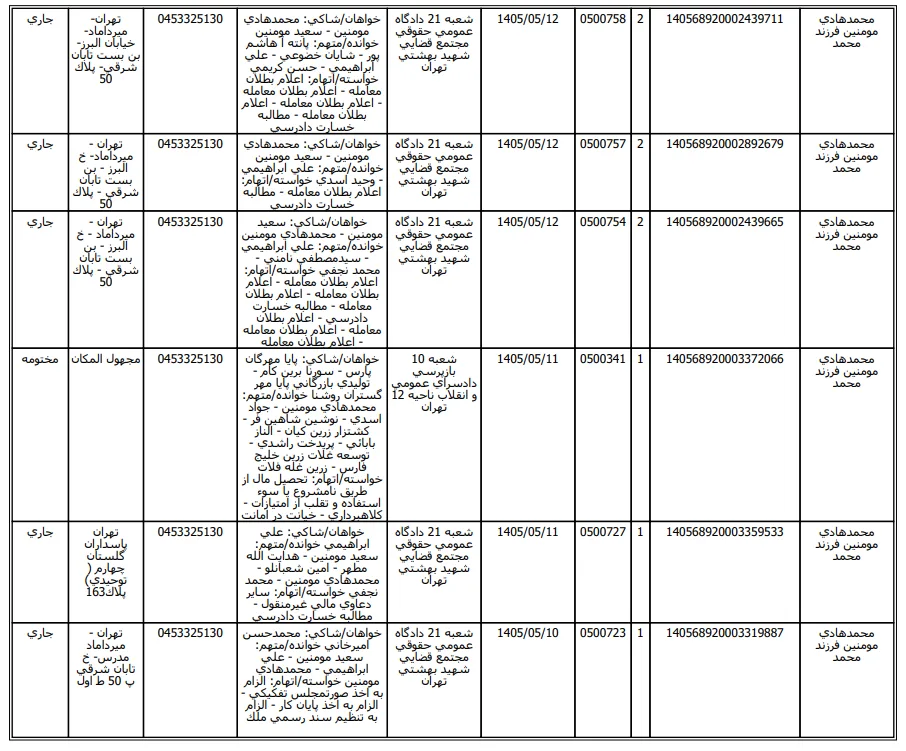
An exclusive review of the full list of legal records provided about Mohammad Hadi Momenin, the trustee figure who has become a symbol of Iran's rent-seeking and corrupt economy these days, shows that his name was registered in 255 judicial rows between August 2011 and October 2026, a 15-year record, the majority of which relates to financial, commercial, contractual, and property disputes, and 34 of his cases are still registered as "ongoing" in the current output. Now that Momenin's name has been raised alongside several other intermediaries in the discussion of the sale of sanctioned Iranian oil, this record has raised a fundamental question about the mechanism of credit assessment and selection of oil trustees.
Momenin is not just an oil intermediary; he owns one of the most extensive sets of legal records registered in Tehran courts over the past fifteen years. A review of his legal cases shows that this individual, whom the media has introduced as one of the four main trustees for oil sales during the sanctions period, has been involved in over a hundred legal and financial cases, ranging from claims for payment and litigation costs to the obligation to formalize documents, annul transactions, property disputes, checks, insolvency, third-party objections, and enforcement of judgments.
These records start from 2011 and continue until 2026, precisely the period when Iran's oil sales structure was transferred to a network of intermediaries, cover companies, and offshore accounts due to sanctions. Simultaneously, Momenin's name has also appeared in investigative reports by international media, including two billion dollars of Iran's oil revenue that was not returned by him and circulated in a network known as "Shayan."
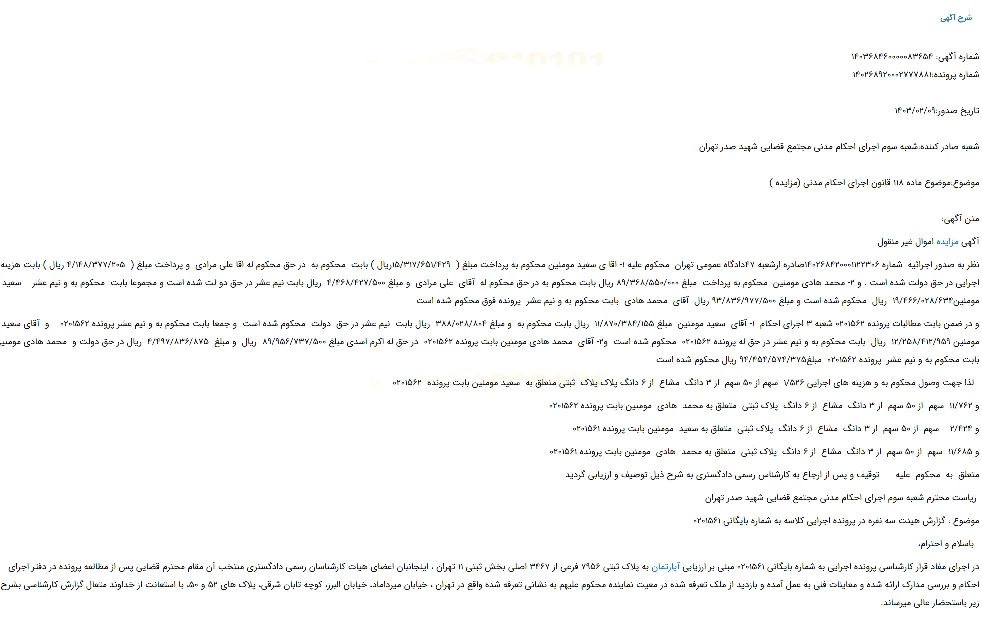
From Bank Debt to Oil Sales Network
Dozens of Cases; A Repeating Pattern
Over the past fifteen years, Mohammad Hadi Momenin has been involved in more than a hundred legal cases. The subjects of these cases are mainly financial and contractual: claims for payment and damages, obligation to formalize official documents, annulment and rescission of transactions, property disputes and contractual disagreements, checks and financial claims, insolvency from paying litigation costs, third-party objections, and suspension of enforcement operations. A significant portion of the older cases (2011 to 2016) has been closed, but since 2017, the volume of ongoing cases has increased.
This trend shows that Momenin has not only been involved in high-risk transactions but also that his financial disputes have intensified in recent years. Momenin's cases are seen in almost all major branches of Tehran courts: branches 36, 9, 142, 47, 44, 79, 4, 1135, 141, and even branch 37 of the appellate court. This diversity of branches indicates the breadth of the types of lawsuits and the volume of his financial activities.
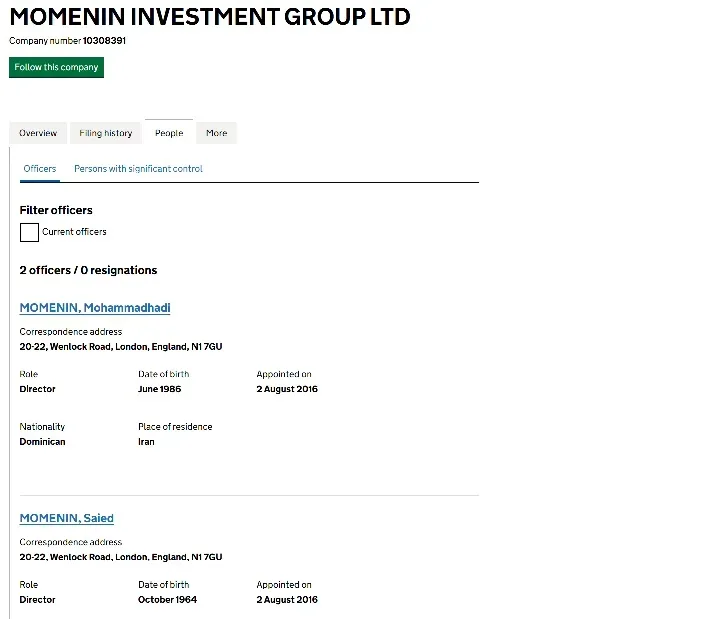
Simultaneously, his international commercial records are also verifiable: registration of the company Momenin Investment Group Ltd in the UK and registered citizenship of Dominican and a Master
Franchise contract with Telepizza Spain and activity in Cellpack
Ltd, which this commercial record, alongside domestic legal cases, creates a picture of a multilayered economic network that is active both inside and outside Iran.
In 2026, note that media reports named Momenin alongside three other trustees Ali Bayandarian, Rouhollah Razavi, and Hossein Shamkhani as the main intermediaries in the sale of Iranian oil. The crimes included: transferring tens of millions of barrels of oil, heavy discounts in sales, not returning about two billion dollars of oil revenue, connection with the "Shayan" network, a dispute over a two-million-barrel shipment in China, and a request for 33 million dollars in compensation for the tanker COVENIO.
An Opaque Structure and a Key Question
15 years of litigation history, 34 ongoing rows, repeated financial and commercial disputes, and major bank debt raise an important question: what credit and eligibility checks were conducted and what guarantees were in place for the return of money when entrusting large oil shipments and selling them on credit?
Momenin's case shows that the mechanism of oil trustees, which was formed as an emergency solution during the sanctions period, the government, to circumvent sanctions, entrusts public assets to opaque networks. The criteria for selecting individuals, guarantees, credit ceilings, and settlement methods are also part of the public responsibility of the same structure.When someone with dozens of financial cases, heavy bank debt, and extensive legal records becomes the main circle of the country's oil sales.