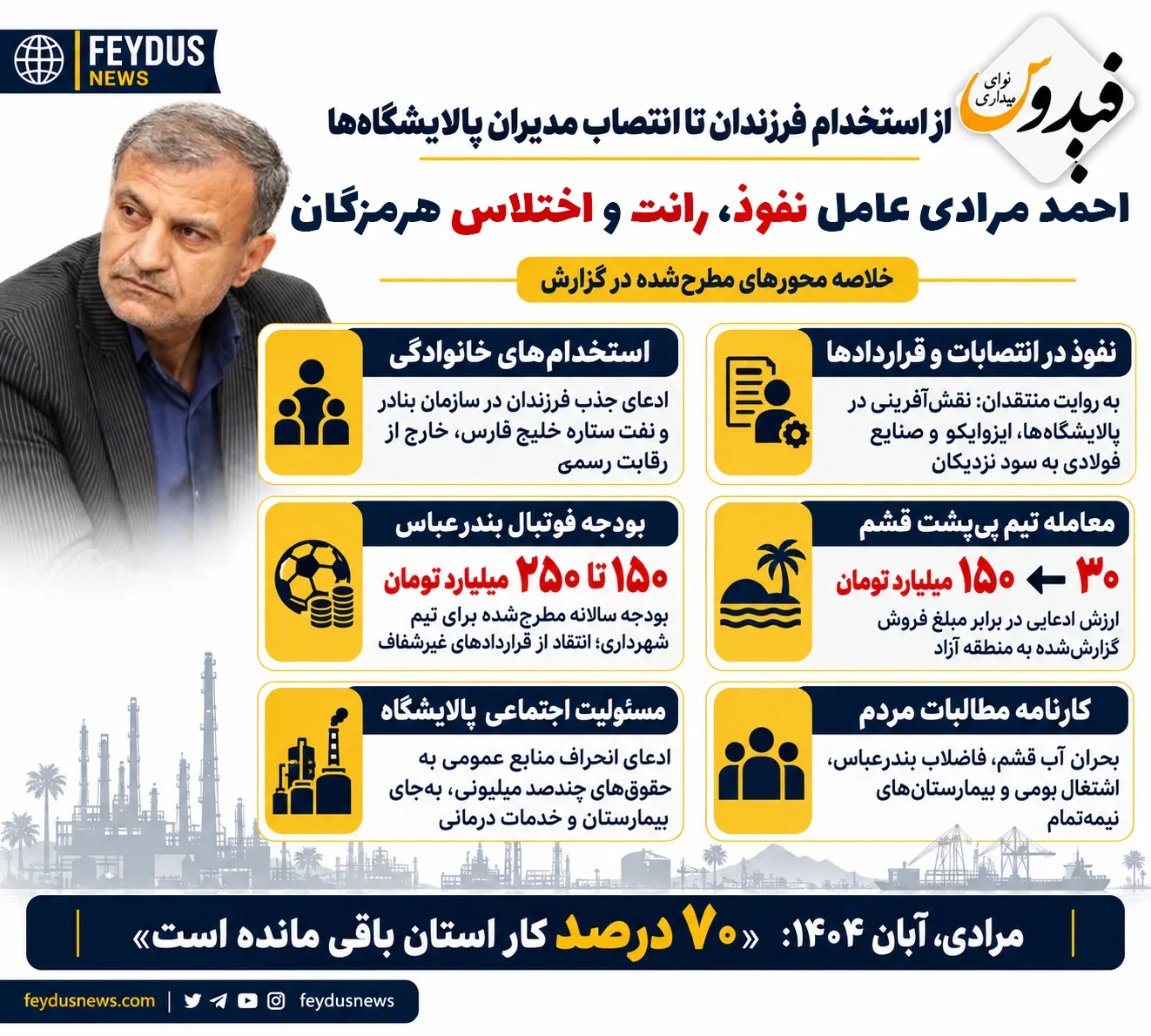
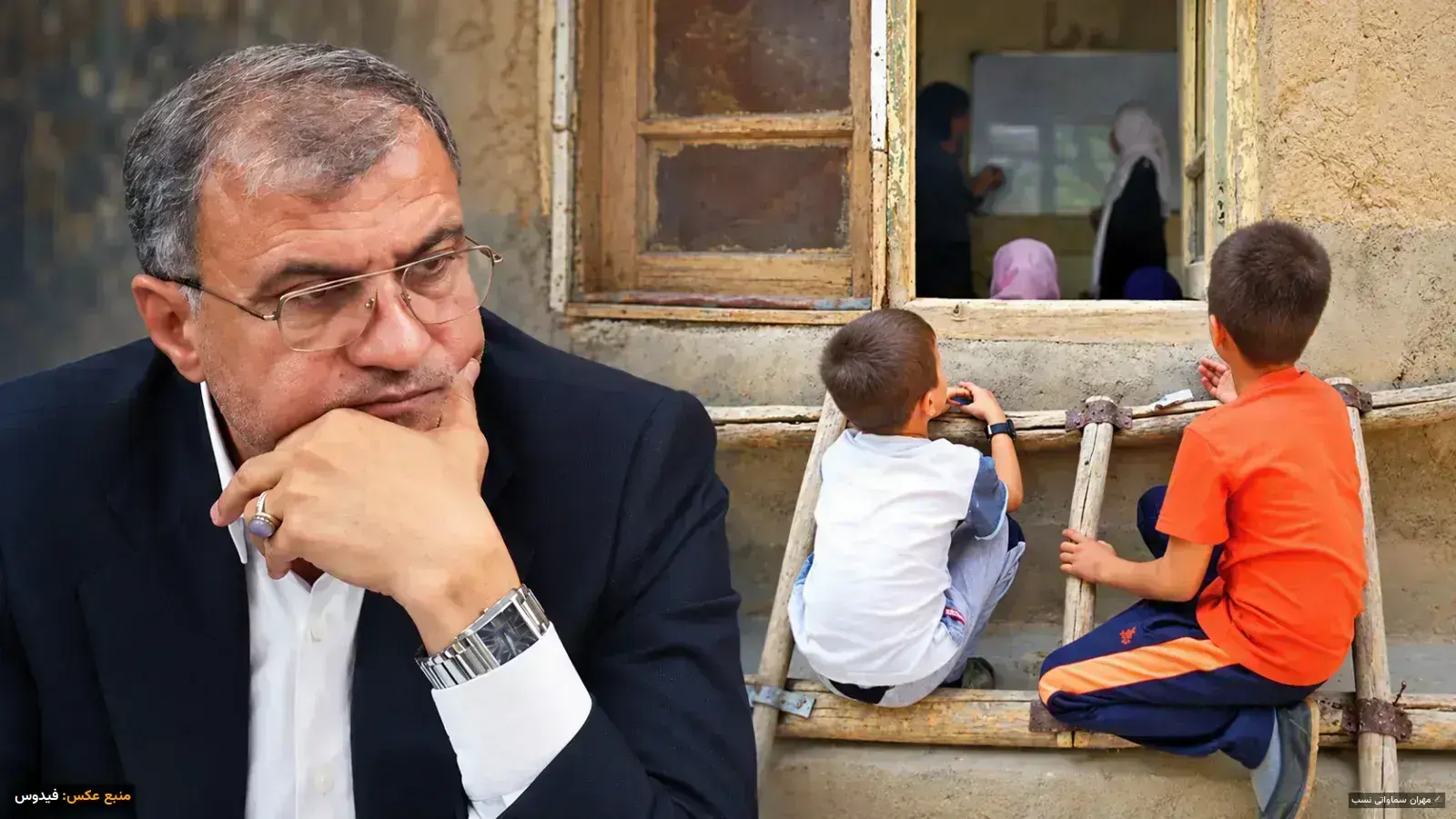
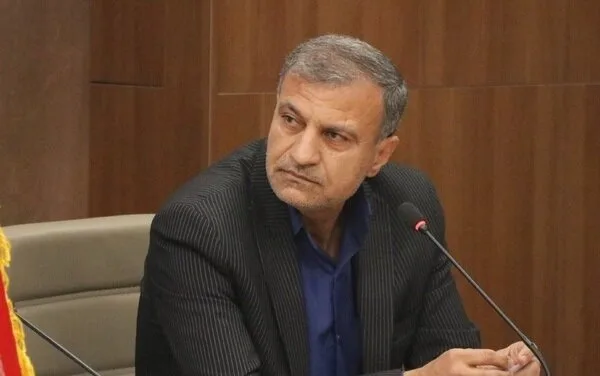
More than a decade has passed since Ahmad Moradi, the representative of the Hormozgan provincial center, has been in the Islamic Consultative Assembly; a presence accompanied by a series of accusations regarding political influence, interference in appointments, family hirings, and roles in the province's economic structures. The scope of these accusations includes the Ports Organization and refineries, as well as the steel, shipbuilding, and football industries in Hormozgan.
In recent years, the hiring of Moradi's children in the Ports Organization and the Persian Gulf Star Oil Refinery has been controversial. According to the claims made, they were employed in these two entities without undergoing competitive processes and outside the official recruitment mechanisms.
Additionally, the appointment of the current CEO of the Persian Gulf Star Oil Refinery is attributed to Moradi's direct involvement; a manager whose professional experience and competence to run this entity are questioned by critics. The repetition of this appointment pattern in ISOICO, other refineries, and steel industries has fueled criticisms about Moradi's extralegal influence in Hormozgan's industrial and energy structures.
Interference in Industries, Hirings, and Contracting
The narratives about Moradi's performance also include his interference in the appointments of the steel industries, Tavanir, and other major economic entities in the province. Economic activists say he has directed managers and exerted political pressure to arrange hiring and contract allocations in a way that companies close to him or individuals he supports benefit from major contracts. Regarding ISOICO shipbuilding, it is claimed that the scope of these hirings includes Moradi's brothers and other relatives, as well as his political circle affiliates.
During his years as a representative, Moradi has repeatedly announced the initiation of investigations in sensitive economic areas, including the Qeshm Free Zone and the Almahdi Aluminum Complex. However, according to the criticisms, these cases have not led to specific outcomes, the publication of final reports, or judicial follow-ups. Critics see the gap between the loud announcements of these pursuits and the lack of clear results as a sign of using parliamentary oversight tools for gaining advantages.
Criticisms of Moradi's performance are not limited to the economic domain. His stances in defending security crackdowns, heavy sentences, and the execution of protesters have led critics to view him as a representative of the repressive structure, not an advocate for the people's demands. In Hormozgan, his support, alongside Mohammad Ashouri, the governor, for strict security policies and calls for harsher crackdowns on social protests are central to these criticisms.
Family Influence and Out-of-Province Lobbying
Local narratives also speak of Moradi's extensive lobbying in Isfahan province; connections said to have been formed through his maternal family in Falavarjan, affecting major decision-making in Hormozgan.
Examples mentioned in this context include the water transfer projects from Hormozgan to Isfahan and Lamerd. Critics say these projects have progressed without guaranteeing the rights of the province's people and in media silence, ignoring Hormozgan's interests in the decision-making process.
Hormozgan football has also faced accusations of money laundering, privilege, and political networking in recent years. According to the figures mentioned, the Bandar Abbas Municipality football team receives an annual budget of between 150 to 250 billion tomans. Critics say a significant portion of these resources, instead of developing neighborhood sports and supporting underprivileged children, is allocated to circles close to Ahmad Moradi and Mohammad Ashouri.
These expenses are raised while teenagers in Bandar Abbas neighborhoods struggle even to purchase two-million-toman sports shoes or a 500
thousand-toman ball. In contrast, according to critics, a large portion of the urban football budget is spent on astronomical salaries, unnecessary trips, non-transparent contracts, and strengthening political relations.
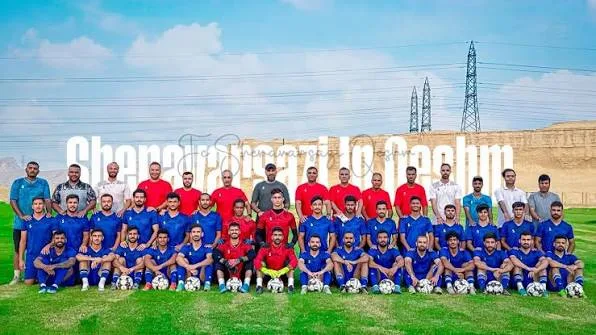
In this context, the name of Eslam Jahedi is mentioned as one of the individuals close to Ashouri and Moradi. It is claimed that he receives billions of tomans annually from sports travel, tickets, and unnecessary missions and pressures city council members to prevent the team's dissolution.
In Qeshm, the sale of the Peyposht team to the Free Zone is another point of criticism. According to the narrative, this team, valued at over 30 billion tomans, was sold to the Free Zone for 150 billion tomans under Ahmad Moradi's pressure, and in return, pristine and valuable lands of the island were transferred.
It is also said that the CEO of the Free Zone intends to spend another 300 to 400 billion tomans on team management; while the people of Qeshm still face issues with stable access to drinking water. All these points have intensified criticisms about turning Hormozgan football into a platform for transferring public resources, money laundering, and strengthening political networks; networks in which Moradi is mentioned as one of the key figures.
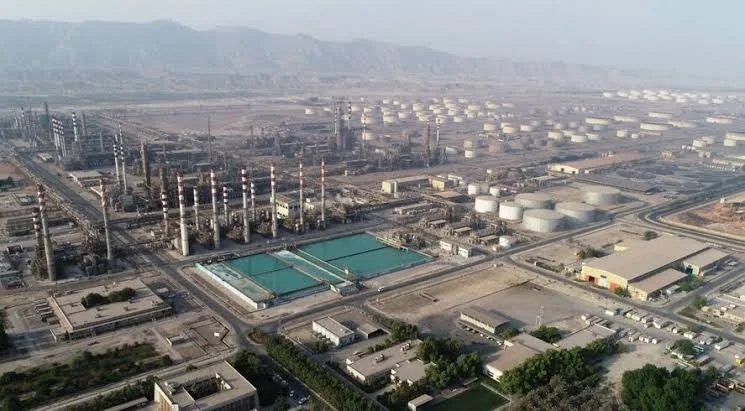
Bandar Abbas Oil Refinery and the Fate of Social Responsibility Budget
Similar narratives are raised regarding the Bandar Abbas Oil Refinery. According to these narratives, resources that should be used for building hospitals, dialysis centers, nursing homes, and other public projects have been allocated to paying multi-million-toman salaries to appointed managers and individuals close to Moradi's political circle.
In claims related to embezzlement and misdirection of these resources, names like Kalahor, Avazpour, and Malmir are mentioned. The focus of criticisms is the fate of the budget defined under the title of social responsibility, which, according to critics, instead of addressing public needs, has been spent on the interests of managerial and political circles.
Over a Decade of Representation and Unfulfilled Demands
Despite Moradi's three terms in Parliament, the Qeshm water crisis, the discharge of Bandar Abbas sewage into the sea over 30 years, hazardous roads, local employment, pollution fees, power outages, and the completion of hospitals remain unresolved issues in the province. Critics say his record in these areas has not been accompanied by tangible results commensurate with his years of representation. Many projects remain incomplete, and some, despite years of follow-up, have not yet been operationalized.
Moradi himself stated in November 1404 that he has been only "20 to 30 percent successful" and "70 percent of the province's work remains." This assessment highlights the gap between his years in Parliament and the extent of fulfilling the demands of the people of Hormozgan.
The influence that, according to the narratives, has been effective in hiring relatives, appointing managers, and directing contracts, has not had a corresponding reflection in resolving the water crisis, completing hospitals, improving infrastructure, and providing sustainable employment for the people of Hormozgan. After more than a decade of representation, Moradi's record faces unfulfilled demands from the people and accusations regarding the performance of his close circle. Repeated promises and announcements of inconclusive follow-ups do not replace the publication of oversight results, clarification of the fate of public resources, and accountability for these accusations.