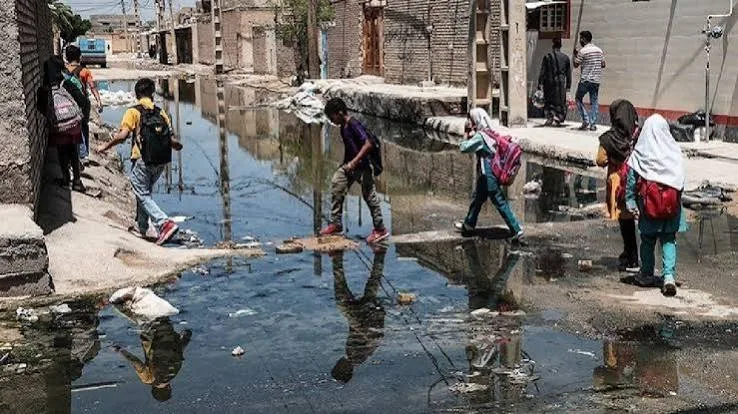
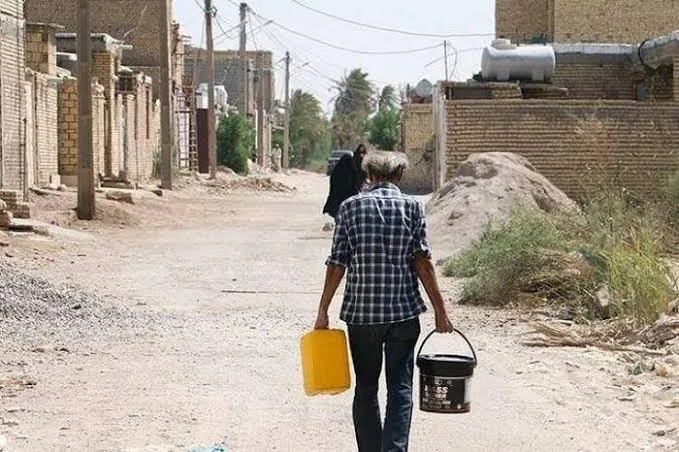
Ahvaz, the capital of a province with immense oil and industrial capacity, still struggles with the most basic urban living needs. Water and sewage issues, deteriorating streets, inadequate services, unfinished projects, and underprivileged neighborhoods paint a picture of a city where the promise of development is repeatedly made, yet the gap between people and prosperity remains. Some of these disarrays are also reflected in local reports about the city's condition.
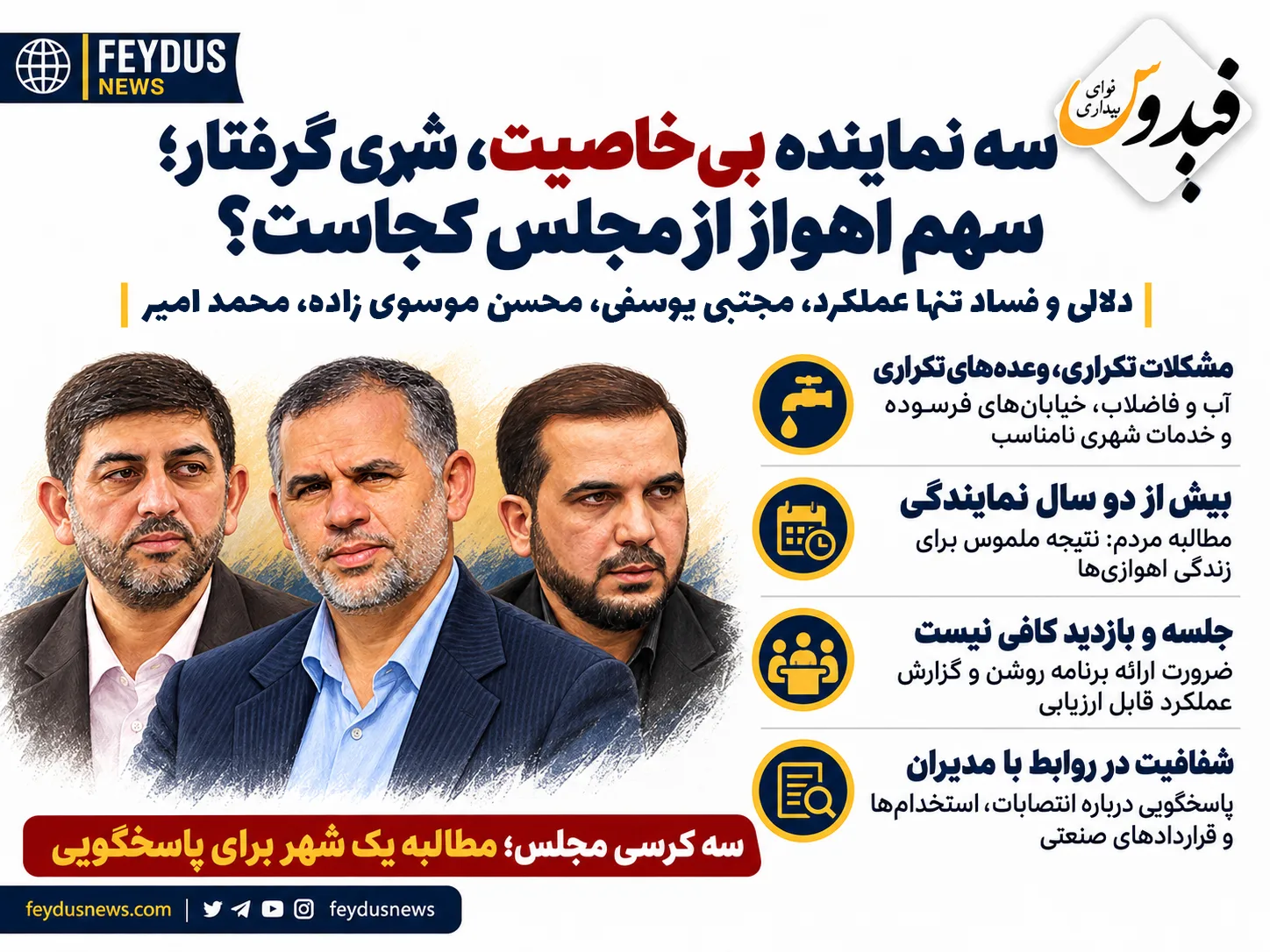
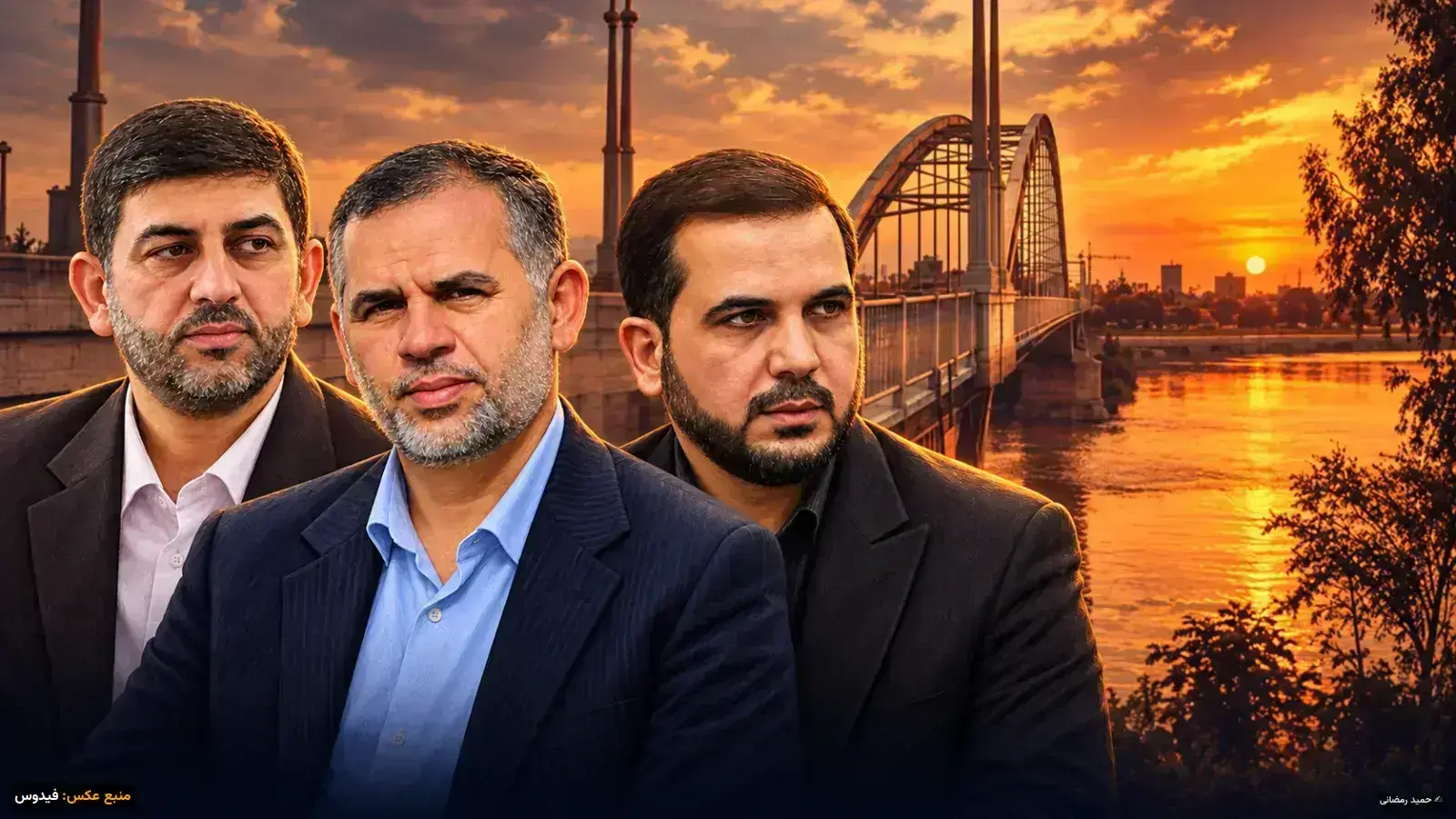
In such circumstances, the performance of the three representatives of Ahvaz must be measured by a clear criterion: what change has the power they derived from people's votes brought to their lives? Mojtaba Yousefi, Mohsen Mousavi-Zadeh, and Mohammad Amir cannot hide their responsibility behind the complexity of problems, the multitude of agencies, or the shortcomings of executive managers. Representation finds its meaning precisely in confronting these obstacles; where scattered follow-ups should turn into effective oversight and public demand into executive commitment..
Mojtaba Yousefi, Mohsen Mousavi-Zadeh, and Mohammad Amir must answer why, after more than two years in office, the lives of Ahvaz's people are still besieged by recurring problems and what tangible achievements their political presence has brought to the city..
A City Whose Problems Are Passed from Manager to Manager
The vicious cycle in Ahvaz starts here: problems are known, officials change, promises are renewed, and citizens continue to bear the cost of delays. An unfinished project becomes the subject of the next visit, and the disarray of urban services becomes the excuse for another meeting. In this cycle, responsibility is divided among institutions so that ultimately no one is accountable for the outcome..
Parliament members are not directly responsible for implementing the sewage network or paving streets, but they are obliged to hold responsible agencies accountable, pursue resource allocation, and ensure commitments are not buried in meeting archives. When problems recur, demanding explanations from representatives is entirely justified: where and how have their legal tools been employed, and what has been the result?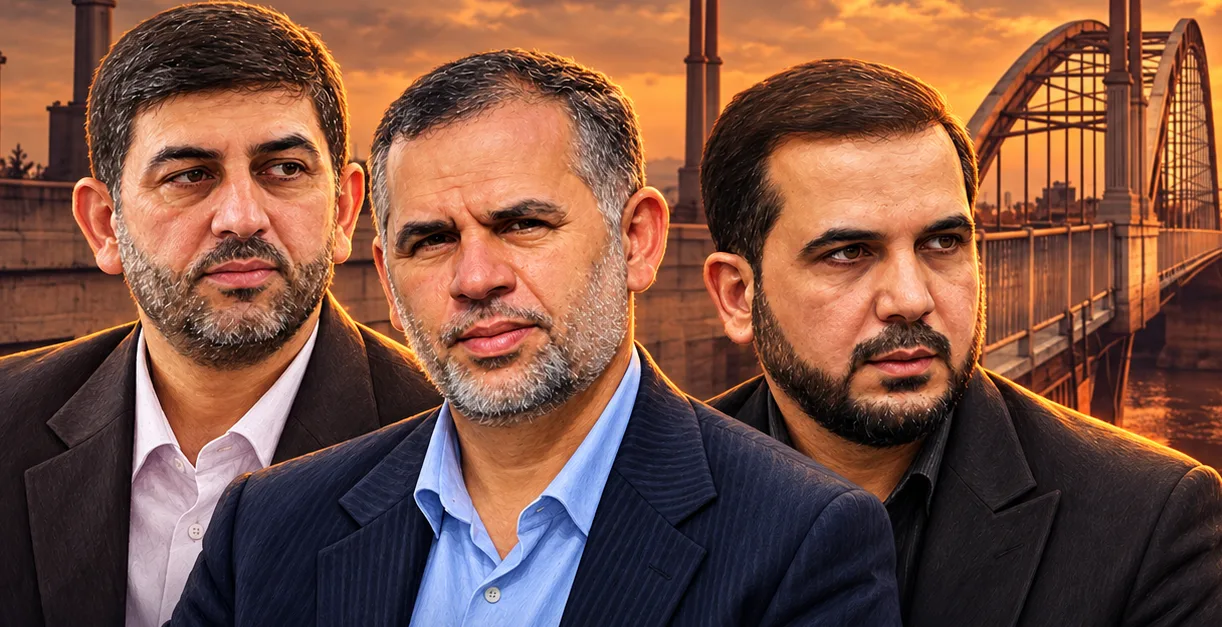
Presence in the City, Without Presence in People's Lives
The central criticism of these three representatives is the gap between being visible and being impactful. Attending ceremonies, visiting offices, publishing photos of meetings, and accompanying managers only have public value when they lead to a clear outcome. For a family struggling with everyday problems, the number of meetings a representative attends is irrelevant; what matters is changing the conditions that make life difficult..
A performative presence occurs when political engagement with the city is limited to occasions and accountability for outcomes is absent. Ahvaz needs representatives from whom a coherent program, clear priorities, and a timeline for follow-up can be demanded. The three parliamentary seats should enhance the city's bargaining power; scattered activities and competition for visibility erode this capacity..
Close Relations with Managers; Where is the Public Interest?
In the local narrative about these representatives' performance, meetings with industrial and urban managers are highlighted more than pursuing the city's interests; a critical narrative that links these interactions to seeking shares, mediation, and exploitation of contracts. This description, without independent documentation, does not provide a basis for definitive personal gain attribution; however, it raises an important political issue: how transparent is the boundary of a representative's relationship with managers and contractors?
The answer to this ambiguity is not the publication of a meeting photo. It must be clear what benefit these relationships bring to the general public and how the conversion of representative influence into privileges for close circles is prevented. A city that struggles with service shortages alongside large industries has the right to be sensitive about how its representatives' political power is used..
Two Years Passed; Where is the People's Report Card?
The question for the people of Ahvaz is: more than two years have passed in the current term; what has been the people's share? Why should they still wait for promises and follow-ups for basic needs? Yousefi, Mousavi-Zadeh, and Amir must present a report card with results that are tangible for citizens..
Reaching the parliament provides a representative with credibility, access, and influence. The legitimacy of using these resources depends on the benefit that accrues to the people. Ahvaz cannot bear the cost of the political presence of those whose achievements for the city are unclear. The three representatives must demonstrate that their seats are tools for getting Ahvaz out of the deadlock; otherwise, they will also be responsible for the continuation of this situation..