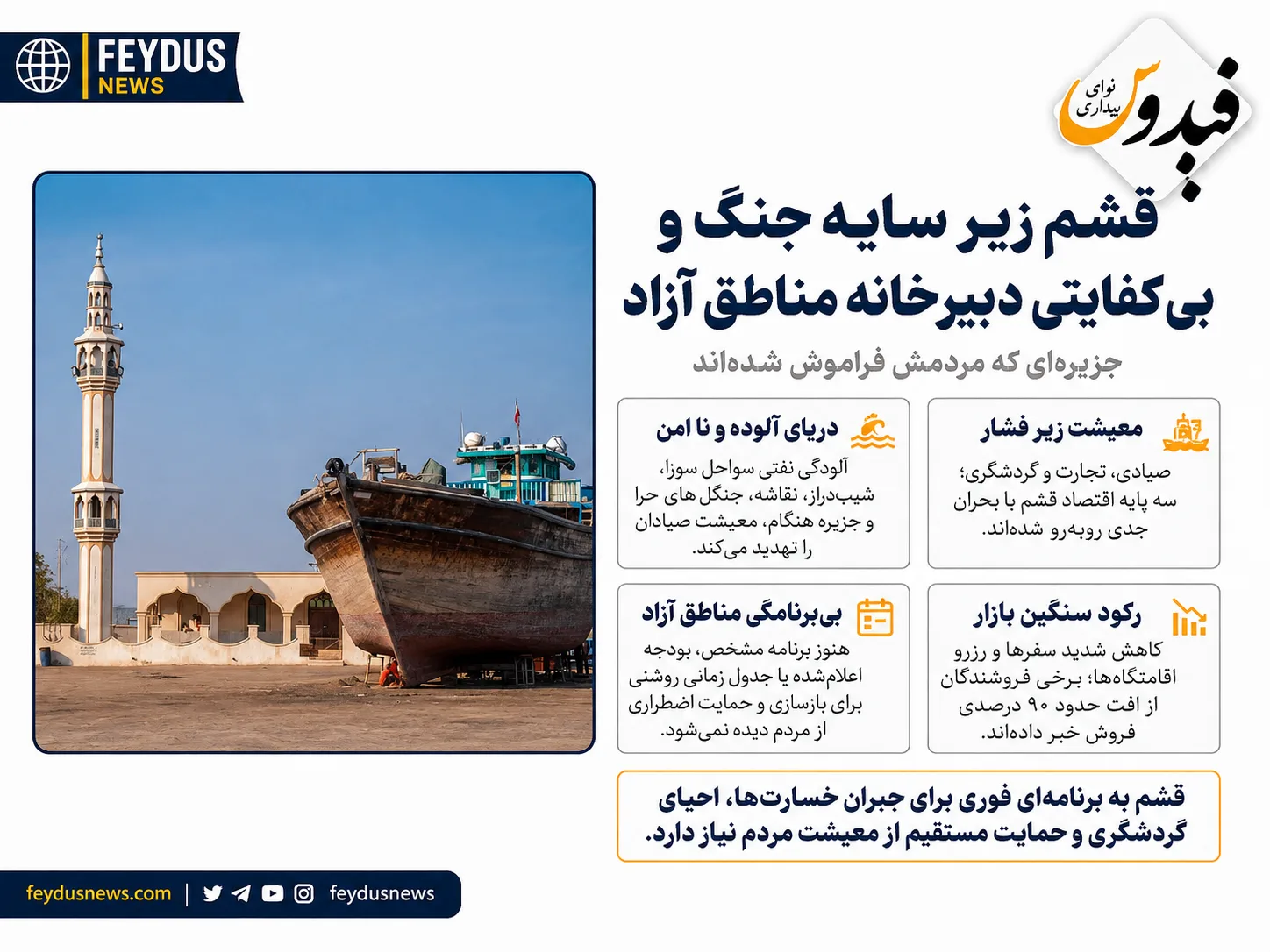
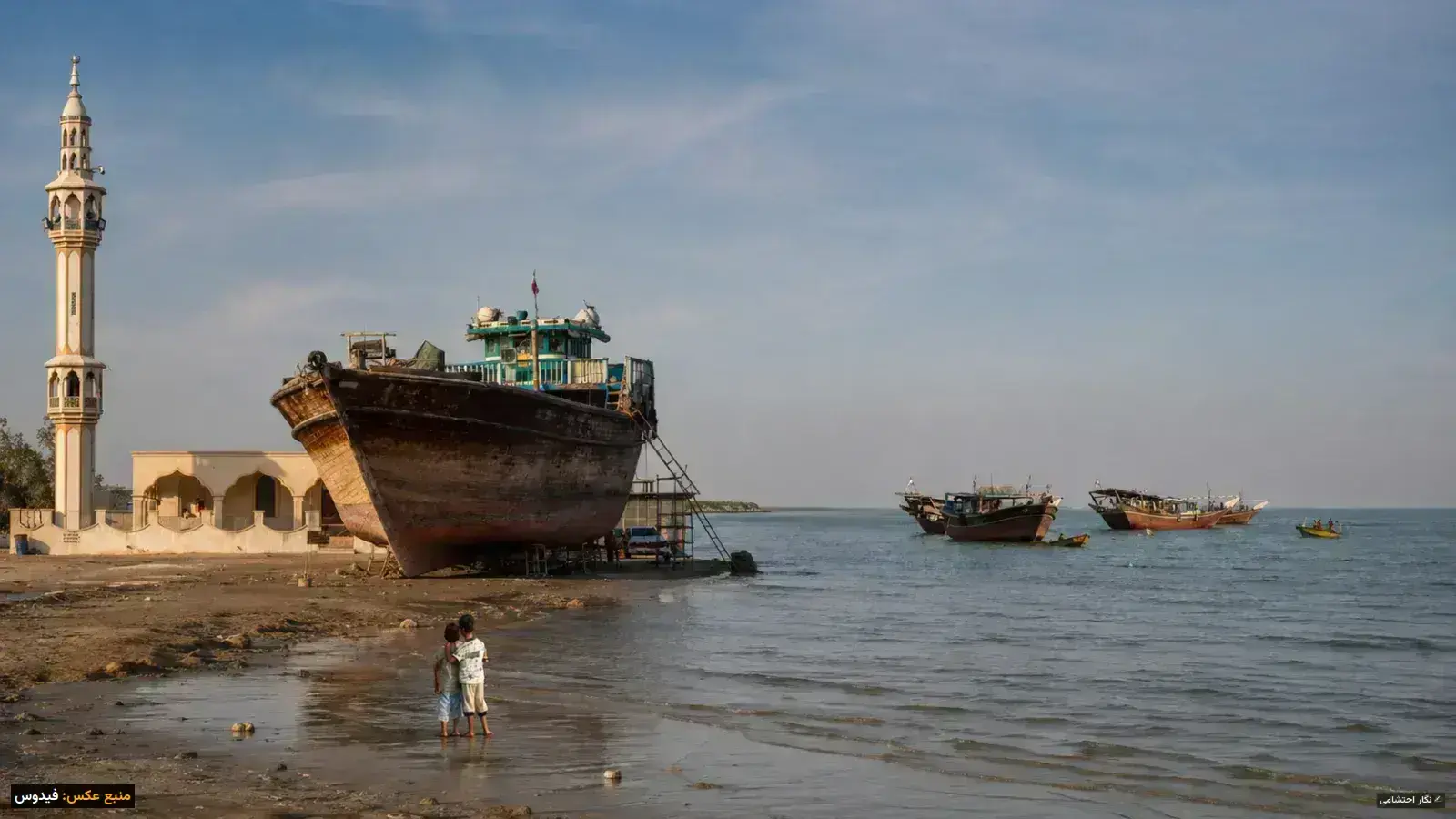
Months after the start of a new round of military conflicts in southern Iran, Qeshm and its surrounding islands are still facing repercussions that go beyond the direct damages of war, now affecting the daily lives, employment, and livelihoods of a large portion of the region's residents.
During the recent conflicts, Qeshm was one of the targets of military attacks. Official media of the Islamic Republic also confirmed attacks on areas of the island. In May, IRNA quoted the spokesperson of the Khatam al-Anbiya Central Headquarters as saying that during one of the attacks, areas in Qeshm Island and the Hormozgan coast were targeted. Subsequent reports also indicated repeated attacks on facilities and locations in Qeshm and Hengam Island.
Tourism and Fishing; The Devastated Economic Pillars of Qeshm
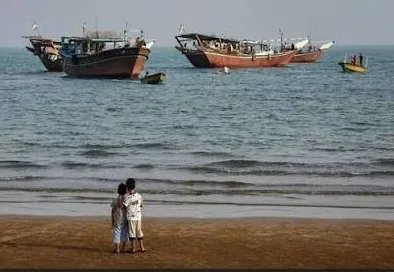
For decades, the economy of many villages and towns in Qeshm has been based on three pillars: fishing, trade, and tourism. Now, all three sectors are facing serious problems. Internal reports from Iran indicate that war and maritime restrictions have harmed the fishing community of Hormozgan. Ahmad Nafisi, the political and security deputy of Hormozgan Province, stated on June 26th the necessity of "compensating for the damages to docks and the fishing community" and declared the revival of fishermen's livelihoods as one of the province's priorities.
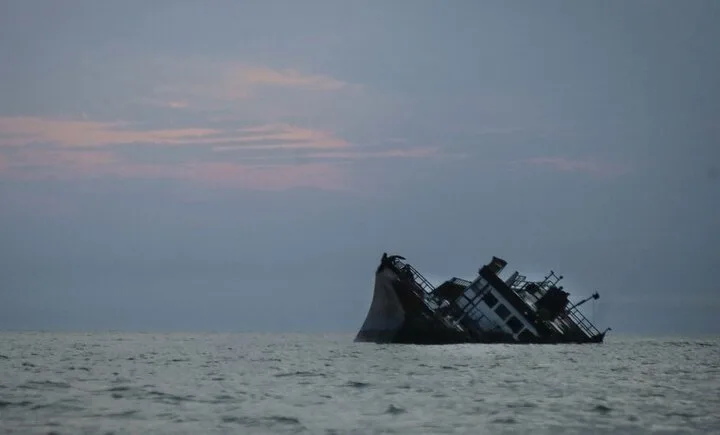
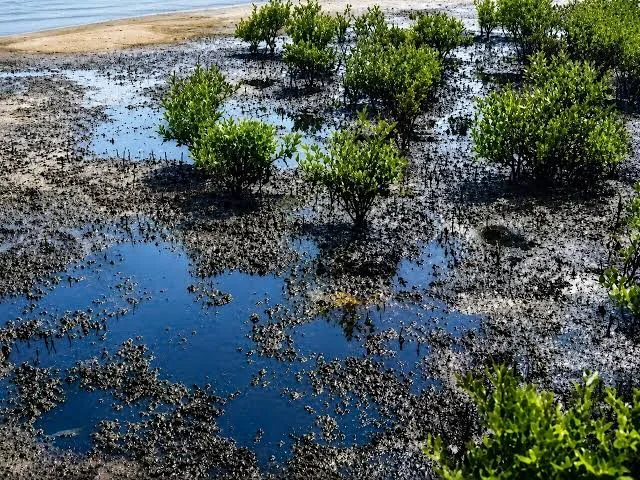
The problems for fishermen have been exacerbated in recent weeks by oil pollution in parts of Qeshm's coasts. Reports from within Iran have indicated pollution in the coasts of Suza, Shibderaz, Naqasheh, mangrove forests, and parts of Hengam Island; areas where fishing and maritime activities are part of the daily lives of their people. Domestic media have warned about the consequences of this pollution for marine life, food security, and the livelihood of the local community.
On the other hand, Qeshm's tourism has entered one of its toughest periods. The "Donyaye Eghtesad" newspaper reported in August that security concerns and news of military attacks have led to a sharp decline in accommodation bookings in Qeshm, putting many eco-tourism and tourism-dependent businesses in crisis. According to this report, even a more than fifty percent reduction in the price of some accommodations has not been able to bring back travelers, and the fear of being trapped on the island at the start of new attacks has been cited as one of the main reasons for the decline in travel.
Another field report published on August 5th provided a clearer picture of the depth of the recession. A vendor in one of Qeshm's commercial centers reported a roughly 90 percent decrease in sales, and restaurants, shopping centers, and accommodations have also faced a noticeable drop in customers. The simultaneous rise in the prices of imported goods has put additional pressure on the economy of island families. This situation is occurring on an island where a large part of the mission of its administration and development is the responsibility of the Qeshm Free Zone Organization; one of the oldest free zones in Iran.
Hossein Forouzan started his role as the new secretary of the High Council of Free Zones on August 5th. In his first weeks, he outlined five priorities, including transparency, facilitating economic activity, and "developing infrastructure." However, in the reviewed reports and public announcements, there is still no specific plan, announced budget, or clear timeline for rebuilding Qeshm's damaged infrastructure and providing emergency support for businesses and residents of this island.
Here lies the contradiction: while officials talk about developing free zones, attracting investment, and increasing their role in trade, in one of the country's most important and oldest free zones, some people are struggling to maintain their most basic sources of income.
The fisherman faces an unsafe and polluted sea; the shopkeeper faces an empty market; the accommodation owner faces rooms without guests; and a family whose life depends on these jobs still does not know what the government's plan is for the coming months.
Today, Qeshm needs a clear emergency plan for rebuilding infrastructure, compensating fishermen and businesses, reviving tourism, and directly supporting people's livelihoods more than promotional projects and long-term promises. Otherwise, the largest island in the Persian Gulf may continue to live with the economic and social consequences of war long after the explosions have ceased.