The Chambers of Commerce were supposed to be a support for economic activists against government bureaucracy; however, years of protests over elections, financial resources, and management methods have highlighted the gap between the title "Parliament of the Private Sector" and their actual performance. When a representative seat provides access to the managers of the Ministry of Industry, executive bodies, and economic information, the competition for it is no longer merely a professional rivalry; it can turn into a struggle for influence, commercial interests, and proximity to power.
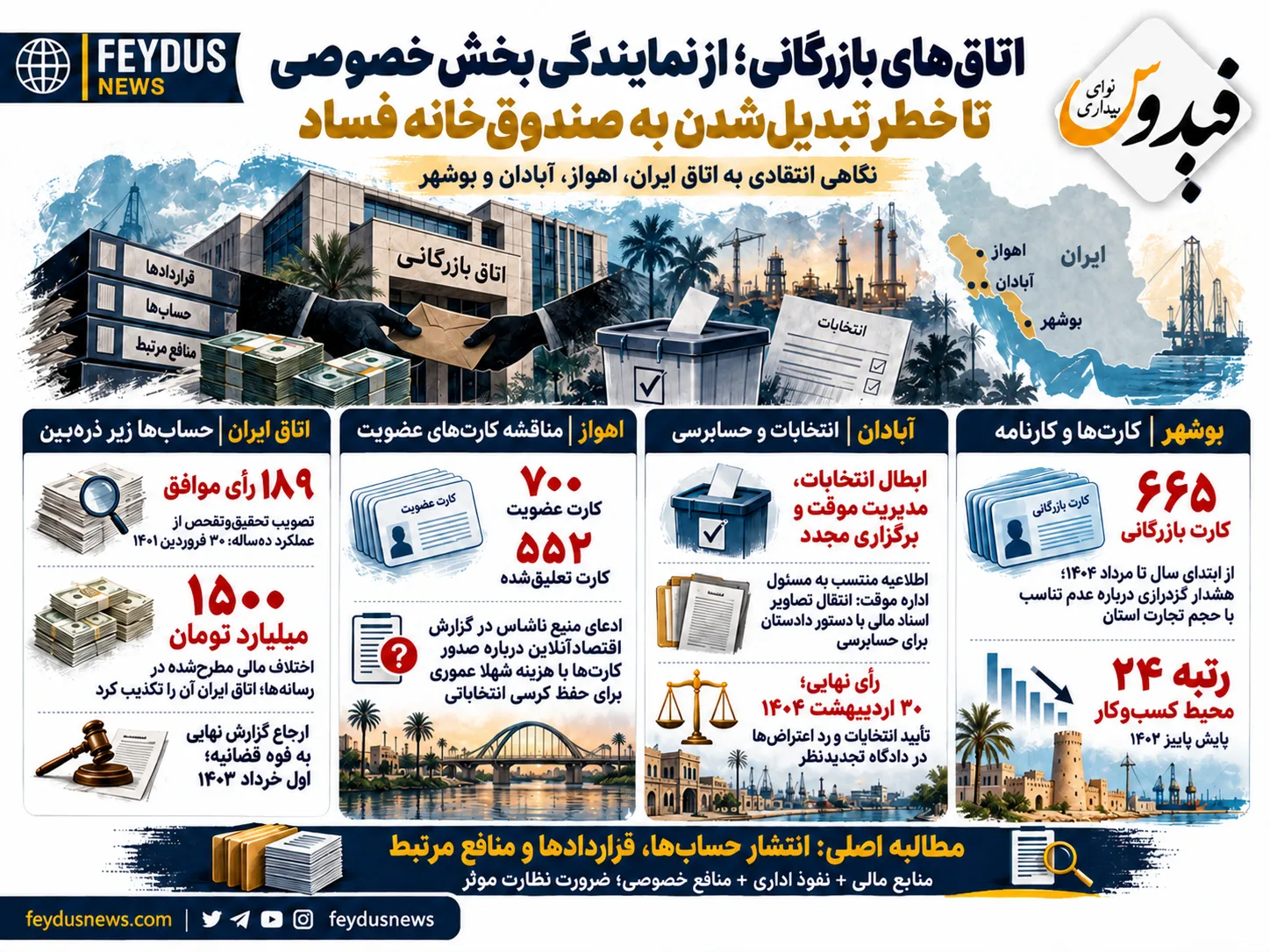
These protests have not been limited to local chambers. The Parliament on April 19, 2022, with 189 votes in favor, approved an investigation into the ten-year performance of the Iran Chamber. Reviewing revenues and expenses, quality of services, supervision of provincial chambers, and the issue of astronomical salaries were among the announced axes. In the same session, one of the representatives criticized that some members, instead of solving producers' problems, pursue their own interests and hide behind political parties.

Simultaneously, reports about a 1,500 billion toman discrepancy between the calculations of companies' payment shares and the figures recorded in the chamber were published; an issue that some media referred to as "missing money," which the Iran Chamber denied. On May 22, 2024, the Parliament also agreed to send the final investigation report to the judiciary. This referral is not a conviction but indicates that the demand for financial accountability has gone beyond media protests.
The main issue is a structure where commercial interest holders are both representatives of the private sector and have access to decision-making centers. If the boundary between personal interests and representative responsibility is not clear, negotiation with the government can be limited to lobbying for privileges. The non-governmental title is not a license to escape oversight; economic resources and powers demand more accountability.
Khuzestan; From Membership Dispute in Ahvaz to Electoral Struggle in Abadan
In Ahvaz, a report by Eghtesad Online, republished on February 17, 2019, claimed that 700 membership cards were issued at the personal expense of Shahla Amouri to maintain an electoral seat, according to an anonymous member of the Iran Chamber. The same source reported the suspension of 552 cards. This claim should be read with precise attribution, but the fundamental question raised is: what guarantees exist that membership does not become a tool for organizing votes and maintaining power?
A chamber that talks about economic problems must also answer for its own representation mechanisms. Publishing membership criteria, the outcome of addressing protests, and election costs is the minimum expectation. Defending transparency outside the chamber, without transparency within it, holds no credibility.
In Abadan, too, the electoral dispute led to annulment, the introduction of a temporary board, and a re-election. Reports have indicated the acceptance of protests and the annulment of the second-round elections; a process that shows the management of this institution has been caught in a dispute over the legitimacy of the representative composition.
The issue was not just the ballot box. In a notice attributed to one of the officials of the temporary chamber administration, it was reported that images of financial documents were transferred by the prosecutor's order for auditing; an action that the notice's author objected to its execution. This news indicates entering into account reviews, not proving embezzlement. However, publishing the audit result can clarify what financial issues lay behind the managerial disputes.
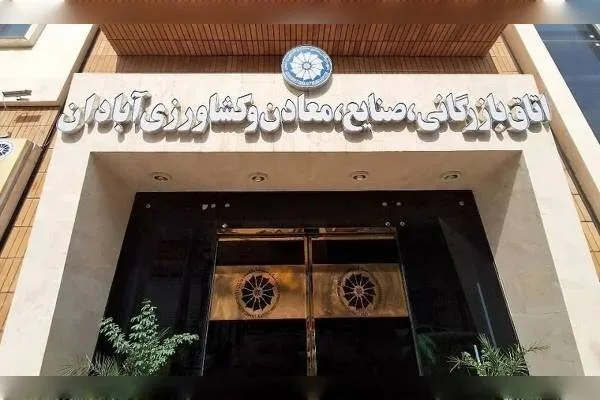
In the narrative of this case, the next result is also important: the market report on May 20, 2025, reported the final verdict of the 51st branch of the Tehran Court of Appeal confirming the elections and rejecting the protests. Therefore, the previous annulment cannot be introduced as a definitive violation. Today's serious criticism is directed at the cost of these struggles and the necessity of providing a measurable report card to economic activists.
The issue in Khuzestan goes beyond electoral violations. The influential lobbies of Abadan's Chamber of Commerce members with corruption cartels like Abdolbaghi and government managers and parliament representatives clearly show the impact of these circles on the critical situation of Abadan's economic businesses.
Bushehr; Access to Officials, Without Exemption from Accountability
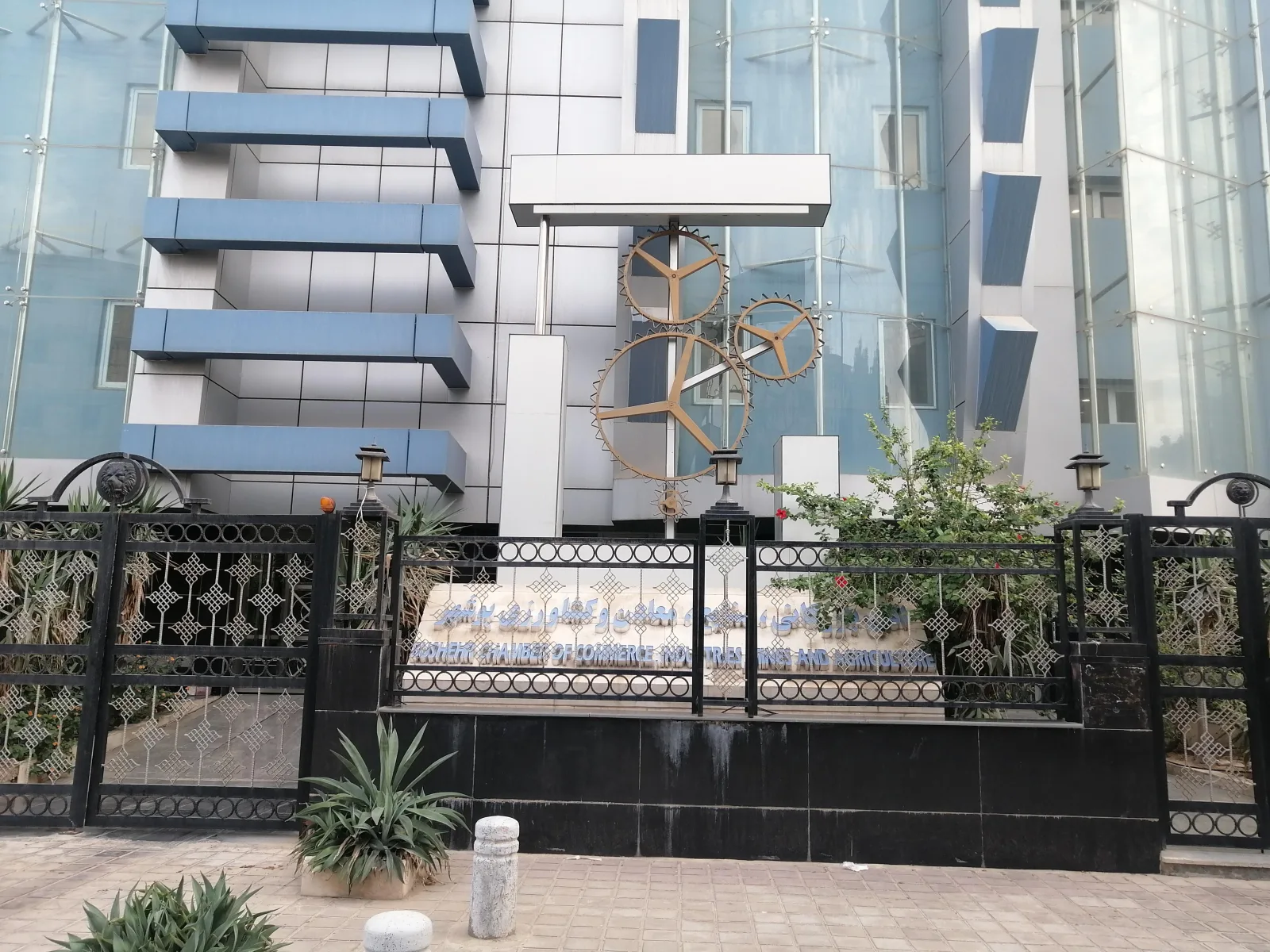
In Bushehr, Khorshid Gazdarazi in August 2025 reported the issuance of 665 business cards since the beginning of the year and said the number of cards does not match the trade volume of the province. He attributed the responsibility for monitoring the issuance to the Ministry of Industry. This warning further emphasizes the need for the chamber to publish its follow-ups to improve the situation; dividing responsibility should not turn into passing the issue between agencies. Gazdarazi had previously reported Bushehr's 24th rank in the business environment monitoring in autumn 2023. This situation highlights the government's responsibility, but the chamber must also explain what results its meetings and communications have achieved.
The issue of violations and corruption in the Chambers of Commerce of various cities has a distinct aspect. Here, the influence of parliament members becomes a pressure lever on chamber managers and their entry into networks of corrupt lobbying and the widespread level of corruption. For this reason, the Chambers of Commerce in various cities themselves provide opportunities for political deals and violations, with one side involving the influence of provincial representatives' powers.
Turning chambers into houses of corruption begins with the connection of financial resources, administrative influence, and private interests without effective oversight. Managers of these institutions must publish contracts, accounts, related interests, and the results of follow-ups. Economic activists do not need a club of relationship owners; they need an institution that ensures equal access rights and holds itself accountable.
This is why the departure of the Chambers of Commerce from the true private form to becoming corrupt has been sufficient, and until the concept of operational independence is redefined and implemented, controlling and reducing corruption is akin to joking about this matter.