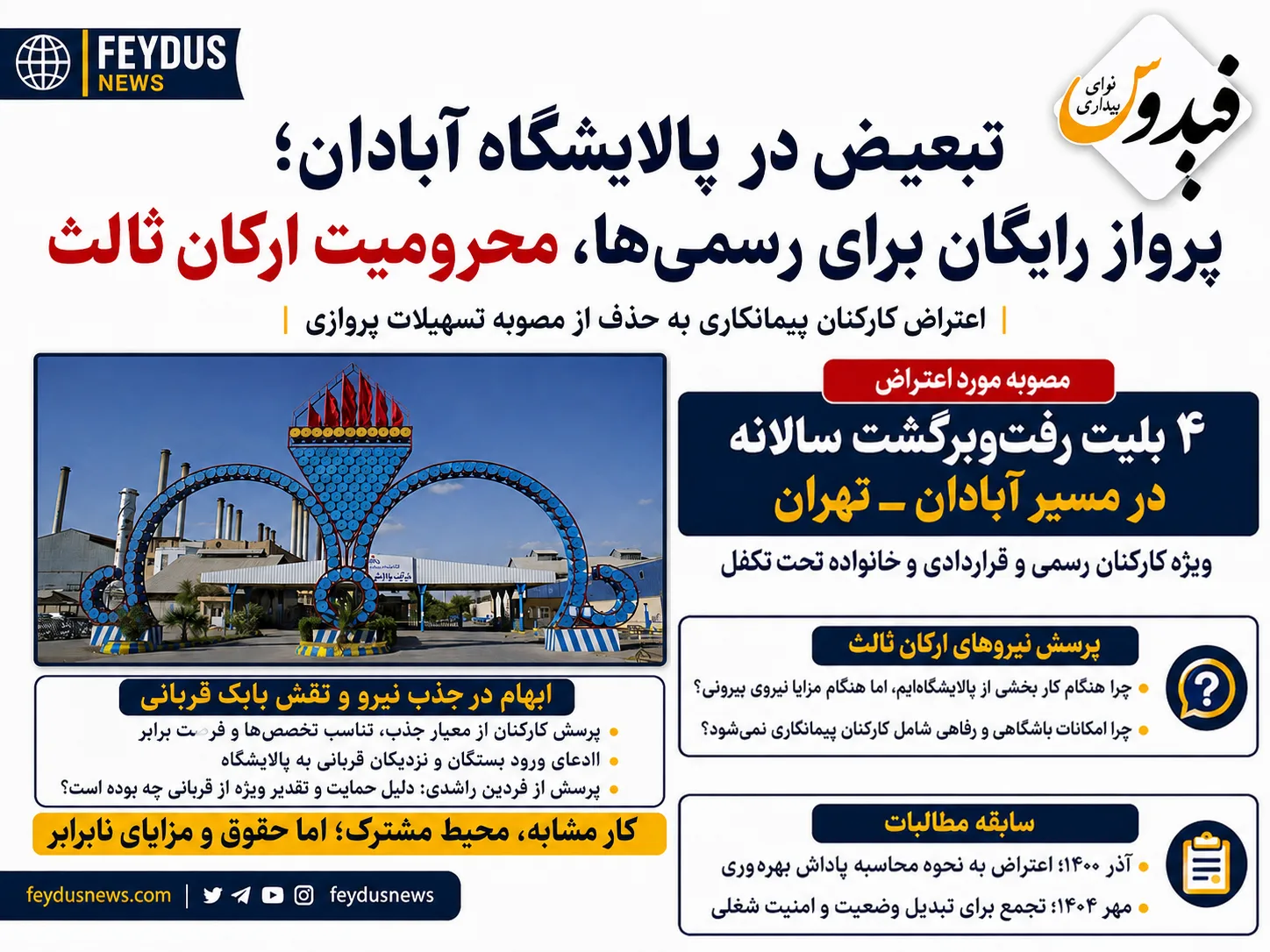
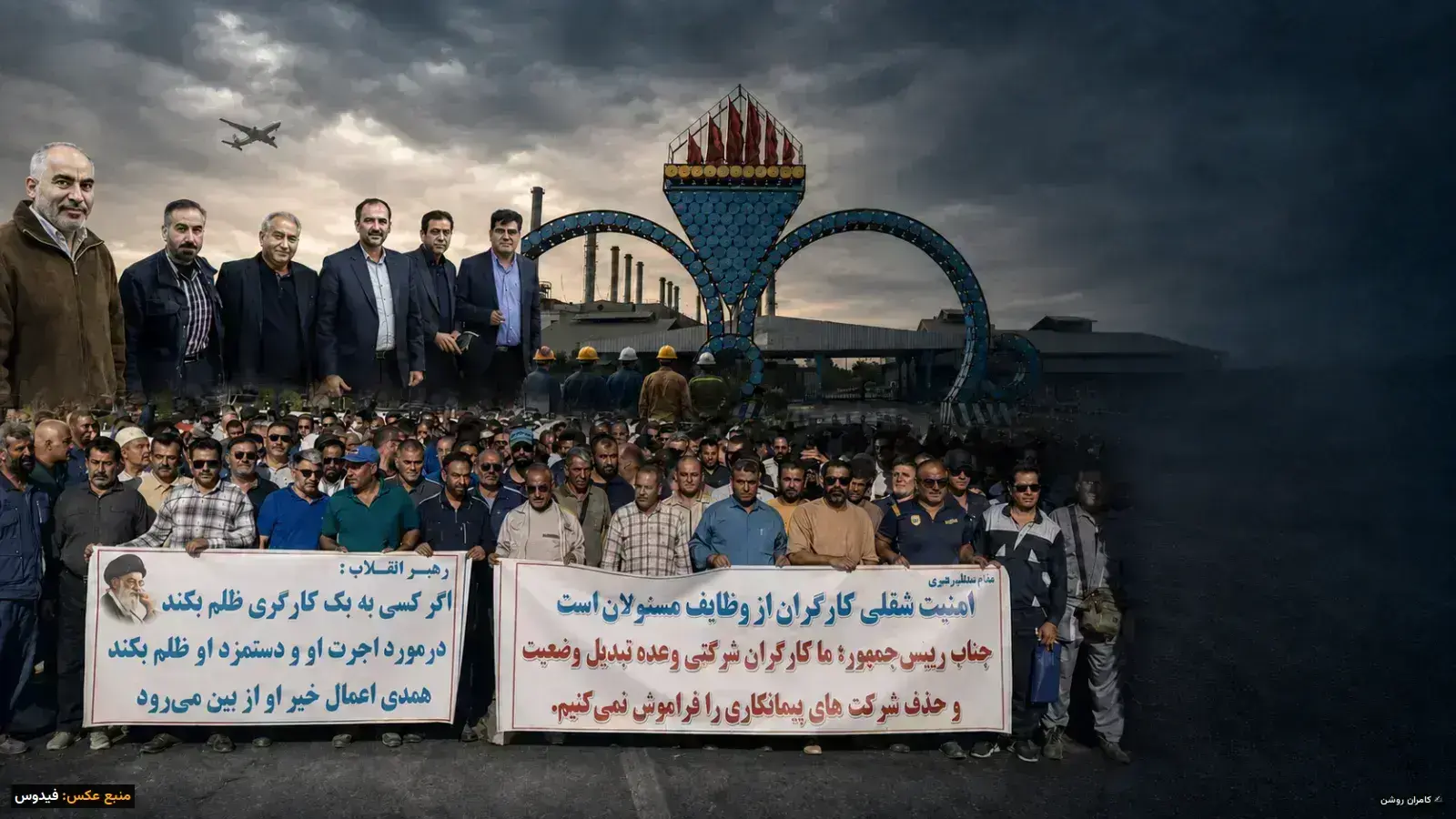
The release of an administrative letter regarding the approval of flight benefits for official and contractual employees of Abadan Oil Refining Company and their dependents has sparked a new wave of protest among the third-party forces of this organization. Protesters say that contract workers operate alongside official forces in many operational, technical, and support units, but when it comes to allocating welfare facilities and organizational benefits, the type of contract becomes a barrier to their inclusion..
According to the image of a letter obtained by Fidus News, the subject of the resolution is the use of flight benefits on the Abadan-Tehran route for eligible employees. The letter, addressed to the CEO, non-industrial operations manager, and human resources manager of Abadan Oil Refining Company, mentions the provision of four round-trip tickets per year for official and contractual employees and their dependents..
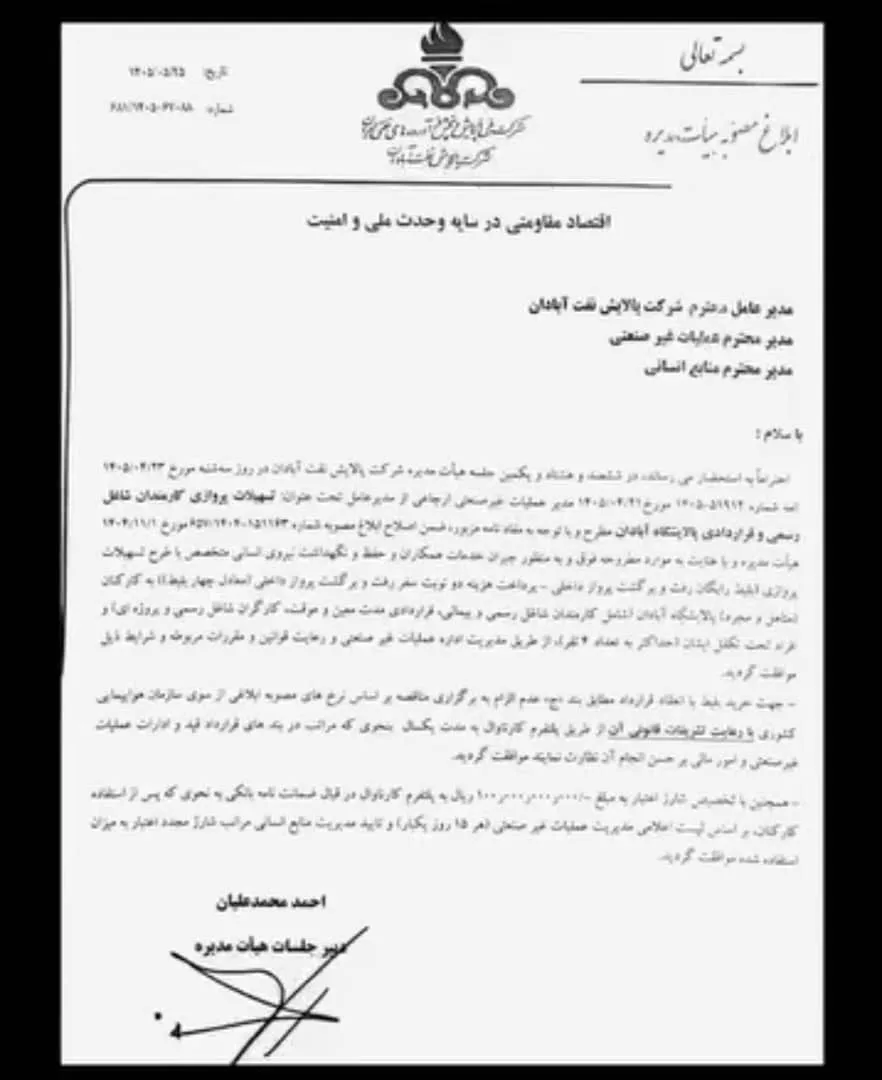
Part of the letter emphasizes that the cost of these benefits should be anticipated in the annual budget and necessary coordination should be made for the implementation of the resolution. What has caused the protest of third-party employees is the limitation of the scope of this benefit to official and contractual forces, excluding contract workers who bear a significant portion of the daily activities of the refinery..
Partners in Work, Strangers in Benefits
Several third-party employees have told Fidus News that the issue is not just about four flights or the monetary value of the tickets; rather, it is the repetition of a pattern where contract workers, when performing work, taking responsibility, and being present in difficult and operational environments, are considered part of the refinery's workforce, but when it comes to bonuses, club facilities, event programs, or welfare benefits, they are sidelined as contractor-affiliated forces..
According to these employees, some third-party forces have university degrees, technical expertise, and long work experience at the refinery, and even in some cases perform tasks similar to official forces. However, the difference in employment relationships has deprived them of many internal benefits..
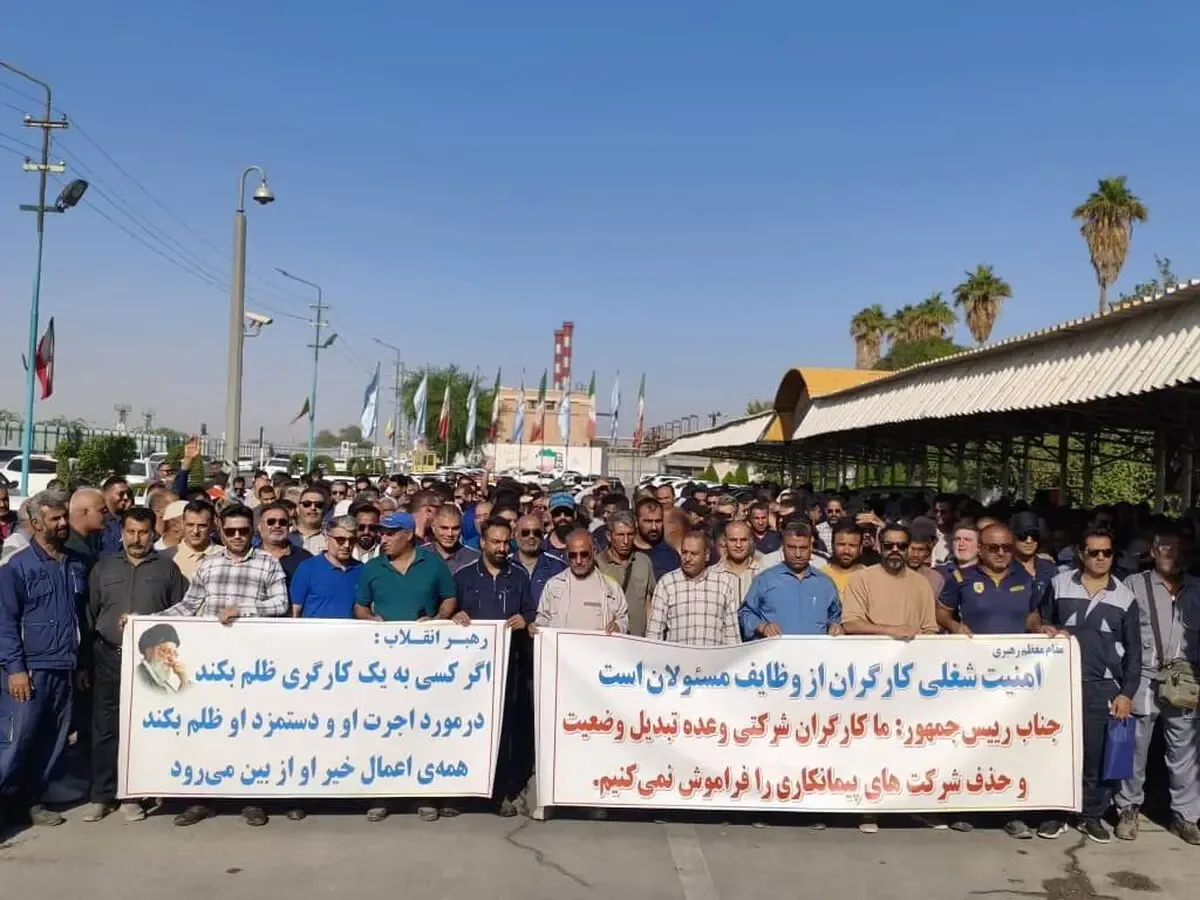
They ask why the management, which can approve and fund flight benefits for one group of employees, cannot define a comprehensive and appropriate mechanism for third-party employees for Labor Day, club access, or other welfare facilities? According to the protesters, the internal nature of this resolution allowed the company management to broaden the scope of beneficiaries or at least consider an equivalent benefit for contract workers..
These protests arise while the public relations of Abadan Refinery announced in June 2023 the "provision of low-interest loans and shopping vouchers" for third-party employees, presenting the refinery as a pioneer in this field. Despite that promise, subsequent reports showed that the issue of vouchers, welfare benefits, and the manner of benefiting contract workers remains one of their unresolved demands..
New Protest, Continuation of an Old Demand
Protests against discrimination among official, contractual, and third-party forces at Abadan Refinery have a history of several years. In December 2021, a group of contract workers protested against the method of calculating productivity bonuses. They said that contrary to existing directives, benefits such as child allowance, worker vouchers, and housing allowance were not correctly included in bonus calculations..
In October 2025, a group of third-party workers also gathered in front of the refinery's main building demanding clarification of their job and employment status. Conversion of status, elimination of contractor intermediaries, job security, and fair access to rights and benefits were the main themes of this gathering..
In January 2024, Abadan Oil Refining Company also announced a meeting to address human resources challenges. That meeting emphasized organizing forces, revising the organizational chart, addressing the situation of low-income employees, and implementing medium- and long-term programs. However, the continuation of protests indicates that the actions taken have not been able to eliminate the feeling of discrimination among different occupational groups..
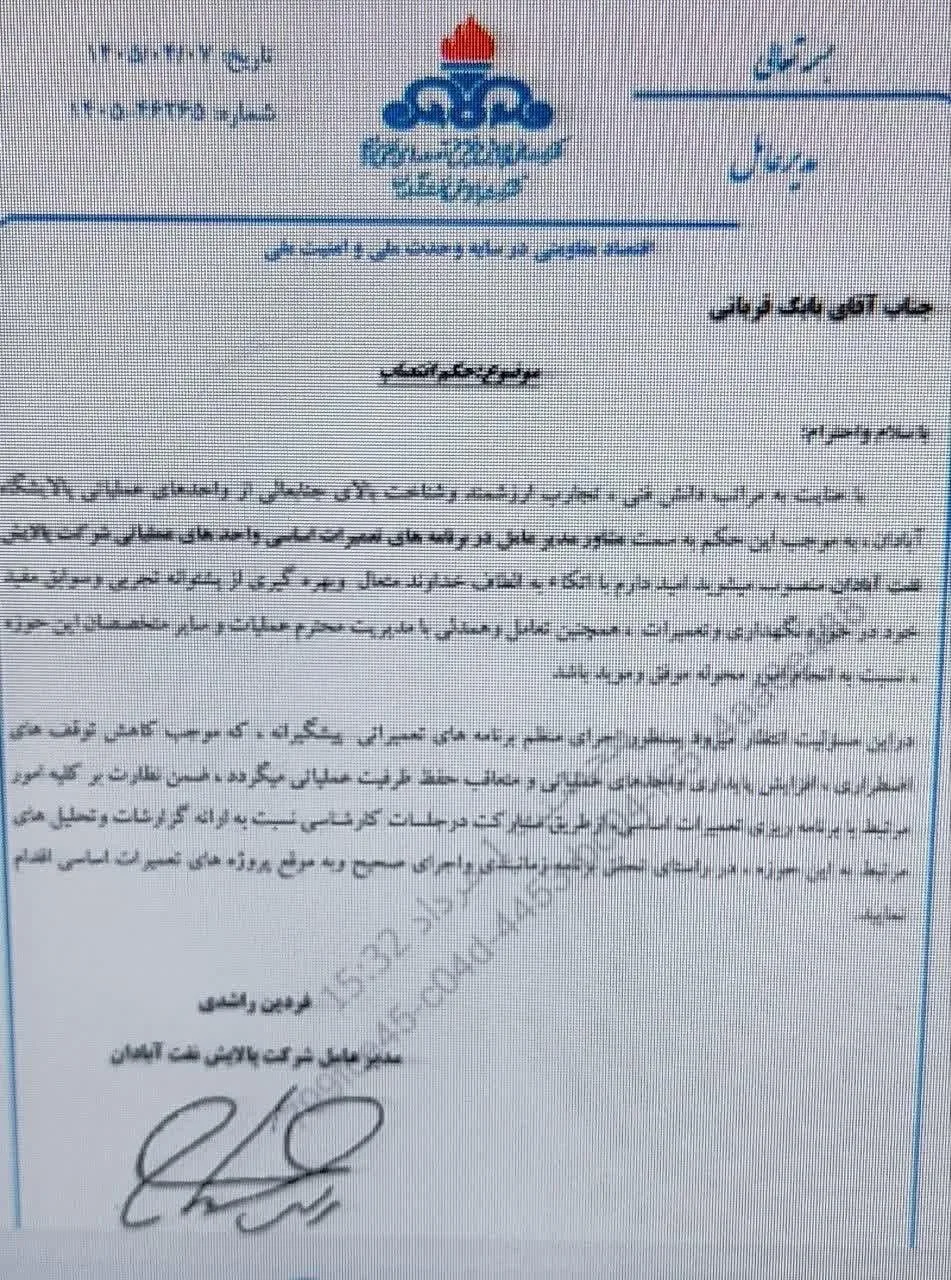
Simultaneously, another letter has been obtained by Fidus News in which questions are raised about the recruitment process and the alignment of hires with the operational needs of the refinery. This issue has put the performance of Babak Ghorbani, advisor to Fardin Rashidi and one of the refinery's managers, under scrutiny, considering his direct role in appointments and recruitments. Employees of Abadan Oil Refining have repeatedly demanded that Ghorbani explain the criteria for recruitment, the alignment of individuals' fields and expertise with refinery jobs, and the observance of equal opportunities..
Some employees have also claimed that during Babak Ghorbani's tenure, his relatives and close associates have entered the refinery. This raises the question of why Rashidi's direct support for him, which even at one point led to a special appreciation session for Ghorbani, was based on what kind of connection and deal.
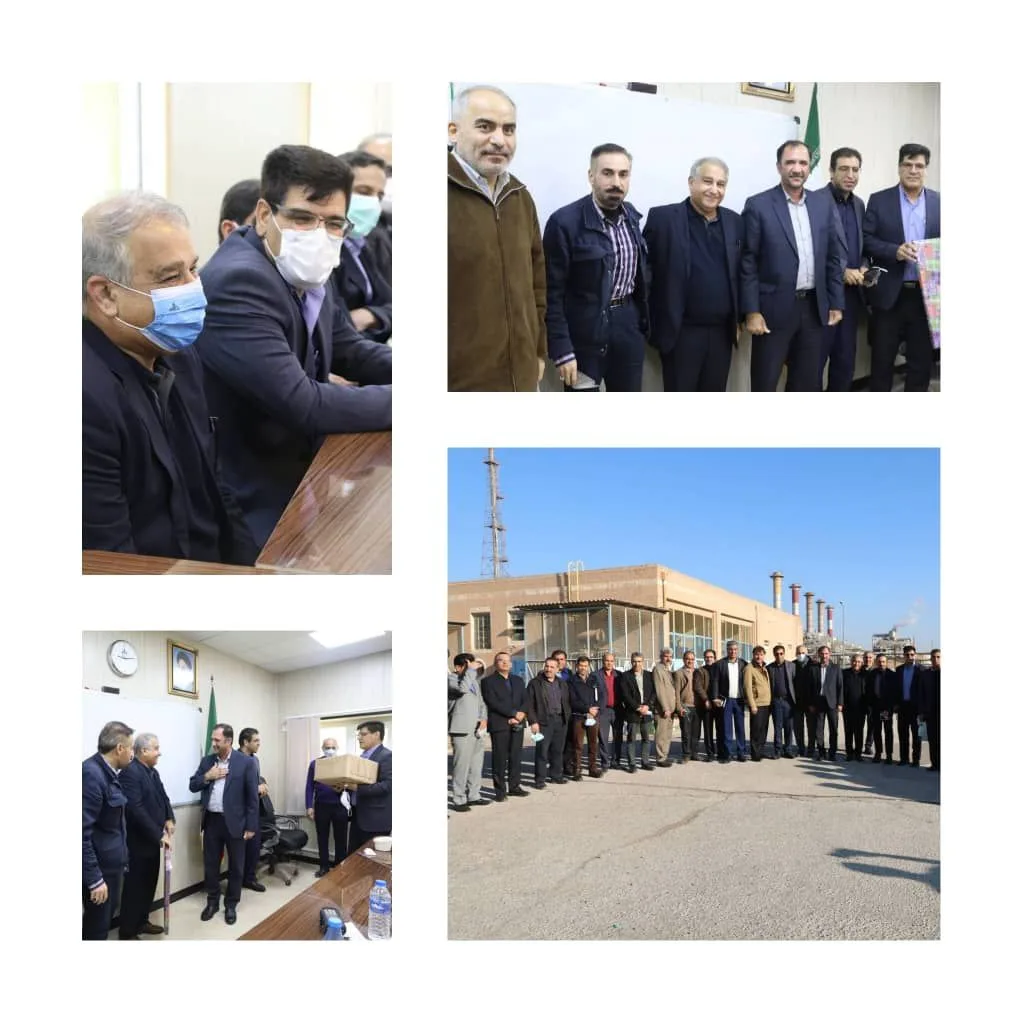
Abadan Refinery, with over 110 years of history, is one of the most important refining centers in the country, and its stable operation depends on thousands of official, contractual, and contract workers. In such an organization, the persistent welfare gap among employees working in the same environment and sometimes in the same unit can affect motivation, organizational trust, and even the quality of operational activities..
Now, the company's management must clarify the basis for excluding third-party forces from the flight resolution, how many employees are covered by it, at what cost, and whether it is possible to allocate similar benefits to contract workers. A transparent response to these questions could be the first step in preventing the deepening sense of discrimination in Iran's oldest refinery..