

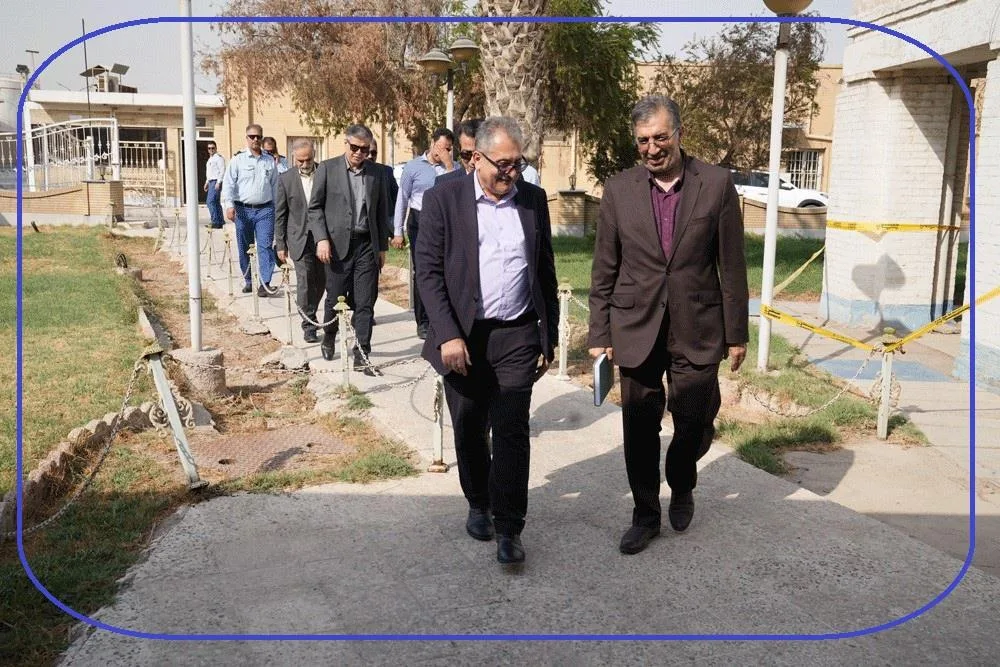
The recent visit of Siavash Kouranifar, the acting head of the Oil Industry Health and Treatment Organization, to Abadan was supposed to be an opportunity to hear employees' issues directly. However, according to some employees, letters they wrote to him were collected and copied by the regional security before being delivered, to identify the protesters.
According to employees, the letters were about employment, overtime, annual evaluations, allocation of organizational housing, loan quotas, and job promotions. They claim the correspondence was copied in the back room of the board meeting hall, the original letters reached Kouranifar, and copies remained with the security and regional management.

Dissatisfaction is not limited to Abadan
The issue of the letters gains more significance when considered alongside previous reports from other sections of the oil industry's health and treatment network. Feydus News, in reports about Ahvaz, has raised employees' objections to relational appointments, criteria for selecting managers, allocation of organizational housing to specific individuals, and contracts with inexperienced doctors. According to these reports, employees have demanded intervention from oil ministry managers and oversight bodies. Claims regarding the decline in treatment quality and irregularities in purchases have also been raised, but to reach a definitive conclusion about them, purchase documents, treatment data, and officials' responses must be published.
The issue of corruption in Ahvaz's health and treatment, the revelation of financial misconduct at Jundishapur University, alongside the deep medical issues in Ahvaz, Asaluyeh, Abadan, and Mahshahr, each illustrate a clear picture of performance weaknesses in the oil health and treatment network, resulting from previous managers and the tenure of Siavash Kouranifar.
In Abadan, a Feydus News report claimed that funds allocated for employee bonuses were used for buying and selling gold during the previous management's tenure. Such a claim, even if employees eventually received funds, raises a clear question: who, with what authorization, and under the supervision of which authority decided on the use of their bonus money? Another report described the appointment of the then head of oil health and treatment's spouse at the city's medical university as a source of questions regarding the selection process and potential conflict of interest. Mere family relations do not prove misconduct; the publication of documents and explanations by responsible officials can address these ambiguities.
These instances provide a picture of several recurring axes of employee dissatisfaction: lack of transparency in appointments, disputes over benefits and organizational facilities, ambiguity in financial decisions, and concern over the consequences of protest. These are allegations and objections that need to be addressed; the mere aggregation of reports does not prove the existence of a corruption network throughout the organization.
In Mahshahr, the issue escalated to introducing the oil treatment complex to the Governmental Disciplinary Organization for negligence, indicating that corruption in this structure is not limited to one or two cities but is a widespread phenomenon across all parts of this complex.
The Test for New Management; Addressing Cases, Protecting Protesters
Kouranifar now faces an issue that goes beyond addressing a local complaint. The organization must clarify how the Abadan letters were received and stored, who has access to potential copies, and what guarantees exist to prevent retaliatory actions against the writers. Simultaneously, the results of the investigation into Abadan's financial claims and objections related to appointments, organizational housing, and purchases in Ahvaz must be announced in a documented manner.
Oil health and treatment employees from Abadan to Ahvaz have the right to know which authority their complaints reach and how they are pursued. Regarding Mahshahr and Asaluyeh, if this investigation is to extend to the entire oil treatment network, the organization's management must publish complaint data, service status, appointment criteria, and investigation results. Addressing accumulated dissatisfaction cannot be completed with travel and meetings; the criterion is traceable handling of each case and the ability for employees to speak without fear.