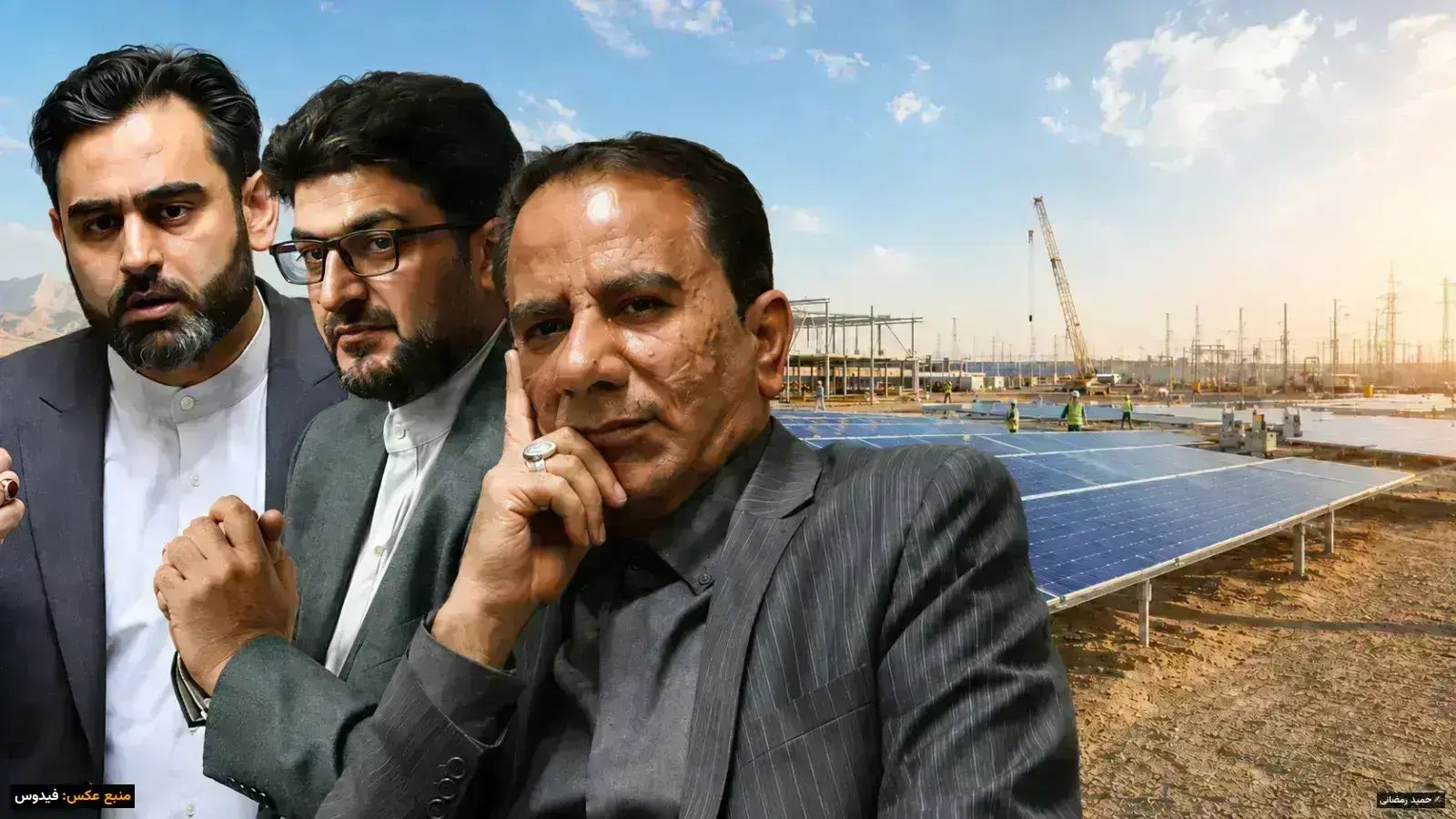
In a situation where the development of solar power plants has become one of the government's most important programs to reduce electricity imbalance, questions have been raised about the financing methods, appointments, and stakeholders of the projects of the "Lavan Energy, Oil, and Gas Development Group" company; questions whose answers could clarify whether public resources have been used for energy infrastructure development or have become a privilege for political and economic circles.
Lavan Company is introduced as a subsidiary of the Mahan Industries and Mines Development Holding and affiliated with the Tourism Financial Group. This group previously participated in the implementation of a 10-megawatt solar power plant in Isfahan and now also speaks of developing multiple solar projects. The Tourism Bank has also announced plans to invest in the production of several thousand megawatts of solar power and has received authorization to finance projects in this field.
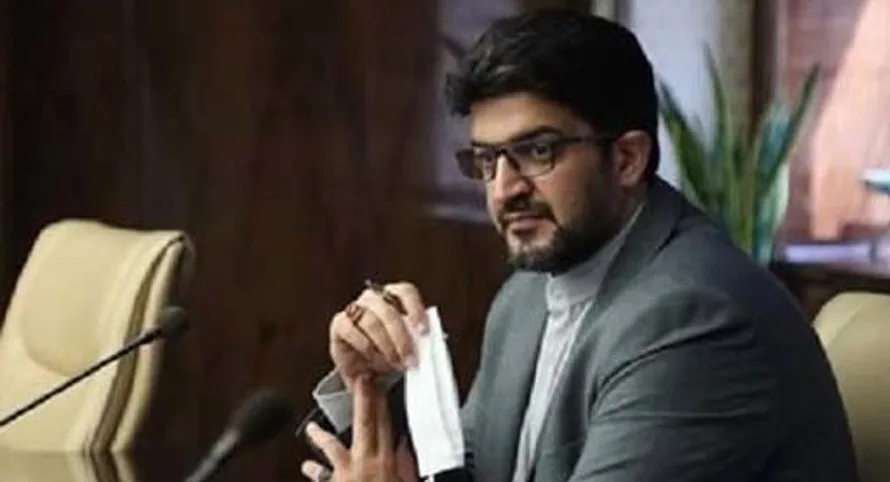
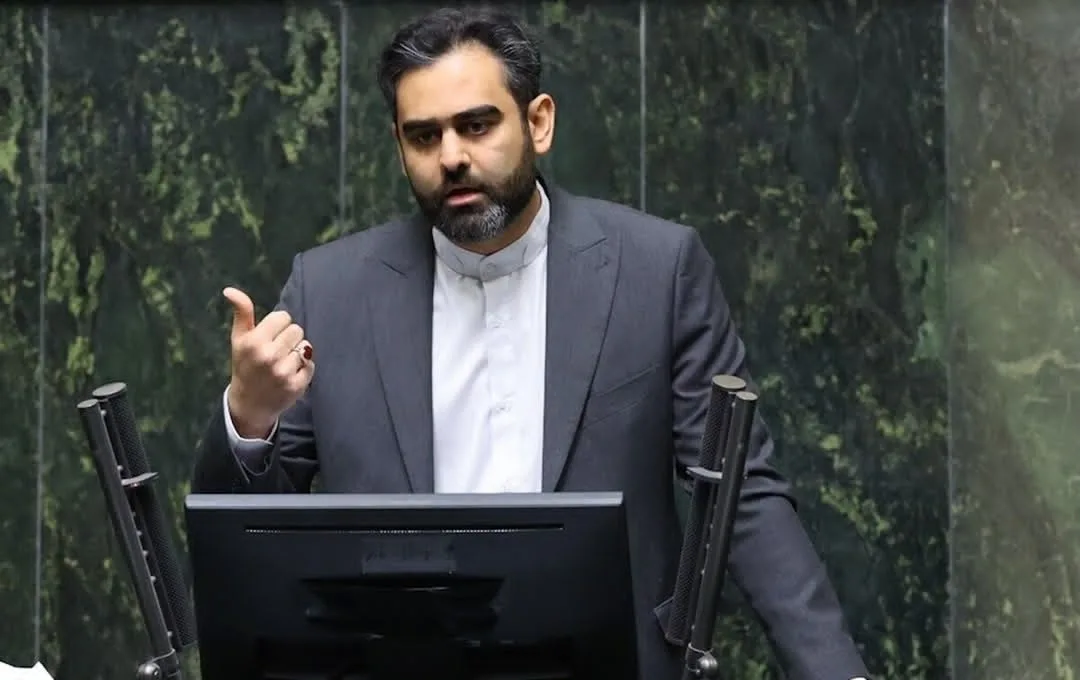
What is the connection between Jafarzadeh and Sabati?
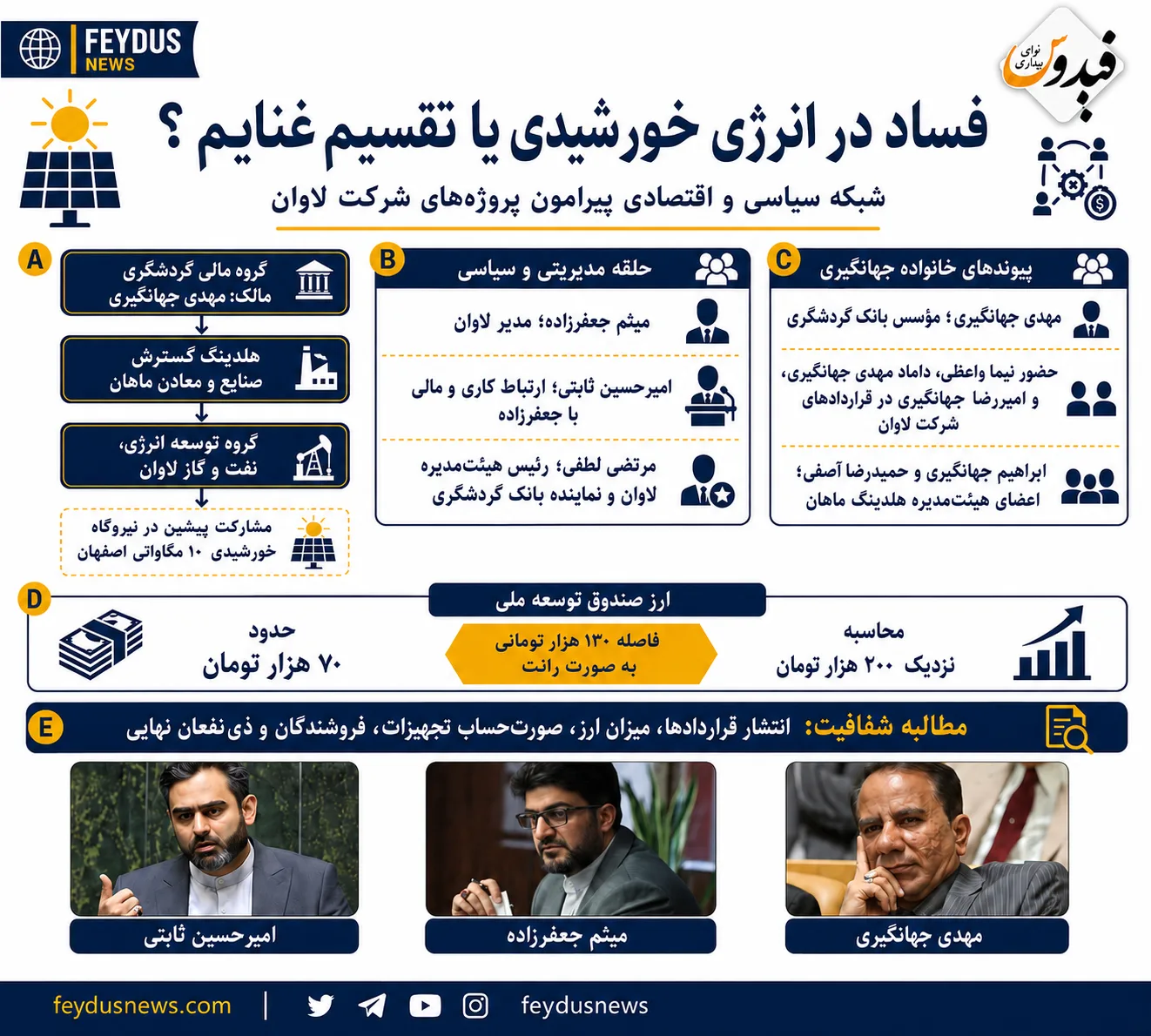
Simultaneously, information and documents obtained by Feydus have raised serious questions about the managerial and economic structure of this group. The first question relates to the relationship between the management of this company, Meysam Jafarzadeh, and Amirhossein Sabati, a member of parliament. Lavan Company and Tourism Bank officials must explain whether such a connection has played a role in appointments, contract signings, or project executor selections.
Another issue is the potential role of Nima Vaezi, the son-in-law of Mehdi Jahangiri, and Amirreza Jahangiri, the son of Mehdi Jahangiri, in the projects and economic structure of this group. Have these individuals been shareholders, contractors, equipment purchase intermediaries, or beneficiaries of solar projects?
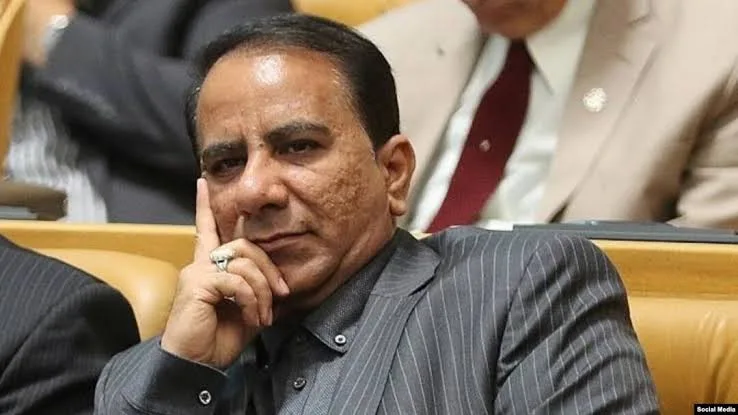
The arrest records of Mehdi Jahangiri, brother of Eshaq Jahangiri, the first vice president of Hassan Rouhani's government, and his key role in the Tourism Bank corruption case shed more light on this case. The presence of Nima Vaezi, Mehdi Jahangiri's son-in-law, in Lavan Company's contracts alongside Amirreza Jahangiri clearly shows that the seemingly deep political differences between Sabati and the Jahangiri family, which had even led to the exposure of some of this family's cases by Sabati, culminate in shared economic interests in the solar energy development plan.
The presence of Morteza Lotfi as the chairman of Lavan Company's board of directors in the role of Tourism Bank's representative becomes meaningful when we revisit Mehdi Jahangiri's corruption case in the Tourism Bank. This is where this individual, using his brother's governmental connections, had a massive advantage and, as the founder of the Tourism Bank, established the Iranian Cultural Heritage and Tourism Investment Group, gaining ownership of some commercial holdings in the energy sector, including the Mahan Industries Expansion Holding. This holding itself owns Lavan Company, allowing us to understand that the role of the Jahangiri family in managing Lavan Company is more prominent than ever.
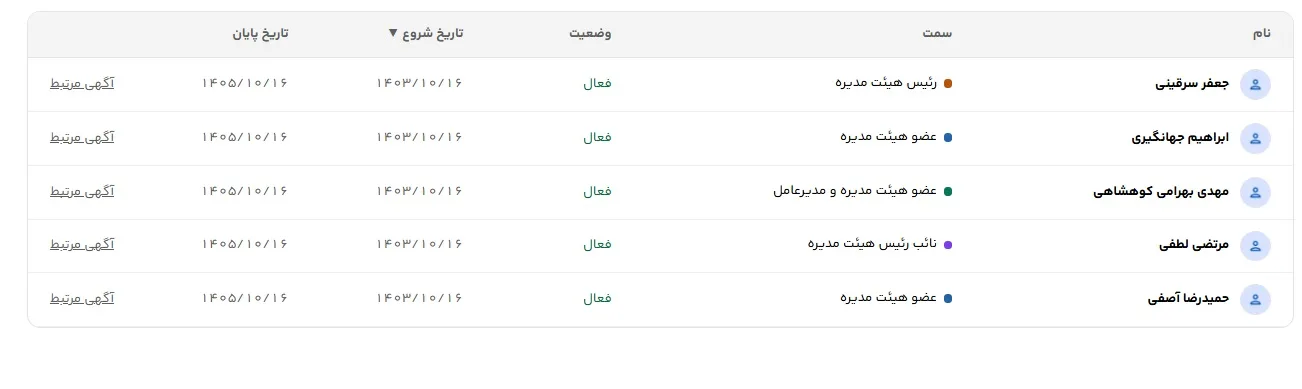
Reviewing the board of directors list of the Mahan Industries and Mines Development Holding, the main owner of Lavan Company, also reveals other connections of the Jahangiri family with this company. In the Mahan Holding, Ebrahim Jahangiri, another brother of Eshaq Jahangiri, holds the position of board member, and Hamidreza Asefi, a prominent political figure close to the Jahangiri faction, is also a board member of this holding.
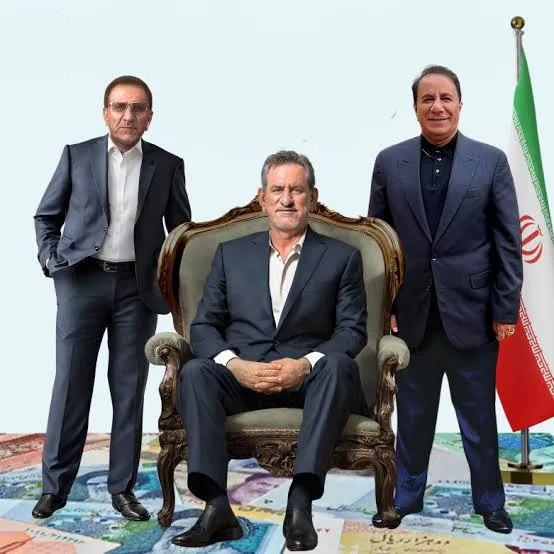
Therefore, it can be understood that the financial and work relationship between Jafarzadeh, the manager of Lavan, and Sabati is a link connecting two opposing political currents that, when it comes to profiting from national resources, reach a point of convergence in corruption.
National Development Fund Resources: A Broad Privilege Awaiting Insiders
Another question relates to the resources of the National Development Fund. According to public resolutions, the fund provides up to 80% of the necessary resources for some solar projects and the expected return is also in foreign currency.
Now it must be determined whether Lavan's projects have also benefited from the fund's currency at a rate of about 70,000 tomans. If the answer is yes, how much currency, on what date, and for the purchase of which equipment has been allocated?
Calculating or allocating these resources at rates close to 200,000 tomans requires independent review. The severe gap between the claimed allocation rate and the calculated rate necessitates the immediate publication of contracts, equipment purchase invoices, seller names, and the list of final beneficiaries.
In such circumstances, the apparent political differences between Amirhossein Sabati and Mehdi Jahangiri are also questioned: Are we facing a real confrontation, or is there a shared interest behind the scenes of energy projects?