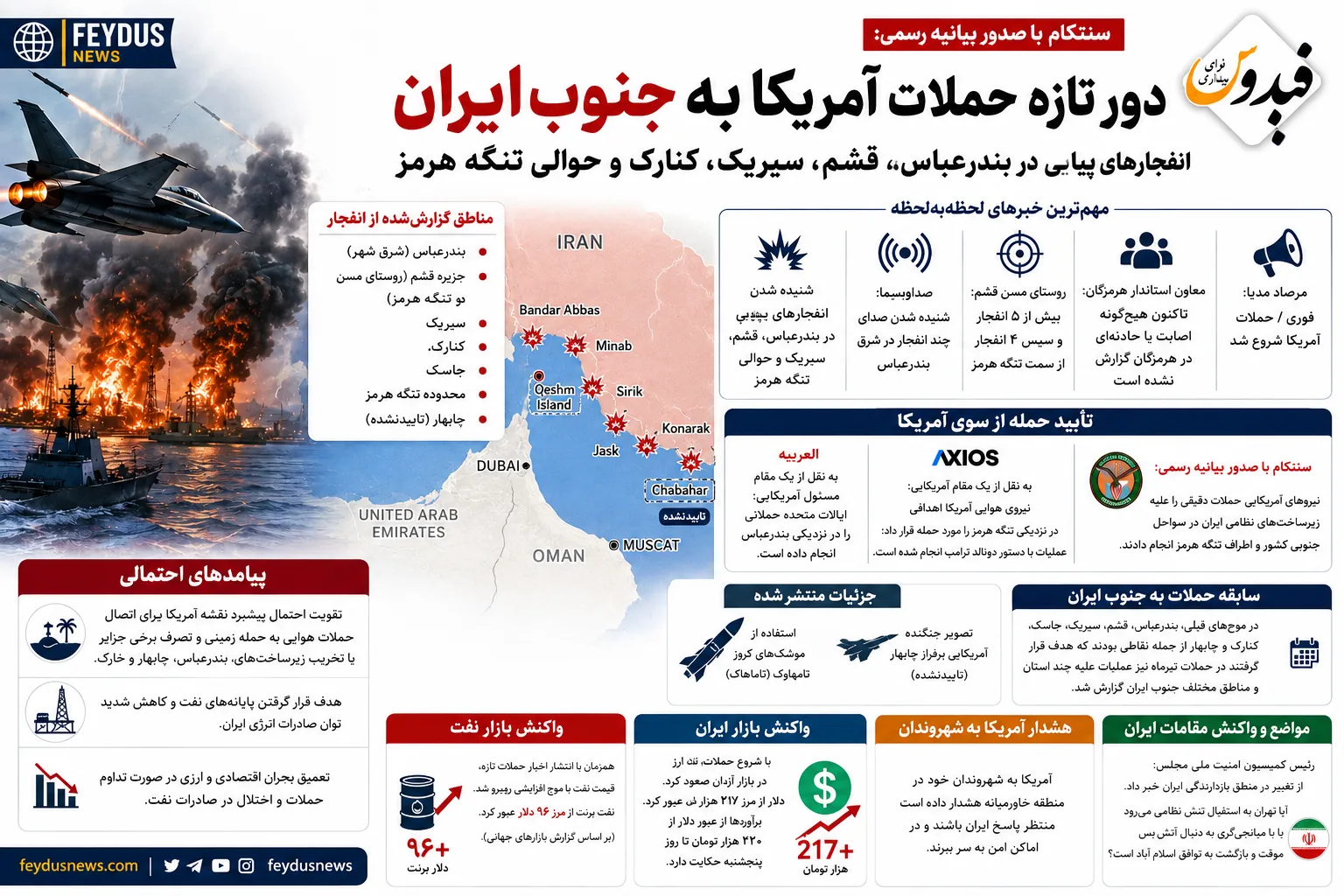
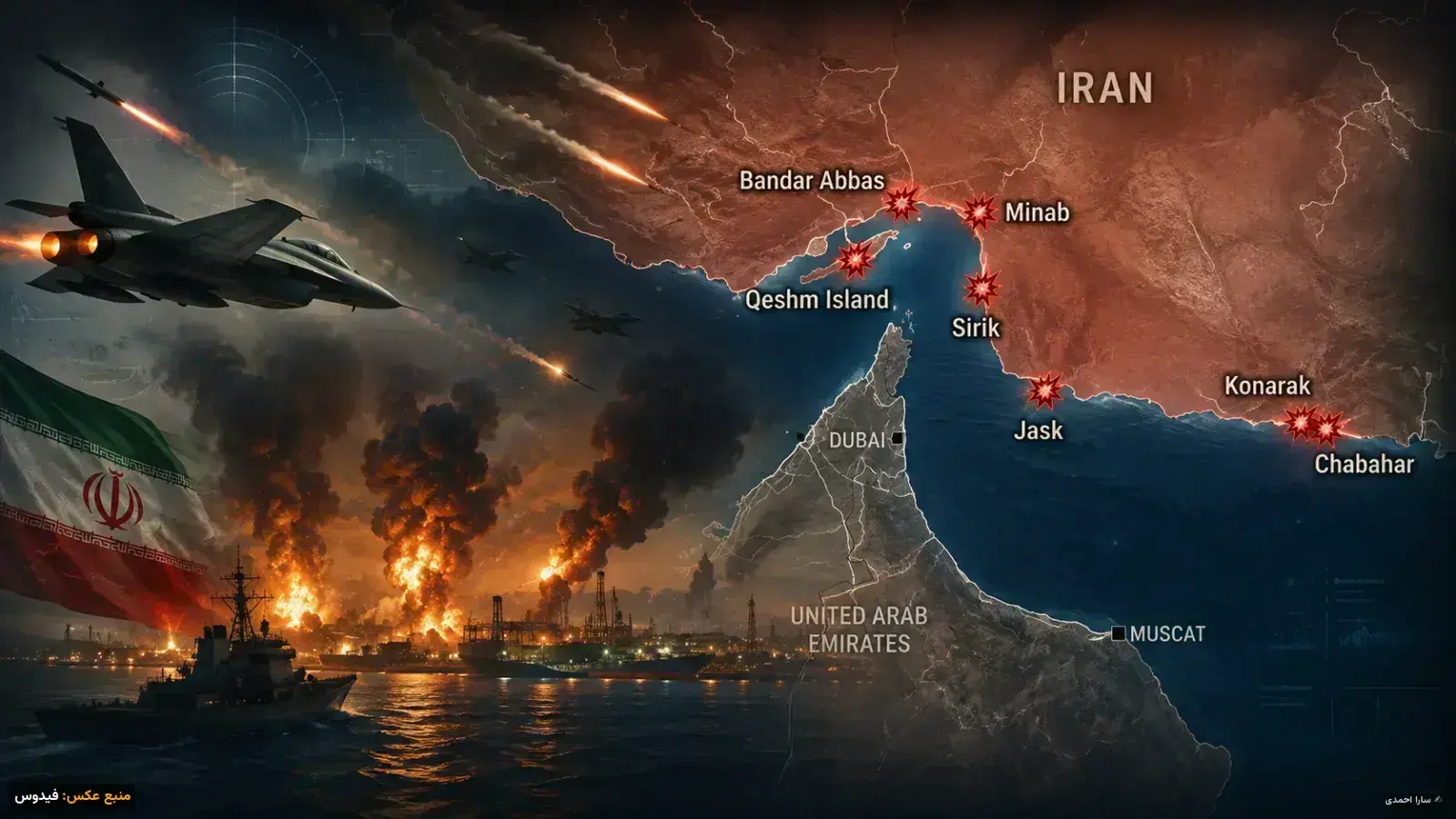
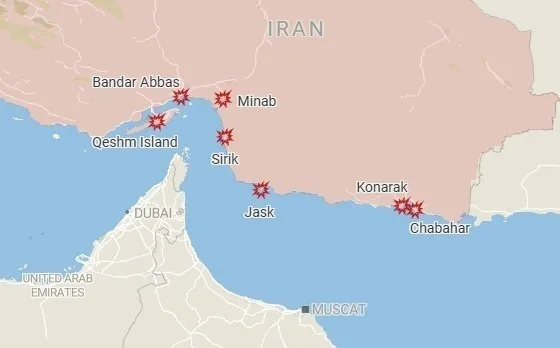
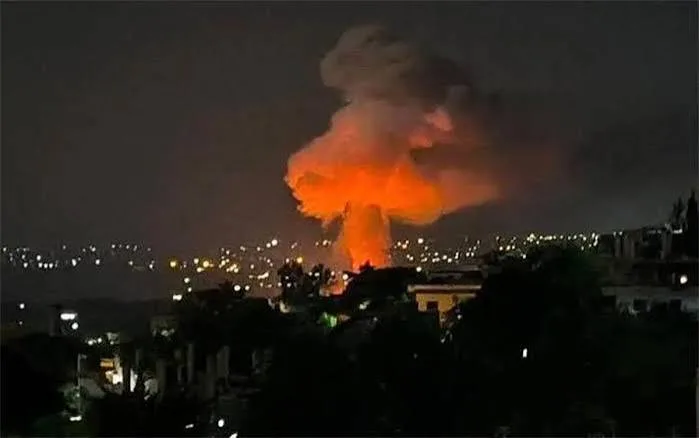
Real-time reports from southern Iran indicate the start of a new round of US attacks along the Gulf Coast. According to local reports, multiple news outlets have reported hearing consecutive explosions in Bandar Abbas, Qeshm Island, Chabahar, Konarak, Sirik, and the Strait of Hormuz area.
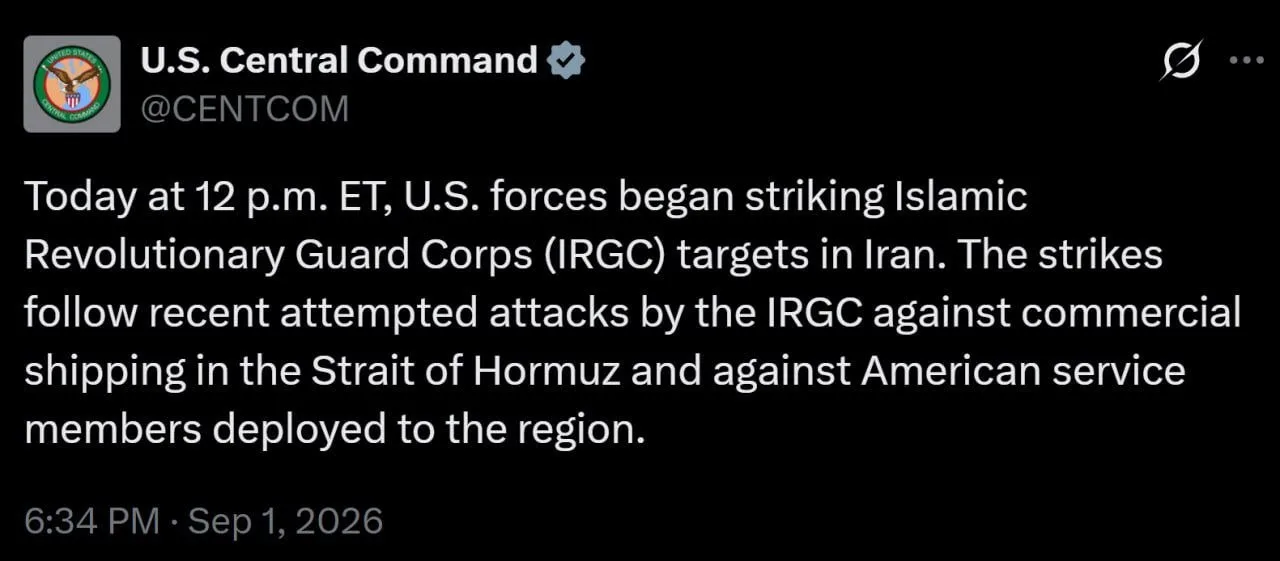
American sources have also confirmed operations around the Strait of Hormuz. While some officials in Hormozgan Province claimed there were no reports of explosions in southern cities, CENTCOM issued an official statement announcing a new wave of attacks.
The initial news came from Bandar Abbas. Mersad Media News Channel first reported hearing explosions in Bandar Abbas and then Qeshm, and minutes later wrote about the start of US attacks. Following that, reports of explosions being heard again in Bandar Abbas were published. IRIB also reported hearing several explosions in eastern Bandar Abbas. According to this report, more than five explosions were heard around the village of "Mesen" on Qeshm Island, and minutes later, four more explosions were reported from the Strait of Hormuz. Independent media reports also confirm the news of explosions in eastern Bandar Abbas and around Qeshm.
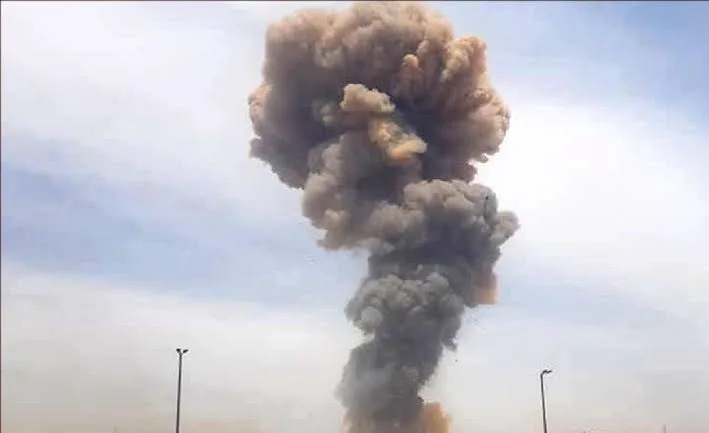
Despite this, Iranian officials have not yet confirmed hits on specific targets. The Political, Security and Social Deputy of Hormozgan Governorate, in the first reaction, stated that "so far, no hits or incidents have been reported in Hormozgan." Therefore, in the current situation, a distinction must be made between hearing explosions, reported by several sources, and confirming the location of hits or potential damages.
The US Confirms Attack in the Strait of Hormuz Area
On the other hand, foreign media have reported on the start of US operations. Al Arabiya, quoting an American official, claimed that the United States conducted attacks near Bandar Abbas. Axios also reported, citing an American official, that the US Air Force targeted objectives near the Strait of Hormuz, and the operation was carried out under Donald Trump's orders.
Some domestic news sources have also reported the use of Tomahawk cruise missiles in this operation; however, no official details have been released yet. Reports of explosions being heard in Sirik have been published, and an image said to show an American fighter jet over Chabahar is circulating on social media; however, the authenticity and timing of this image have not yet been independently confirmed.
The geographical scope of the published news, from Bandar Abbas, Konarak, and Qeshm to Sirik and Chabahar, may indicate that the focus of the new operation is on the southern coastal strip and the entrance area of the Strait of Hormuz.
These areas have previously been targeted multiple times during the Iran-US war. In previous waves, attacks on targets in Hormozgan and other southern regions were reported, and Bandar Abbas, Qeshm, Sirik, Jask, Konarak, and Chabahar were among the locations mentioned in reports of attacks or explosions being heard. In the July attacks, media reports suggested US operations against several provinces and various regions in southern Iran.
Immediate Reaction in Dollar and Oil Prices
The significance of the new wave of attacks is primarily due to their location. The Strait of Hormuz remains one of the world's most sensitive energy corridors, and any indication of escalating conflict in this area can directly affect market assessments of the security of oil and gas supplies. Recent months have shown that news of escalating or reducing tensions in the Iran-US conflict can shift oil prices by several dollars in a short period.
Simultaneously with the news of the new attacks, initial reports of an upward movement in the oil market and prices surpassing the $96 range have been published. This reaction occurred while the energy market remains sensitive to the situation in the Strait of Hormuz and the potential for renewed disruption in the transfer of Persian Gulf oil.
In Iran's financial markets, the news of the start of attacks was immediately accompanied by a rise in currency prices, with the dollar surpassing 217,000 tomans. Estimates also suggest that if reciprocal attacks continue, the dollar will exceed 220,000 tomans by Thursday.
What makes this round of attacks significant is their timing with the release of statements by Mohammad Bagher Ghalibaf on IRIB, claiming that Iran's response to the US attack on Sunday, which targeted Larak Island, was decisive and deterrent.
The insistence of the Islamic Republic's officials on requesting the US to return to the Islamabad agreement, along with this new round of airstrikes, could indicate an escalation of military tensions rather than resolving the previous crisis.
Following these attacks, there are reports that the US has warned its citizens in the Middle East to expect an Iranian response and to stay in safe places. This confirms recent news that the US plans to start a new round of attacks for several days.
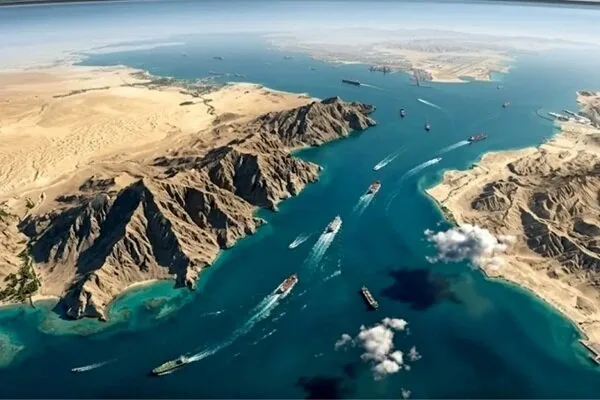
The targeting of southern islands also strengthens the possibility of the Trump administration's decision to advance a potential plan to connect airstrikes to a possible ground attack aimed at capturing some islands or completely destroying Iran's infrastructure on Khark Island, Bandar Abbas, and Chabahar.
This could severely limit Iran's oil export capabilities and push the current currency and economic crisis to an uncontrollable stage.
Inside Iran, as the attacks began, the head of the National Security Commission of the Parliament spoke of a "change in Iran's deterrence logic"; statements that, in the current atmosphere, could be seen as a sign of Tehran's potential response to the new US operations.
We must wait and see whether Iranian officials will embrace the formation of widespread military tensions or, by activating mediators, will once again attempt to use the pretext of a temporary ceasefire to encourage the US to return to the Islamabad agreement.