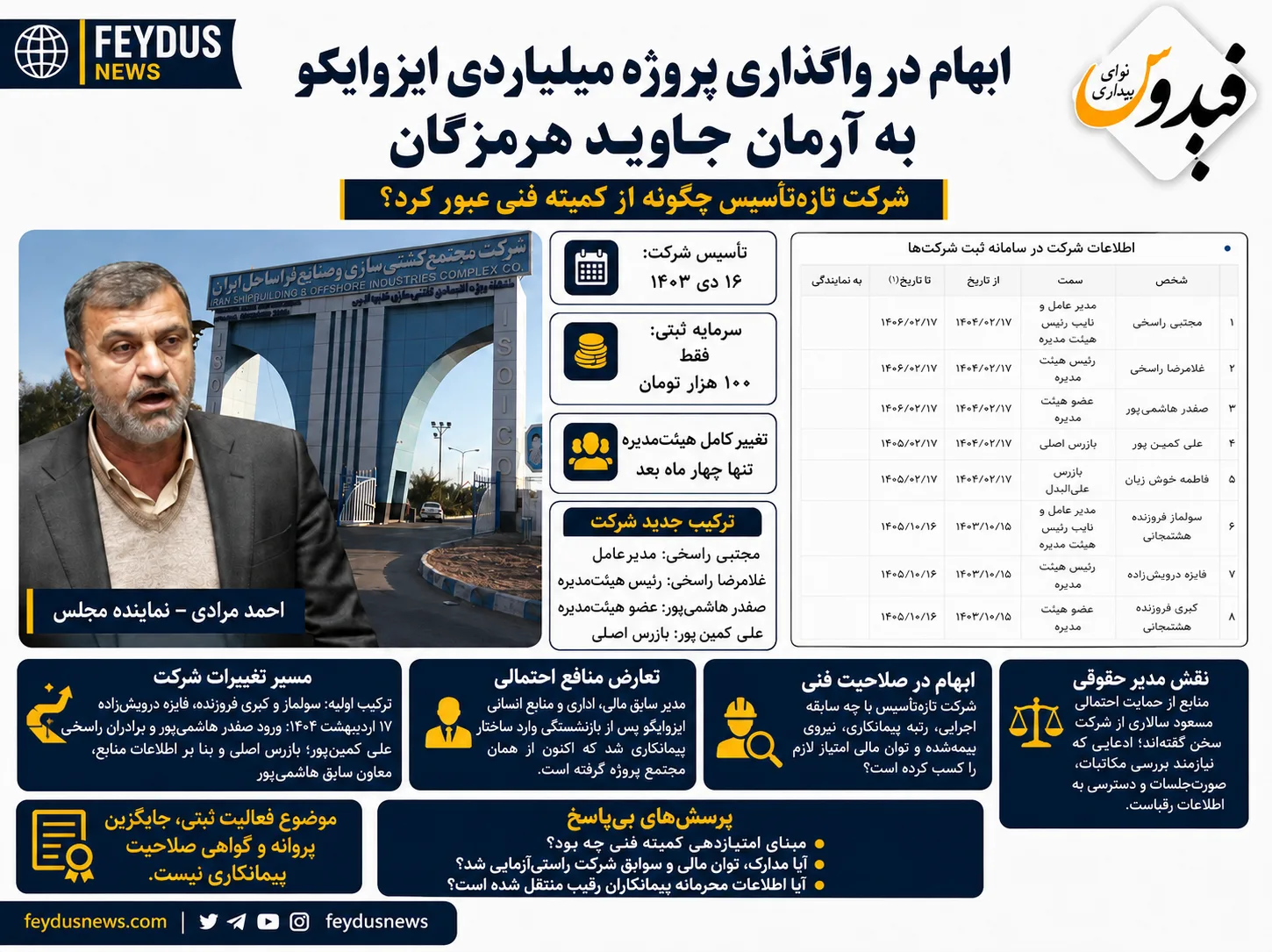
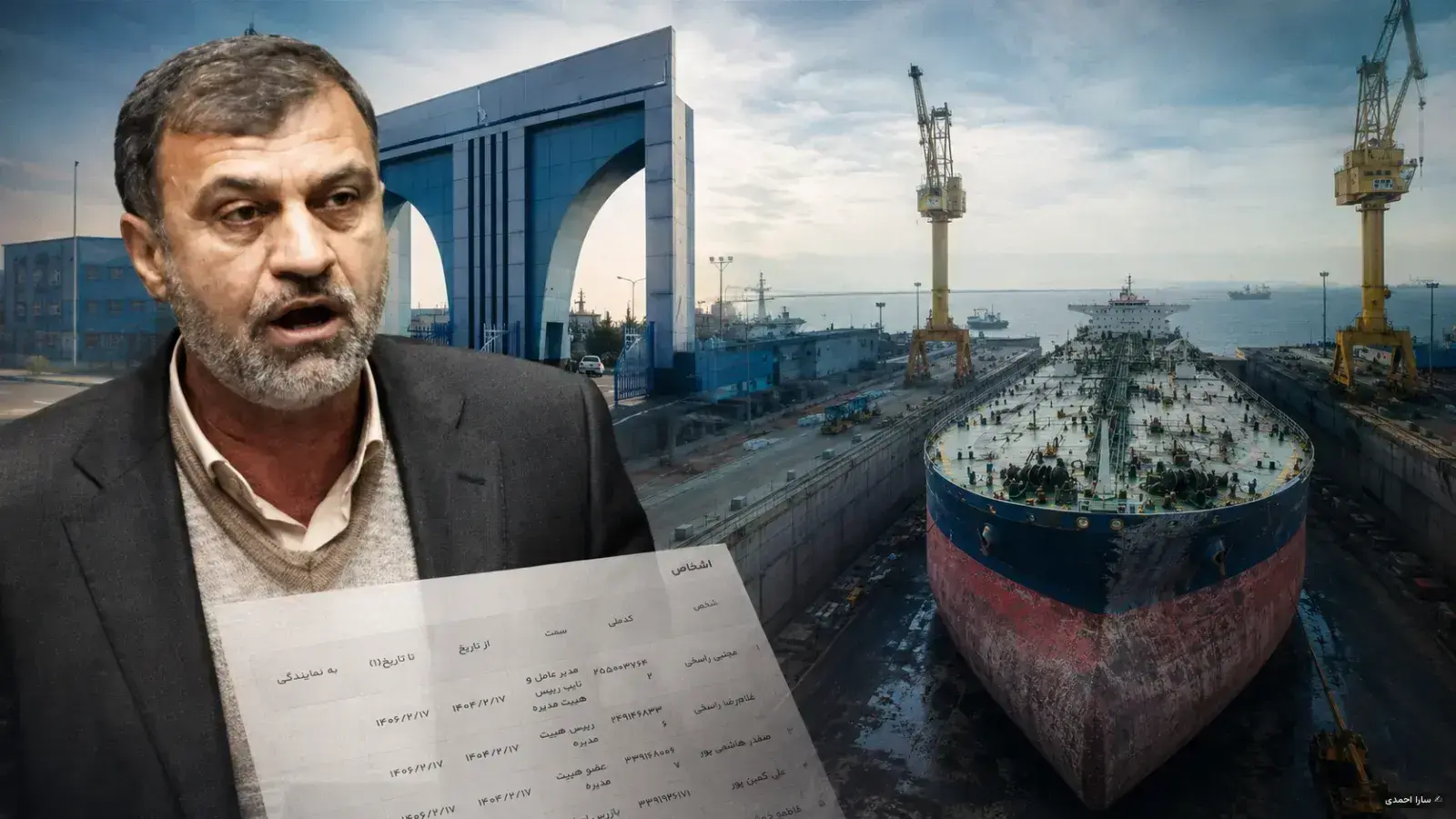
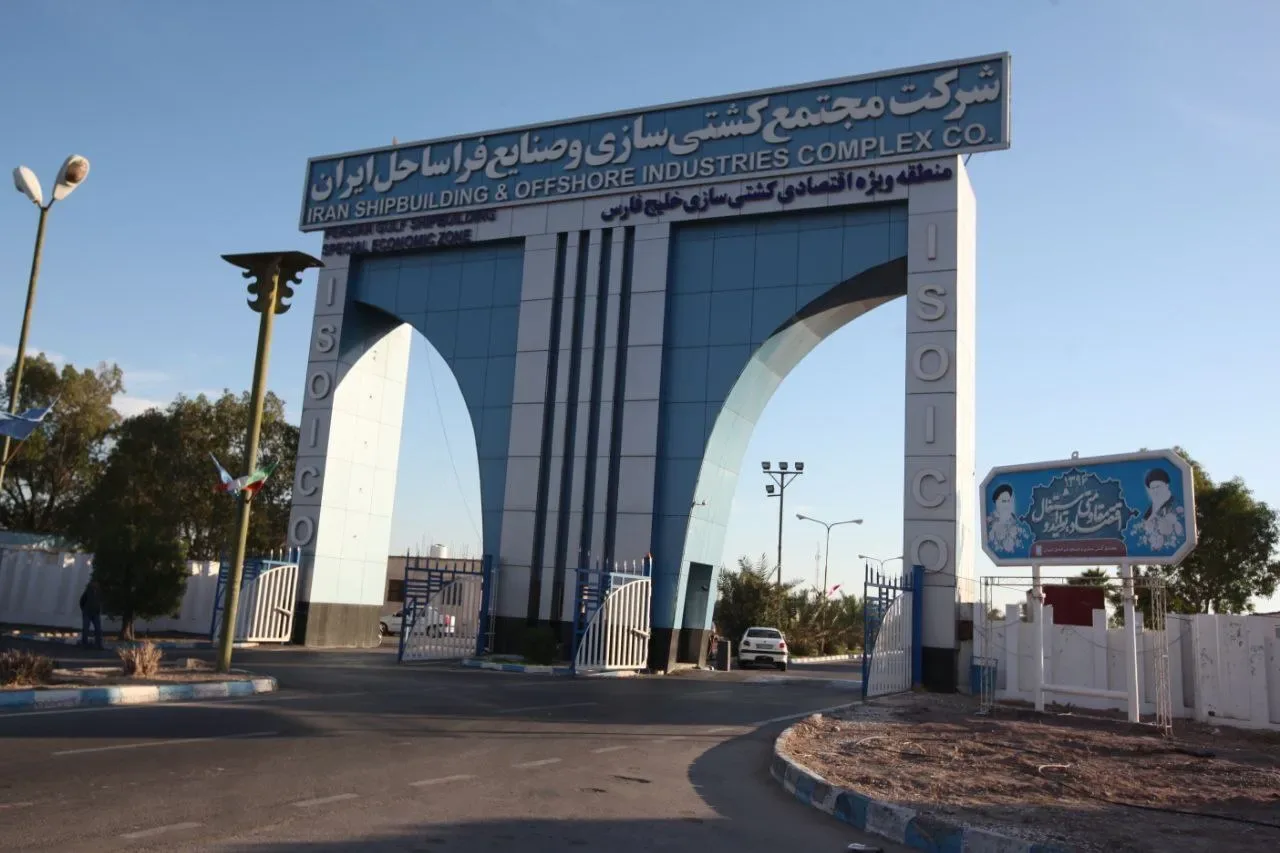
The registration documents of the company 'Omrani va Sanati Arman Javid Hormozgan' alongside information and documents received by Feydus News have raised serious questions about how a newly established company entered the tenders of the Iran Shipbuilding and Offshore Industries Complex, ISOICO; a company that completely changed its management structure just a few months after its establishment, placing a retired ISOICO manager and two contractor brothers at its helm.
According to informed sources, this company has now
succeeded in receiving a billion-dollar project in ISOICO; a project about which ambiguities
have been raised regarding the technical scoring method, contractor qualification, and the potential support of some internal managers. This information does not yet prove collusion or crime, but
the registration data, the speed of the company's structural changes, and the history of the individuals involved with the shipbuilding complex highlight the urgent need for supervisory bodies to intervene.
A Newly Established Company with Minimal Capital
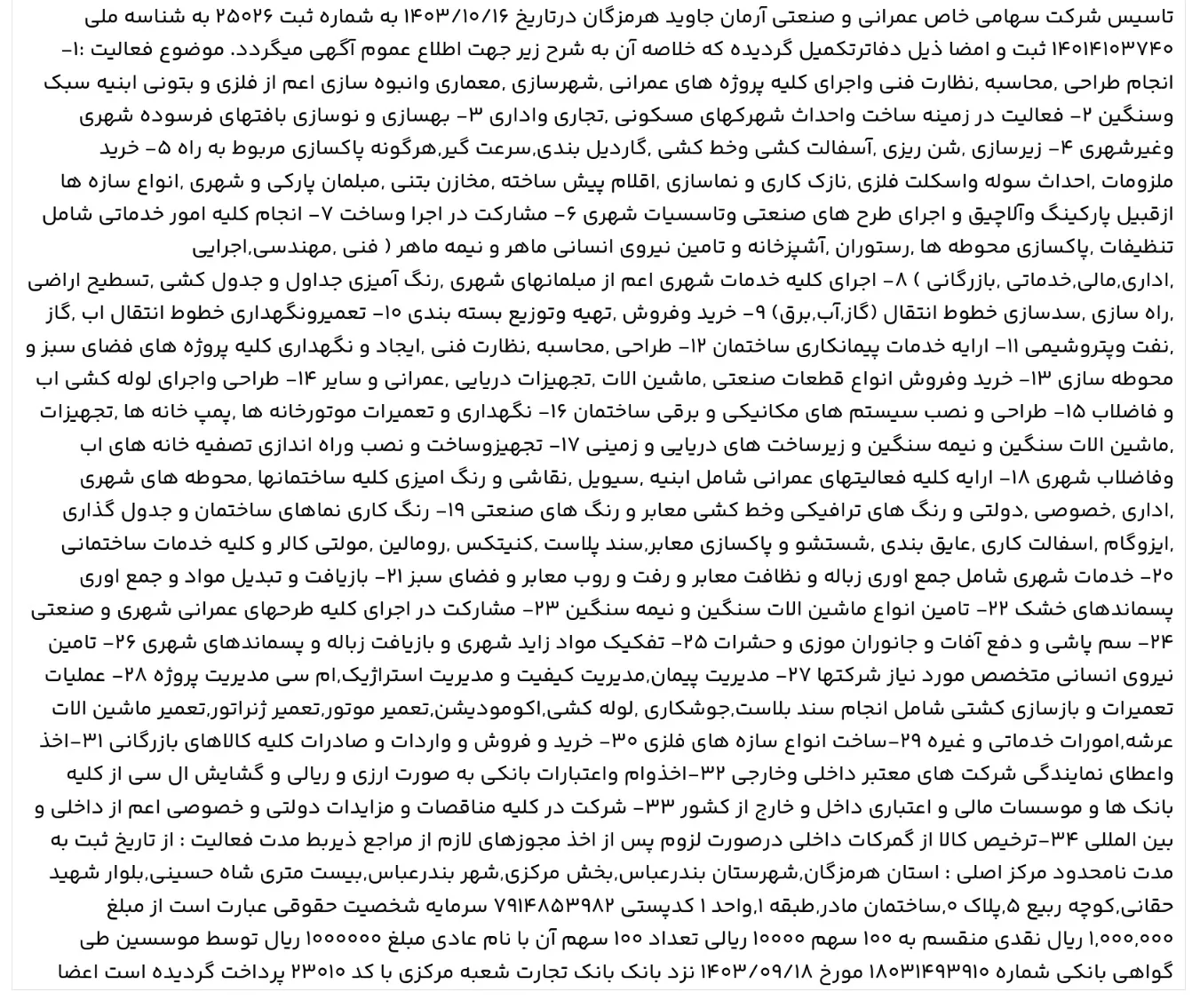
According to the attached registration report, the company Omrani
va Sanati Arman Javid Hormozgan with national ID ۱۴۰۱۴۱۰۳۷۴۰ was established on ۱۶
Dei ۱۴۰۳ as a private joint-stock company. The latest registered capital
for this company is only one million rials, equivalent to ۱۰۰ thousand tomans; a
figure that is significantly distant from the billion-dollar projects in question. The company's
status at the time of receiving the inquiry was declared "active," and the date of its last official newspaper was the first of Aban ۱۴۰۴
.
Of course, registered capital alone does not indicate the
actual financial capability of a company; but when a newly established company with a registered capital of ۱۰۰
thousand tomans, limited execution history, and according to sources, lacking appropriate insurance and
tax records for large projects, receives a passing score in the technical evaluation of a billion-dollar tender, the technical committee is obliged to clarify the basis of its decision.
Informed sources have declared the company's recorded financial turnover before entering the tenders to be
about one million and ۲۰۰ thousand tomans.
Rapid Change in Company Structure; Entry of Hashemipour
and the Rasakhi Brothers
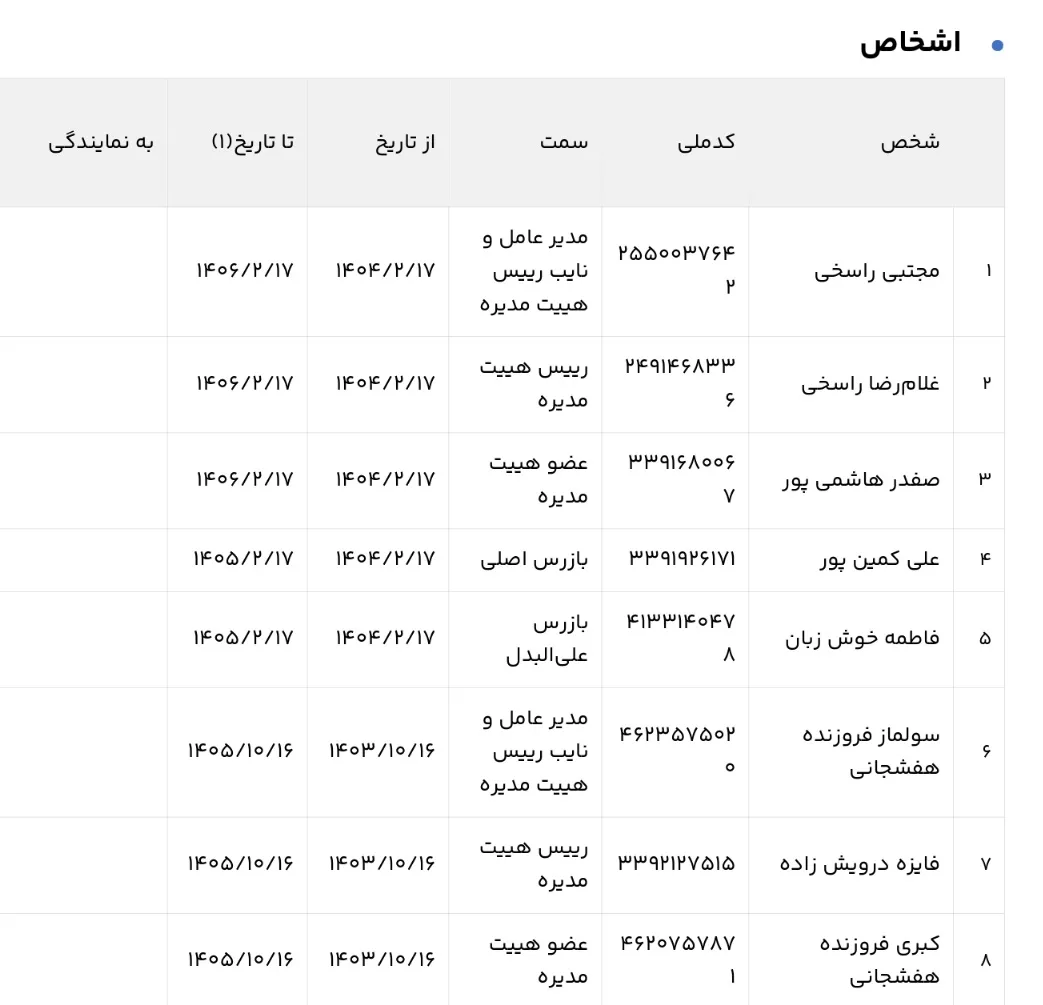
The initial structure of Arman Javid Hormozgan differs significantly from its current structure. At the time of establishment, Solmaz Forouzandeh Hafshjani was the CEO and vice-chairman of the board, Fayzeh Darvishzadeh was the chairman of the board, and Kobra Forouzandeh Hafshjani was a board member. Abdolreza Kaminpour was also introduced as the main inspector and Arash Forouzandeh Hafshjani as the alternate inspector of the company.
The establishment advertisement also shows that the company's activity subject is set very broadly; from construction projects, human resources supply, and repair of oil and gas lines to ship repair and reconstruction, metal structure construction, and participation in government and private tenders. However, at the end of the same advertisement, it is stated that the registration of the activity subject does not imply obtaining or issuing an activity license. Therefore, listing dozens of titles in the articles of association cannot replace a qualification certificate, specialized workforce, machinery, insurance records, and actual project execution experience.
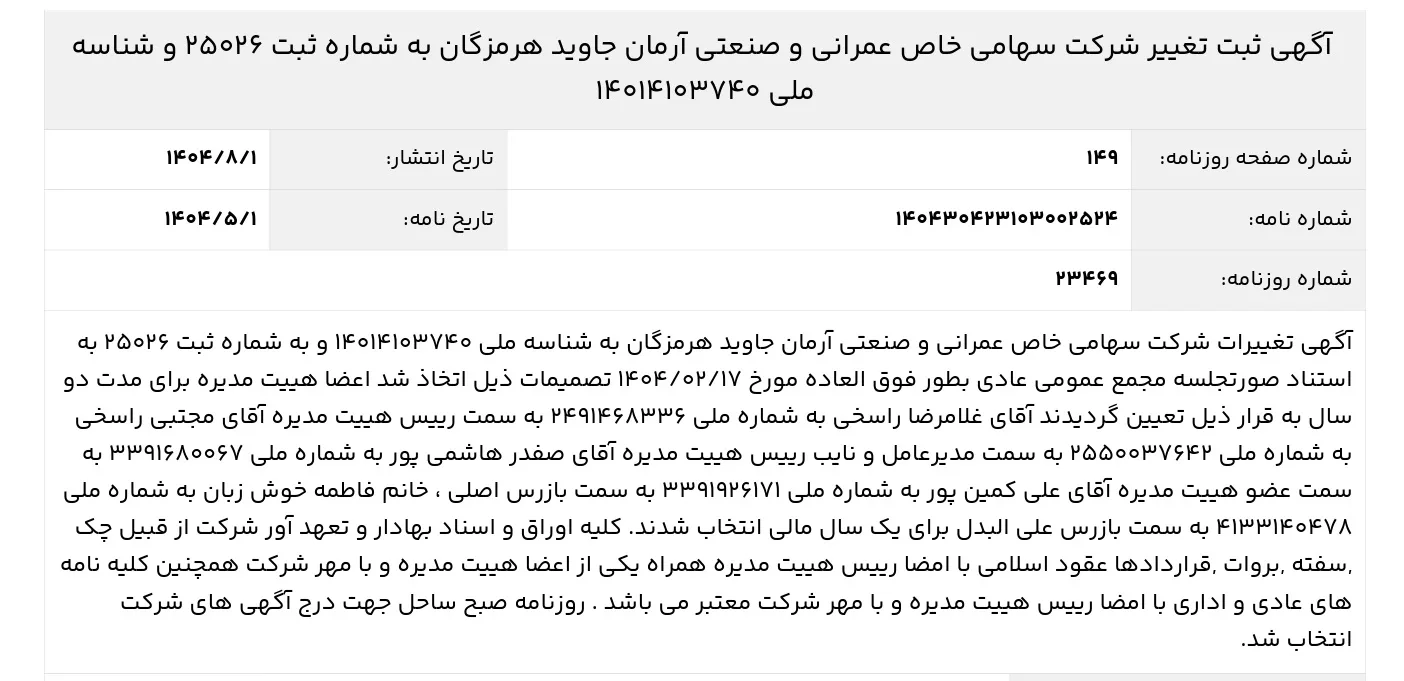
Only four months after establishment, based on the minutes of ۱۷ Ordibehesht ۱۴۰۴, the company's management structure changed: Gholamreza Rasakhi became the chairman of the board, Mojtaba Rasakhi the CEO and vice-chairman of the board, and Safdar Hashemipour a board member. Ali Kaminpour was also selected as the main inspector.
Retirement, Company Registration, and Return through Contracting
According to received information, Safdar Hashemipour has worked for years in the financial and administrative sectors of the shipbuilding complex and later reached the position of human resources deputy. Sources say his official entry into the structure of Arman Javid occurred after his retirement. The same sources introduce the Rasakhi brothers as contractors who had a working relationship with the complex under Hashemipour's management during his tenure.
This information indicates that we are facing a serious case of "conflict of interest": a manager who had access to the administrative structure, human resources, contractors, and decision-making mechanisms of a complex for years, after retirement, has joined previous contractors, and their new company has entered tenders of the same complex. The clear question is: Has the accumulated experience and connections in a public or organizational position turned into an unfair advantage in the contracting market?
The Kaminpour and Forouzandeh Circle
Information from sources indicates closer relationships as well. It is said that Ali Kaminpour was previously Safdar Hashemipour's deputy. Now his name appears as the main inspector in the latest registered structure. In the initial structure, Abdolreza Kaminpour was the main inspector of the company, and clarifying the potential relationship between these two and their job histories can reveal part of the network formed around the company.
The Connection with Ahmad Moradi, Bandar Abbas Representative in Parliament
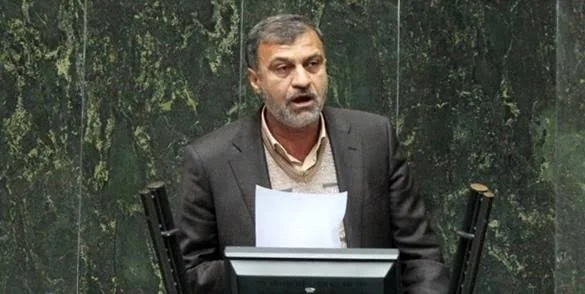
On the other hand, the document reports the presence of three members of the Forouzandeh family in the initial composition: Solmaz Forouzandeh Hafshjani, Kobra Forouzandeh Hafshjani, and Arash Forouzandeh Hafshjani, who according to the documents provided by informed sources, these individuals have a family relationship with each other, and Arash Forouzandeh is currently working in the company. Also, there are discussions about the closeness of this circle with relatives and individuals associated with Ahmad Moradi, the representative of Bandar Abbas and a member of the Energy Commission in Parliament.
The Role of the Legal Manager and the Suspicion of Access to Competitors' Information
The more sensitive part of the case relates to the potential role of Masoud Salari, the legal manager of the complex. Sources have spoken of his support for Arman Javid; the position of the legal manager can be accompanied by access to contracts, contractor files, legal disputes, and some internal information. Therefore, it must be determined whether Salari has played a role in qualification review, contract drafting, or facilitating the company's path.
The more important question is whether confidential information regarding proposed prices, financial capability, documents, or weaknesses of tender competitors has been directly or indirectly provided to Arman Javid. Answering this question is only possible by reviewing access logs to systems, correspondence, technical committee minutes, sealed financial proposals, and committee members' communications.
Exactly What Did the Technical Committee Score?
If a company with such a short history has managed to secure a billion-dollar project, ISOICO must publish the complete scoring table: execution history score, financial capability, employee insurance, equipment, contractor ranking, specialized workforce, and similar projects. The Inspection Organization, Security, and Information Protection must clarify what assets, insured workforce, qualification rank, and verifiable history the company had on the day of proposal submission. It must also be determined whether the company presented the records of individuals or facilities belonging to other entities as its own to increase its score.
The issue is not just a contract. If former managers of a complex can pass a less experienced company through the technical evaluation filter by relying on previous relationship networks, the tender turns from an economic competition into a mechanism for distributing projects among internal circles. Now the ball is in the court of ISOICO managers and supervisory bodies: either publish the evaluation and contract documents and respond to these ambiguities, or accept that silence about billion-dollar projects makes the suspicion of collusion and tender engineering more serious every day.