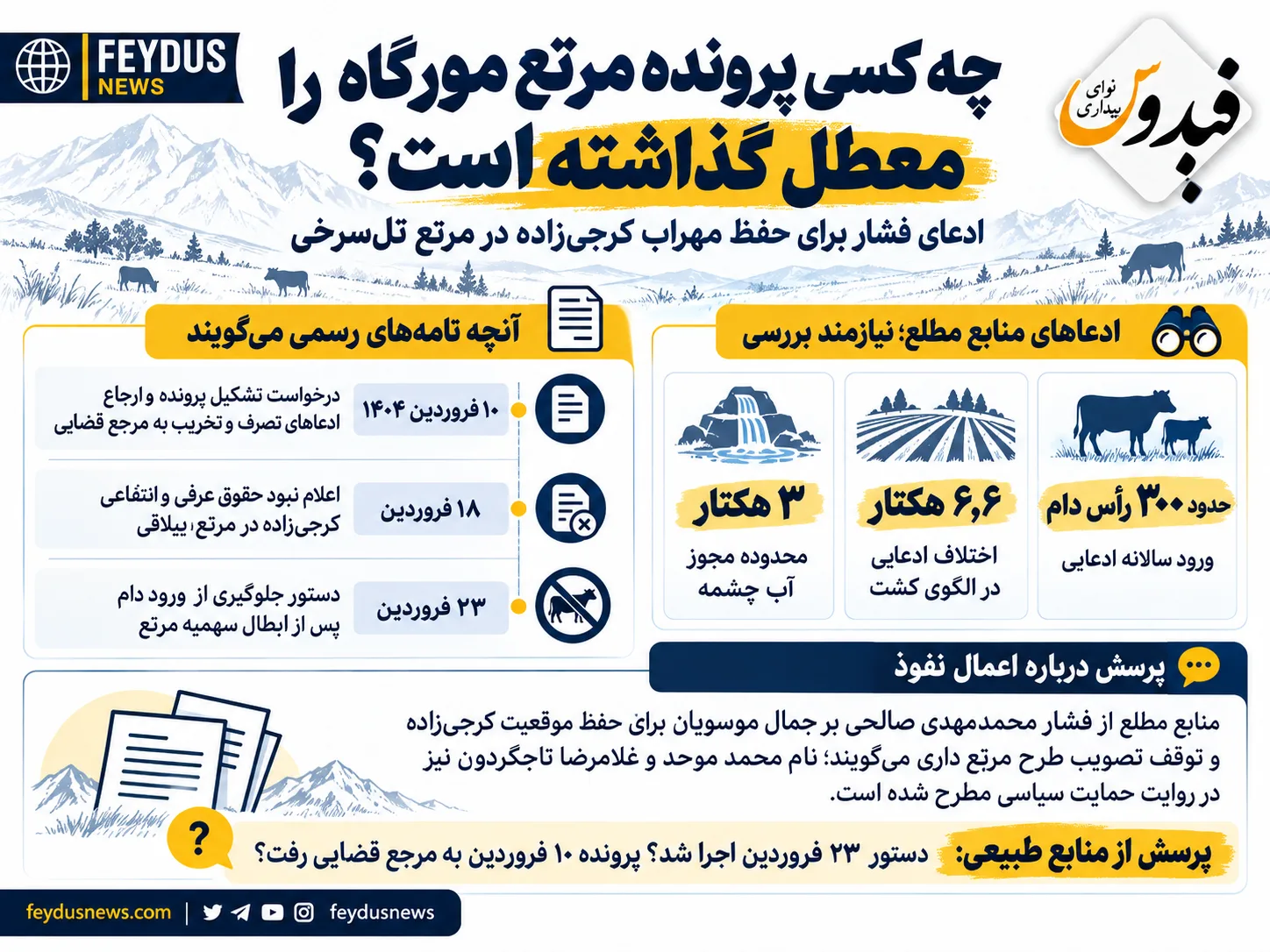
In the case of the Tel-Sorkhi Murgah Kakan pasture in Boyer-Ahmad County, the gap between official letters and what informed sources narrate about the pasture's situation is questionable. The General Directorate of Natural Resources of Kohgiluyeh and Boyer-Ahmad, in correspondence from Farvardin 1404, mentioned the absence of customary rights for Mehrab Karjizadeh Akhchalu in the summer pasture and ordered the prevention of his livestock's entry. However, informed sources claim the case is still under pressure to maintain his position in the pasture.
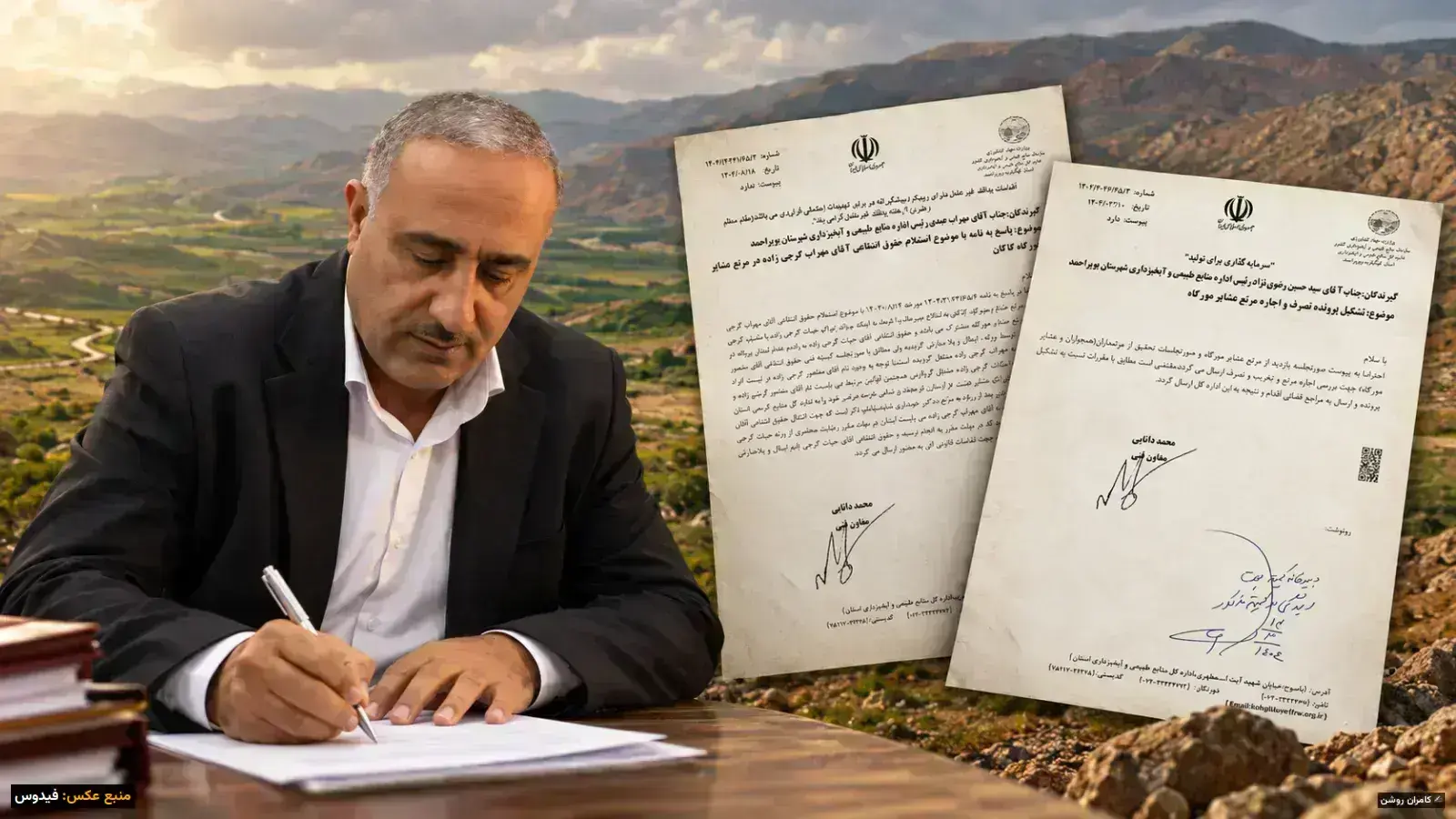
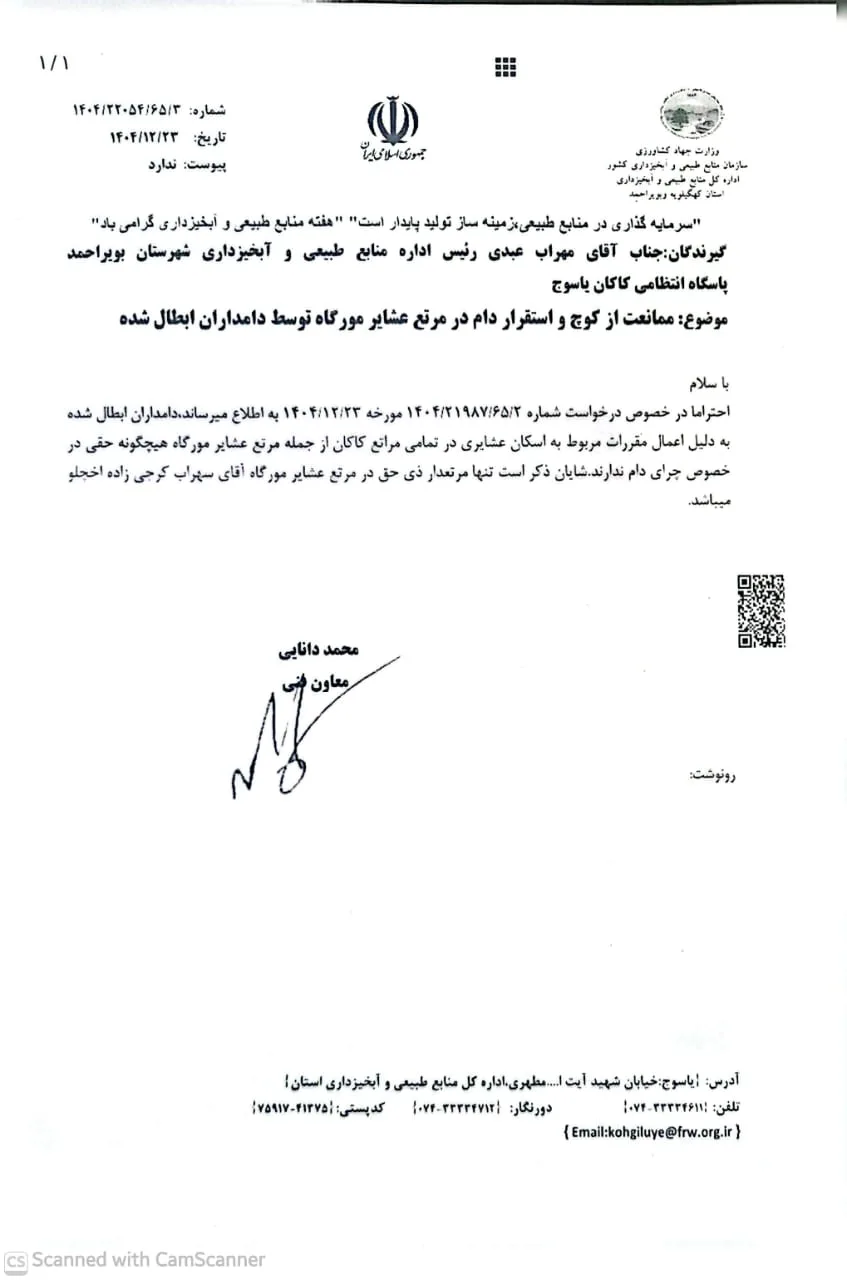
A letter dated 18 Farvardin 1404 signed by Mohammad Danaei, the technical deputy of the General Directorate of Natural Resources, states that Mehrab Karjizadeh has no customary and beneficial rights in the Murgah Kakan summer pasture due to residing in the winter quarters. Another letter on the same date explains that the pasture is communal and the transfer of another individual's beneficial rights to him has faced objections; an issue that was under review and decision-making. Then, in a letter dated 23 Farvardin, the General Directorate informs the Boyer-Ahmad Natural Resources to prevent Karjizadeh's livestock from entering the pasture due to the annulment of the pasture quota by the nomadic settlement.
Documents Indicating Political Influence on Natural Resources
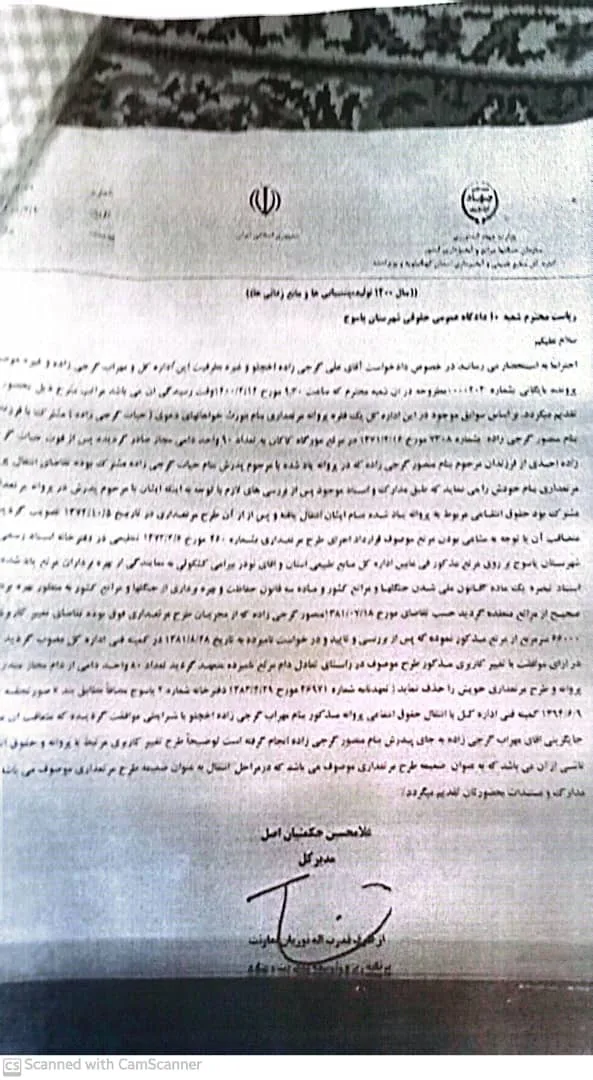
Another document available to this report shows that the matter was reported to the General Directorate even before these letters. In correspondence dated 10 Farvardin 1404, the technical deputy of the General Directorate sent the minutes of the pasture visit and investigation from the pasture owners to the head of Boyer-Ahmad Natural Resources and requested the formation of a case regarding the claim of pasture lease, occupation, and destruction and its submission to the judicial authority. This letter shows that the responsible body deemed field investigation and judicial follow-up of the claims necessary.
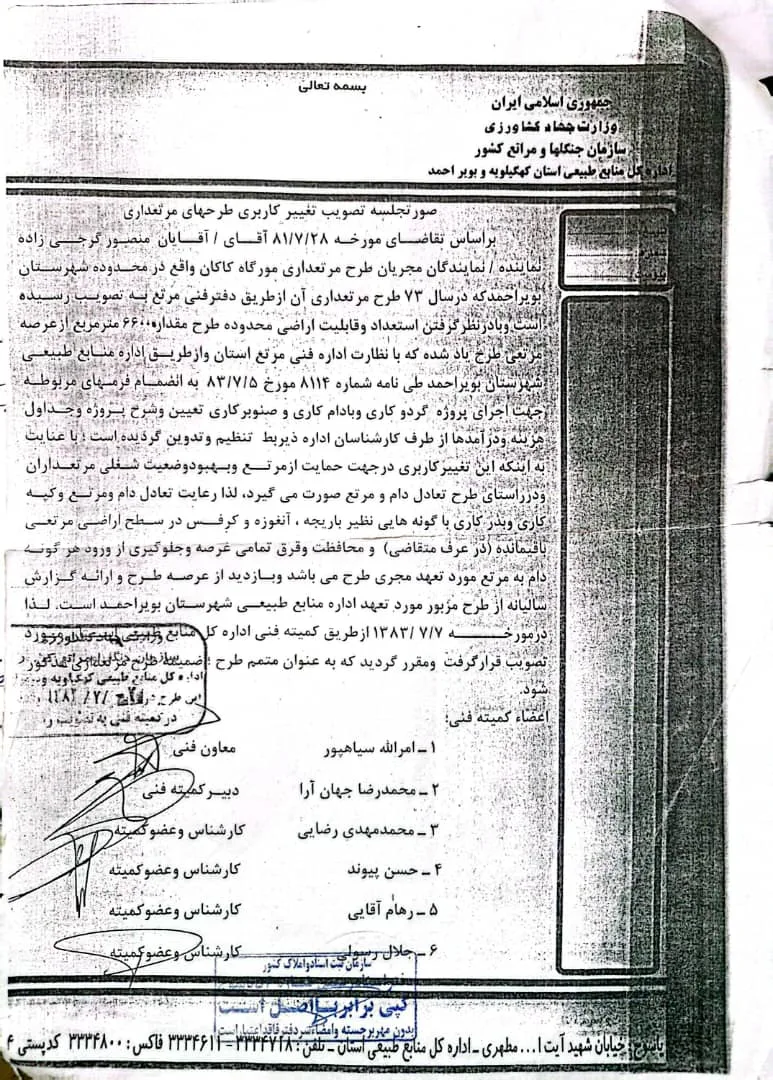
According to informed sources, despite the order to prevent livestock entry, Karjizadeh annually brings about 300 head of livestock into the pasture. These sources say that in 6٫6 hectares of allocated land, instead of the planned crop combination including poplar, almond, and walnut, mostly apple trees have been planted, and the number of walnut trees reaches about 10 to 15. They also claim that the water permit for a spring is issued solely for cultivating three hectares.
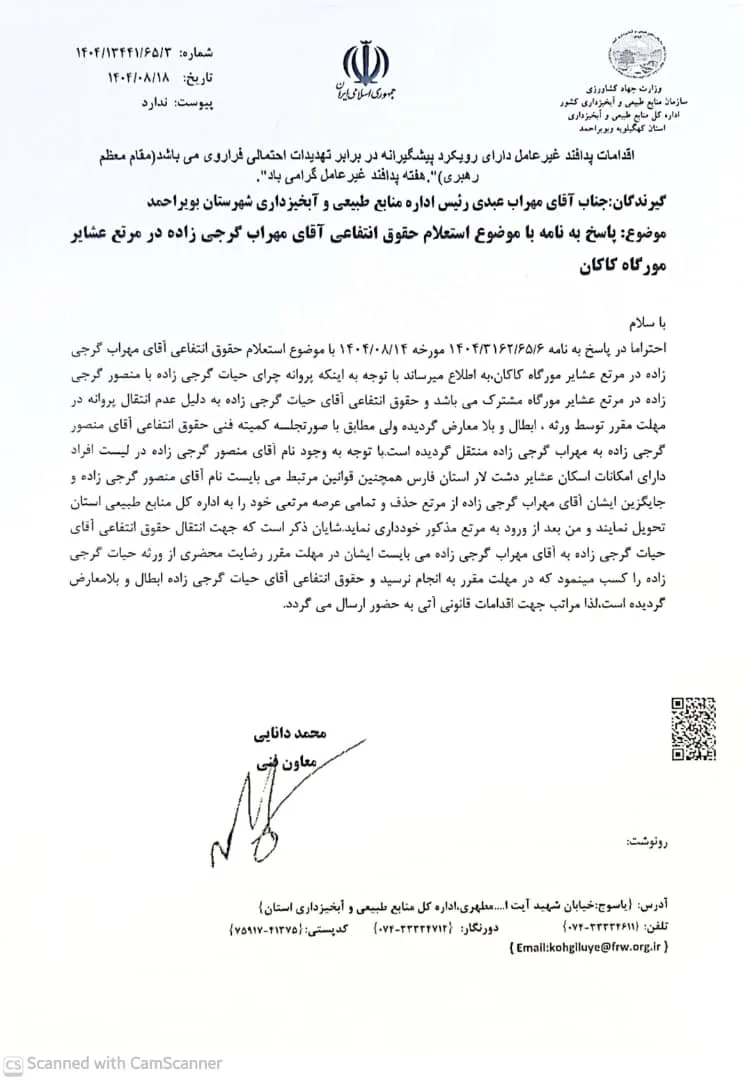
Another aspect of the case is the alleged benefit of Karjizadeh from the facilities of the Dasht-e Lar settlement plan in Qir and Karzin. Informed sources say he has benefited from the D5 well water quota and agricultural land and leases the allocated water with an income of over one billion tomans annually. The claim of receiving two plots of land in the name of his relatives is also raised. If the principle of benefiting from the settlement plan is confirmed, the Natural Resources must explain how the grazing license and the right to use the summer pasture have been determined. The nomadic settlement regulations have mechanisms for introducing a replacement beneficiary and, under specific conditions, canceling the grazing license.
According to informed sources, the main knot of the case now is the influence on the decision-making process. They accuse Mohammad Mahdi Salehi, a senior judicial official, and the Inspector General of Kohgiluyeh and Boyer-Ahmad Province of pressuring Jamal Mousavian, the Director General of the province's Natural Resources, to keep Karjizadeh alongside another pasture beneficiary, repeatedly contacting him and demanding the pasture unit files. Sources also report pressure on middle managers and months-long delays in approving the pasture management plan, stating that several members of the technical committee opposed his request.
In the received information, Salehi's family relationship with Siavash Sami Keshkuli and also political connections in the province have been mentioned. The name Mohammad Movahed is mentioned in this case due to Mousavian's affiliation with him and Gholamreza Tajgardoon as the political support network for Karjizadeh.
A clear response from the General Directorate of Natural Resources to these questions can distinguish between claims and reality: Has the order of 23 Farvardin been implemented? Has the case mentioned in the letter of 10 Farvardin been sent to the judicial authority? What is the latest status of the license, customary rights, cultivation level, and water permit? Until these responses and their supporting documents are published, ambiguity about the fate of the Murgah pasture and the potential impact of relationships on the implementation of administrative decisions remains.