
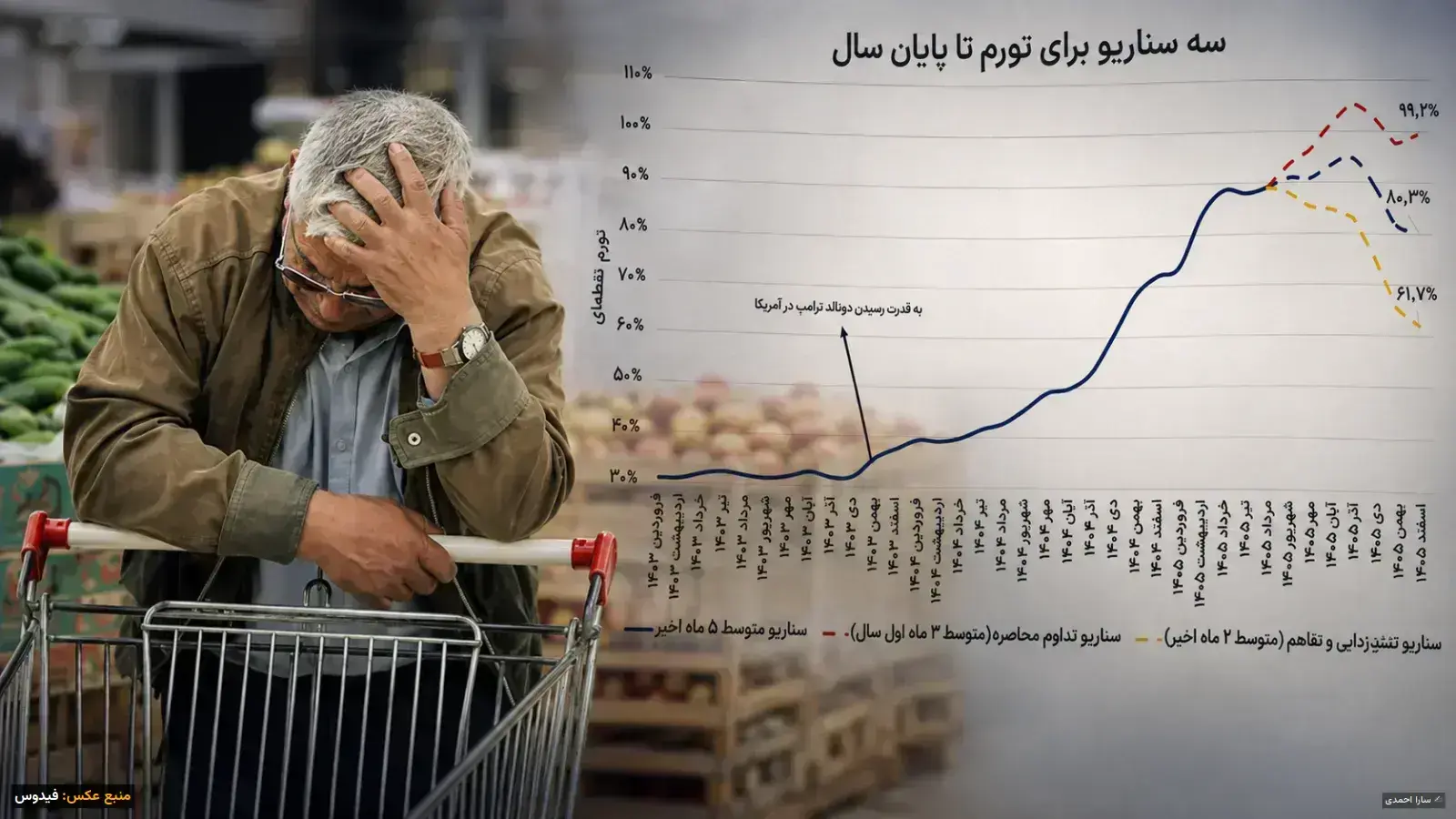
The Iranian economy at the start of the second half of 2026 is facing a challenge greater than the usual price increases. Currency rate surges, foreign trade declines, budget deficits, banking imbalances, and production limitations have painted a picture where even the most optimistic estimates predict heavy inflation by the year's end. In this situation, the concern is not just the final inflation number; rather, the further reduction of purchasing power and society's capacity to endure a new wave of price hikes has become the main worry.
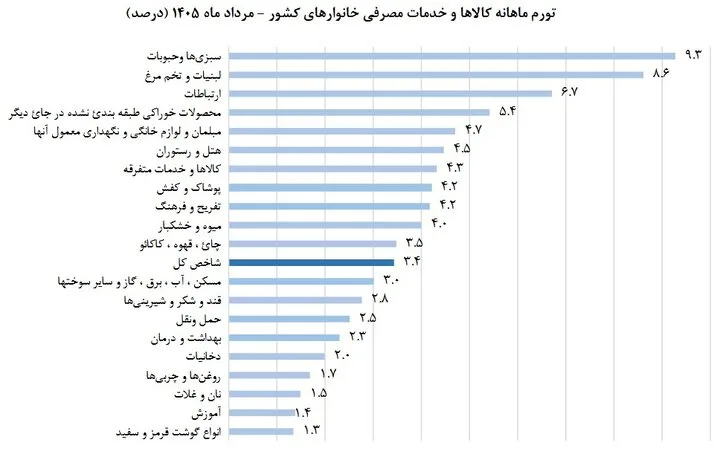
Statistics from August provide a clear indication of the crisis's severity. The Iranian Statistics Center announced a monthly inflation rate of 3.4% and a point-to-point inflation rate of 89%. Central Bank calculations show figures of 3.7% and 84.4%, respectively. Although there is a discrepancy between the reports of the two institutions, both emphasize a common reality: price levels are increasing at an unprecedented speed.
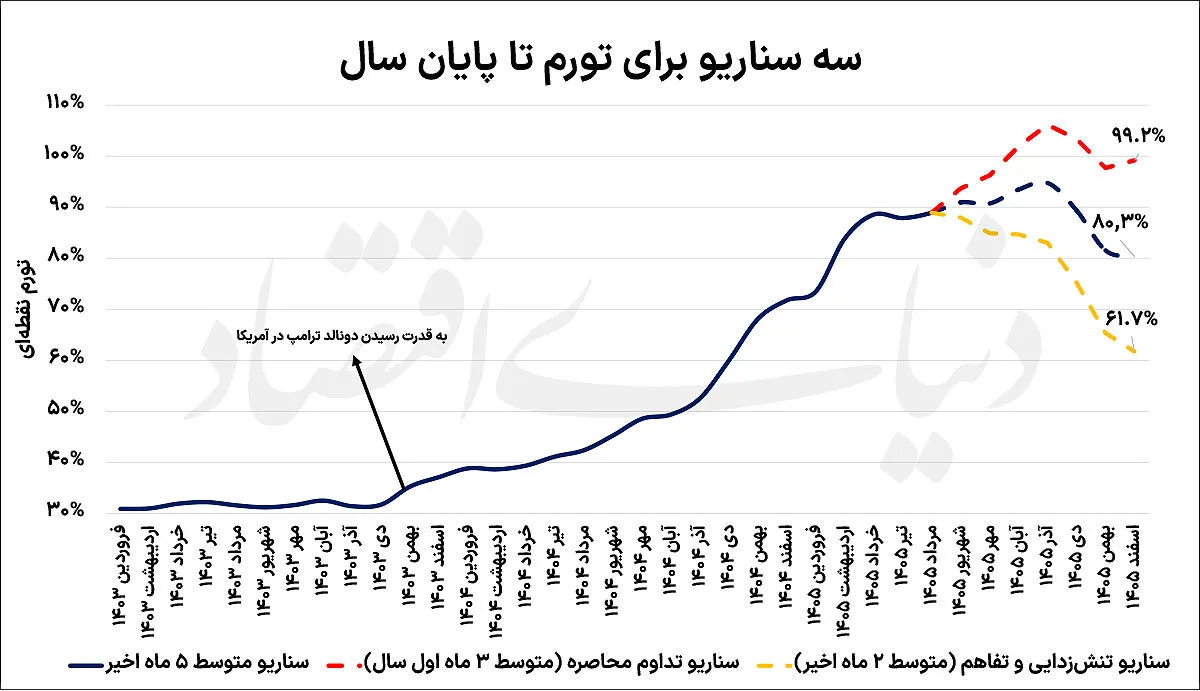
Three Scenarios for Future Inflation
Published estimates outline three different paths for the coming months. If the average monthly inflation reaches 6.4%, the point inflation in March could rise to 99.2%. In a scenario of continued "neither war nor peace" with a monthly inflation rate of 4.8%, the year-end rate would be around 80.3%. Even in an optimistic scenario, with a ceasefire, reduced tensions, and an average monthly inflation of 3.2%, the point inflation in March is predicted to be about 61.7%.
The current inflationary pressure results from the simultaneous activity of several factors. Budget deficits and liquidity growth, banking network imbalances, reduced foreign exchange income, energy crises, decreased production capacity, and increased import costs each form part of the price increase chain. However, the currency rate remains the fastest route for the crisis to transfer to the consumer market.
The increase in currency rates doesn't just make imported goods more expensive. Raw materials, parts, machinery, and the replacement cost of business inventories are also directly affected. A producer who doesn't know at what rate they will procure raw materials in a few months determines today's product price based on potential future costs.
On the evening of September 6, Masoud Pezeshkian announced in a television interview that Iran's exports and imports have decreased by 25 to 35 percent. According to him, the closure or complication of trade routes has caused goods that were previously imported directly and by sea to reach the country through more complex and expensive routes.
Upcoming Economic and Social Challenges
The reduction in exports limits access to foreign exchange resources and increases pressure on the currency market; import declines can also reduce the supply of goods and raw materials. The result of this situation is the simultaneous increase in production costs and consumer prices.
Warnings about such a path are not new. Vahid Shaqaqi-Shahri said in 2025 that continued budget, banking, pension fund, water, and energy imbalances might push the economy towards triple-digit inflation in 2026 and 2027. Masoud Nili also described Iran's economy as being in the "very high inflation" range; a stage that could be the stop before hyperinflation.
A significant part of the current crisis relates to societal expectations. When households suspect that the value of the rial will further decrease, demand for currency, gold, and durable goods increases. Sellers, worried about the rising cost of replacement inventory, raise prices. Thus, fear of future inflation itself becomes a driver of today's inflation.
The government needs more than promises to change this atmosphere. A society that has experienced years of currency rate increases, reduced purchasing power, and rising essential goods prices can only change its economic behavior by observing measurable stability. Even reduced political tensions do not necessarily return prices to the past; because reducing inflation only means slowing the rate of price increases.

Food Inflation on the Verge of 130 Percent
The main pressure is seen in the food market; where point-to-point inflation in August has reached 128%. Such an increase has been imposed on households that have already lost a large portion of their financial capacity. If general inflation approaches the 100% range, price levels compared to the previous year will nearly double, without most households' incomes increasing accordingly.
The government, on one hand, considers price reforms to reduce budget deficits and energy imbalances, and on the other hand, knows that increasing gasoline prices or removing currency supports can exacerbate inflation expectations and social dissatisfaction. The experience of November 2019 showed that a pricing decision in a pressured society could become a trigger for widespread protests.
Therefore, the difference between 62.80% or nearly 100% inflation is not merely a statistical discrepancy. Each scenario will bring a different level of consumption reduction, poverty expansion, market recession, and distrust. The decisive question for Pezeshkian's government is no longer just the March inflation rate; the issue is how much real household income will decrease by the year's end and how far society can afford the costs of food, housing, healthcare, energy, and transportation.