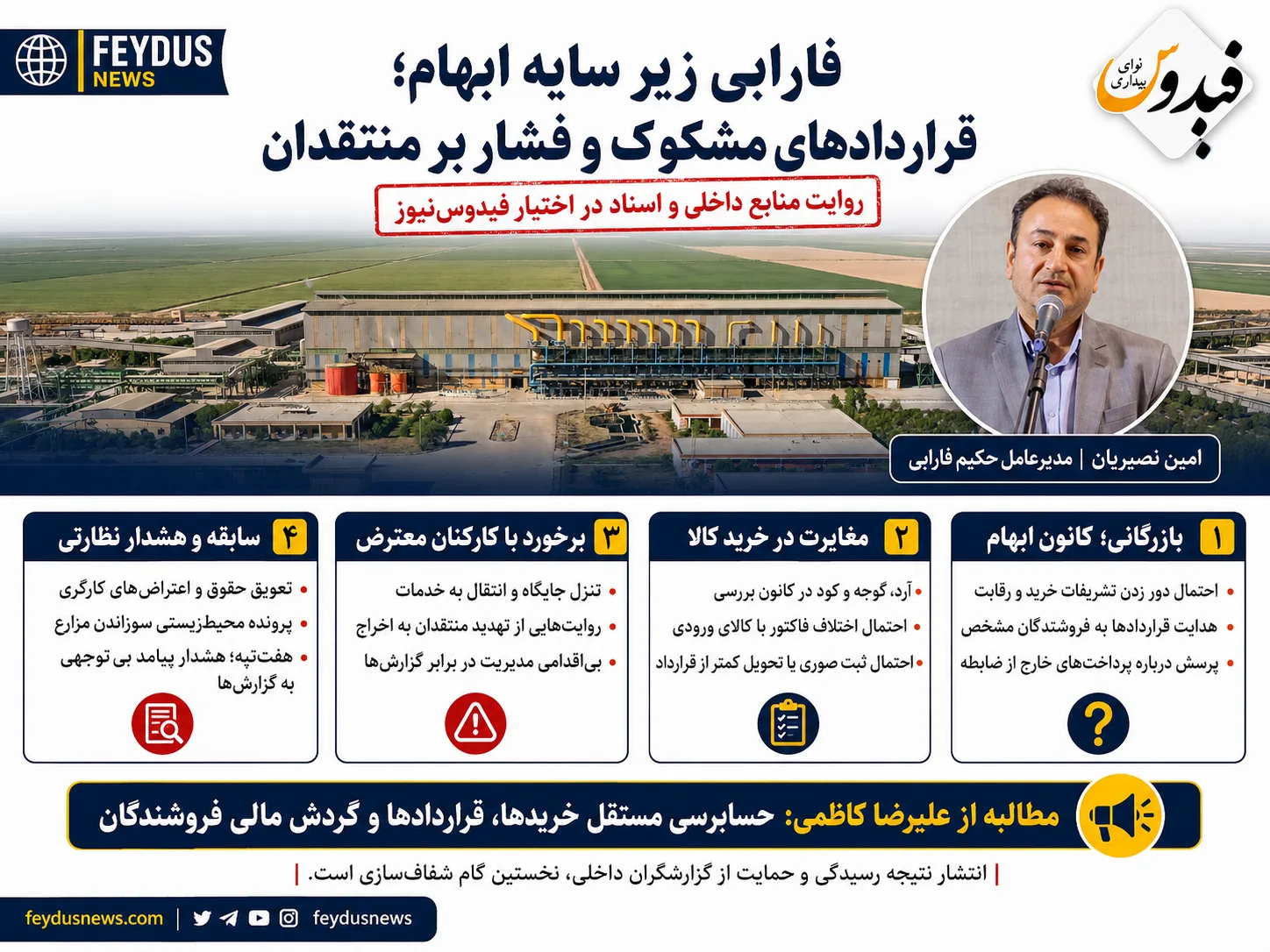
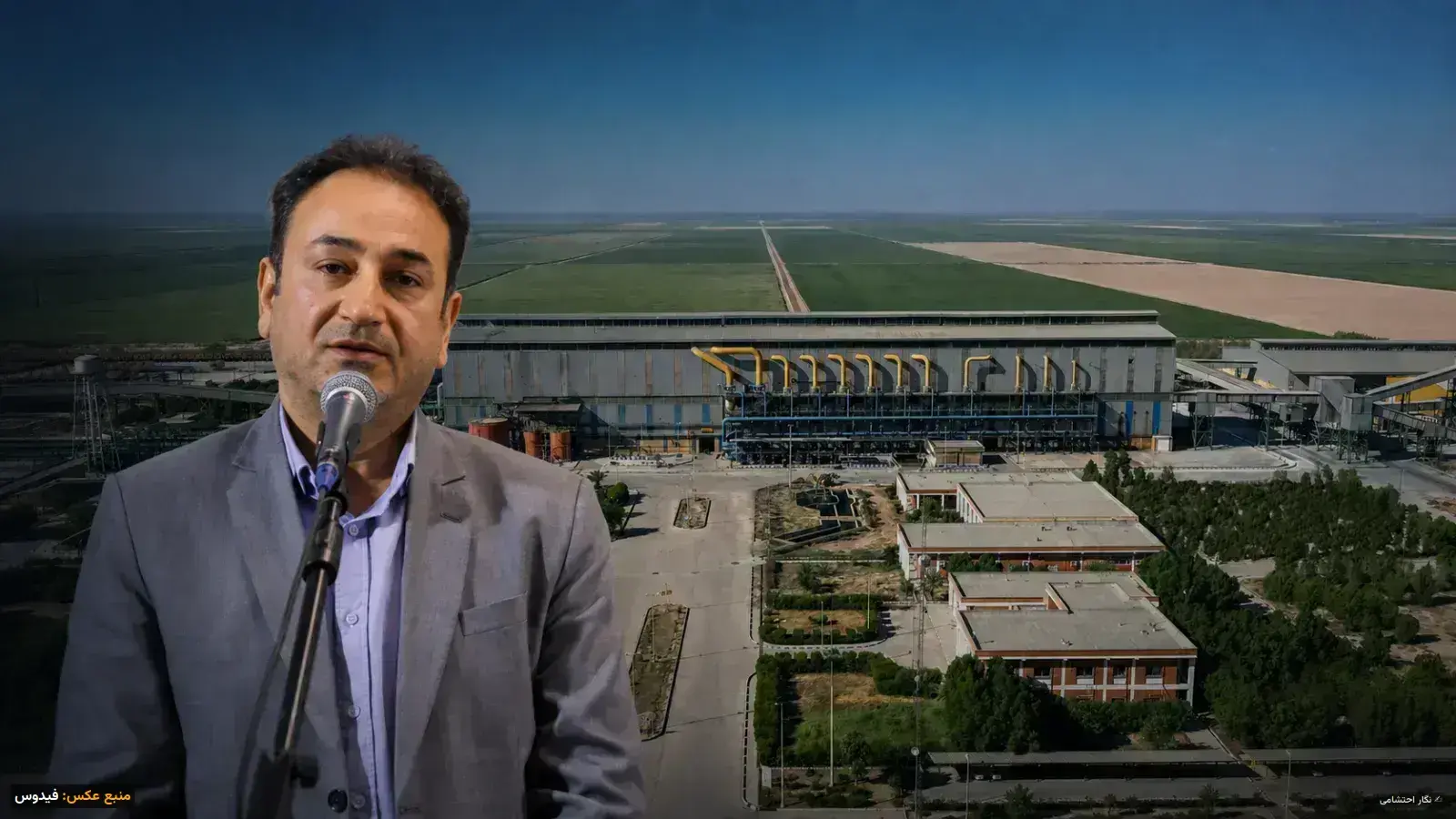
A report from an internal source at Hakim Farabi Sugarcane Cultivation and Industry Company has once again raised the issue of transparency in contracts, the method of purchasing goods, the selection of sellers, and the management's treatment of employees who protest against potential violations.
Company Commerce; The Center of Ambiguity in Contracts and Purchases
According to information provided by internal sources, a significant portion of potential violations occur in the commercial sector and during the process of concluding contracts, awarding contracts, and purchasing goods. This source claims that some contracts have been concluded without fully adhering to competitive regulations or have been directed towards specific sellers and contractors; entities about which there are questions regarding their financial relationships with certain managers and purchasing agents.
The documents and information available pertain to the process of purchasing goods, obtaining quotes, selecting sellers, drafting contracts, and confirming the delivery of items. Based on this, it is suspected that in some cases, approved purchasing laws and procedures have been circumvented, and contracts have been awarded to companies that have made questionable payments to certain individuals associated with Farabi.
Informed sources have pointed to the purchase of items such as flour, tomatoes, and fertilizer, and believe there is a possibility of discrepancies between the amounts recorded on invoices and the actual volume of incoming goods. Additionally, some payments outside the usual procedures between purchasing agents and related officials have raised the possibility of goods being removed, fictitious purchases being recorded, or deliveries being less than the contracted amount.

According to documents the presence of individuals in the commercial, procurement, and legal units is evident, each of whom has facilitated part of the execution process of these contracts. Navid Safidzadeh Procurement Officer, Hassan Eshraghi Head of the Commercial Department and Jamshid Salehi Head of the Company's Contracts Department are among the individuals whose names appear in documents related to the corruption of Hossein Asgari and Amin Nasirian.
Job Demotion and Threatening Critics with Dismissal
Another concerning issue is the treatment of employees who have protested against these processes. According to the internal source, some employees, after raising questions about purchases and contracts, have faced demotion, transfer to service units, or threats of dismissal.
The longstanding connection between Amin Nasirian, CEO of Farabi Company, and Hossein Asgari, the company's commercial director, since their time at the Development Company, strengthens the suspicion of a networked corruption in Farabi, which has resulted in the CEO taking no action to remove him despite the exposure of commercial management violations.
Regarding Amin Nasirian, a key point is his history as CEO of Salman Farsi Cultivation and Industry, during which a series of financial violations and managerial issues ultimately led to his dismissal.
Especially since over the past decade, this industrial unit has repeatedly faced issues with delayed payment of employee salaries and labor protests, and therefore the workforce of this company expected the selection of a manager with a successful track record to manage Hakim Farabi. Considering Nasirian's track record, this issue has essentially been nothing but the continuation of the previous crisis-ridden situation for this company.

From Haft-Tappeh to Other Units; History of Ignored Warnings
The ambiguities raised in Farabi cannot be examined separately from the history of violations and lack of oversight in the Iranian sugarcane industry. The most famous example is the Haft-Tappeh Sugarcane case; a company whose transfer method, use of government currency, resource management, and financial relationships of its former owners turned into a major judicial case. The transfer of this company was eventually annulled with the intervention of the Court of Audit, and its management was entrusted to the Sugarcane Development and By-products Company in the year 1400..
The Haft-Tappeh case did not end with the removal of its former owners. The judiciary spokesperson in Mehr 1404 announced the issuance of an indictment for 14 defendants in the new case. The announced charges included economic corruption, disruption of the currency and monetary system, and currency-related violations associated with the company. This case demonstrated that delays in auditing, ignoring employee warnings, and lack of effective oversight over contracts can turn corporate violations into a widespread crisis.
In other sugarcane units, reports have also been published about discrimination in hiring, sidelining of managers and employees, and the dominance of ethnic or clique relationships over professional qualifications. The ILNA news agency published a report in 1403 about protests regarding the method of appointment and hiring in the Sugarcane Development Company; an issue that, in the absence of a transparent hiring and promotion mechanism, can pave the way for the formation of closed managerial circles and conflicts of interest.
These precedents show that employee, worker, and media warnings should not merely be considered personal dissatisfaction. In Haft-Tappeh, labor protests and initial reports were raised long before the judicial case expanded. The experience of this company can now serve as a warning for Farabi managers and the Sugarcane Development complex: ignoring internal reports will increase the oversight and financial costs of potential violations.
Farabi's Environmental Record and the Need for Independent Auditing
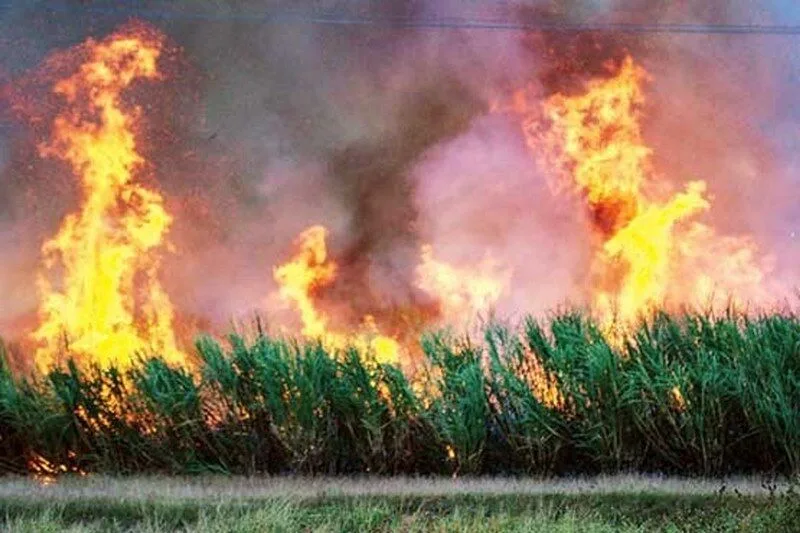
The name Hakim Farabi has previously been mentioned in oversight cases. In the year 1399 the Department of Environmental Protection of Karun County reported the introduction of Farabi, Dabel Khozaei, and Salman Farsi units to the judiciary due to burning fields and causing air pollution. At that time, it was announced that the process of reducing field burning had not progressed according to the commitments of the Sugarcane Development complex.
Reviewing the recent report requires auditing all suspicious purchases, matching invoices with actual goods entry, controlling contractor status reports, examining the workflow of the transaction system, and tracking the financial relationships of sellers with company agents. At the same time, the situation of employees who faced transfer, demotion, or threats after reporting violations should be reviewed, and their job security should be ensured.
Now, Alireza Kazemi, CEO of the Sugarcane Development and By-products Company, must answer what actions have been taken to review the performance of Farabi managers, why employee reports have not led to an independent audit, and on what basis internal critics have faced administrative actions. It is also expected that Amin Nasirian and Hossein Asgari provide a transparent explanation regarding contracts, the method of selecting sellers, and claims related to irregular payments. Public disclosure of the investigation results, the right of response for the mentioned managers, and support for internal reporters are the first steps in clarifying the dimensions of this case.