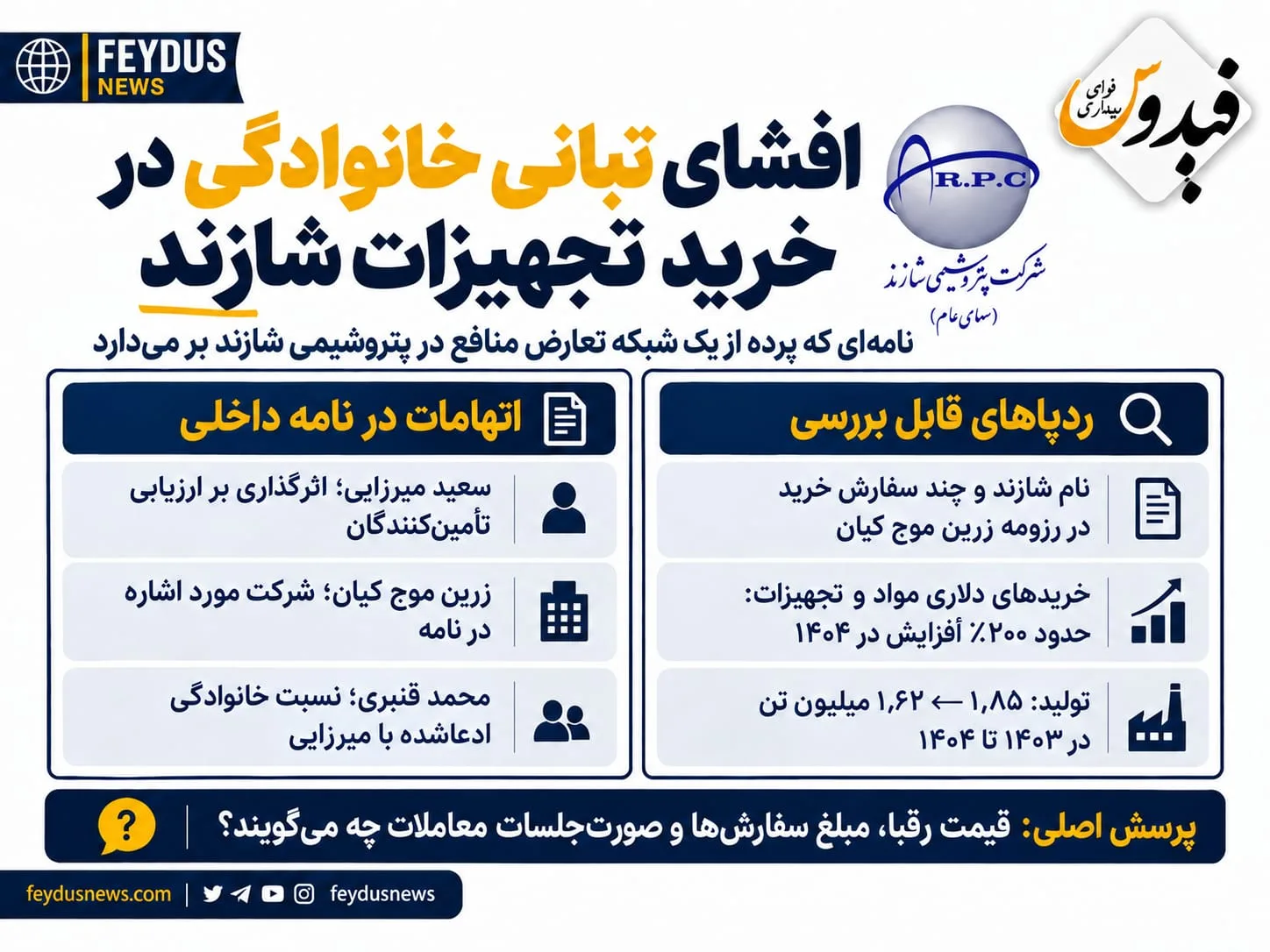
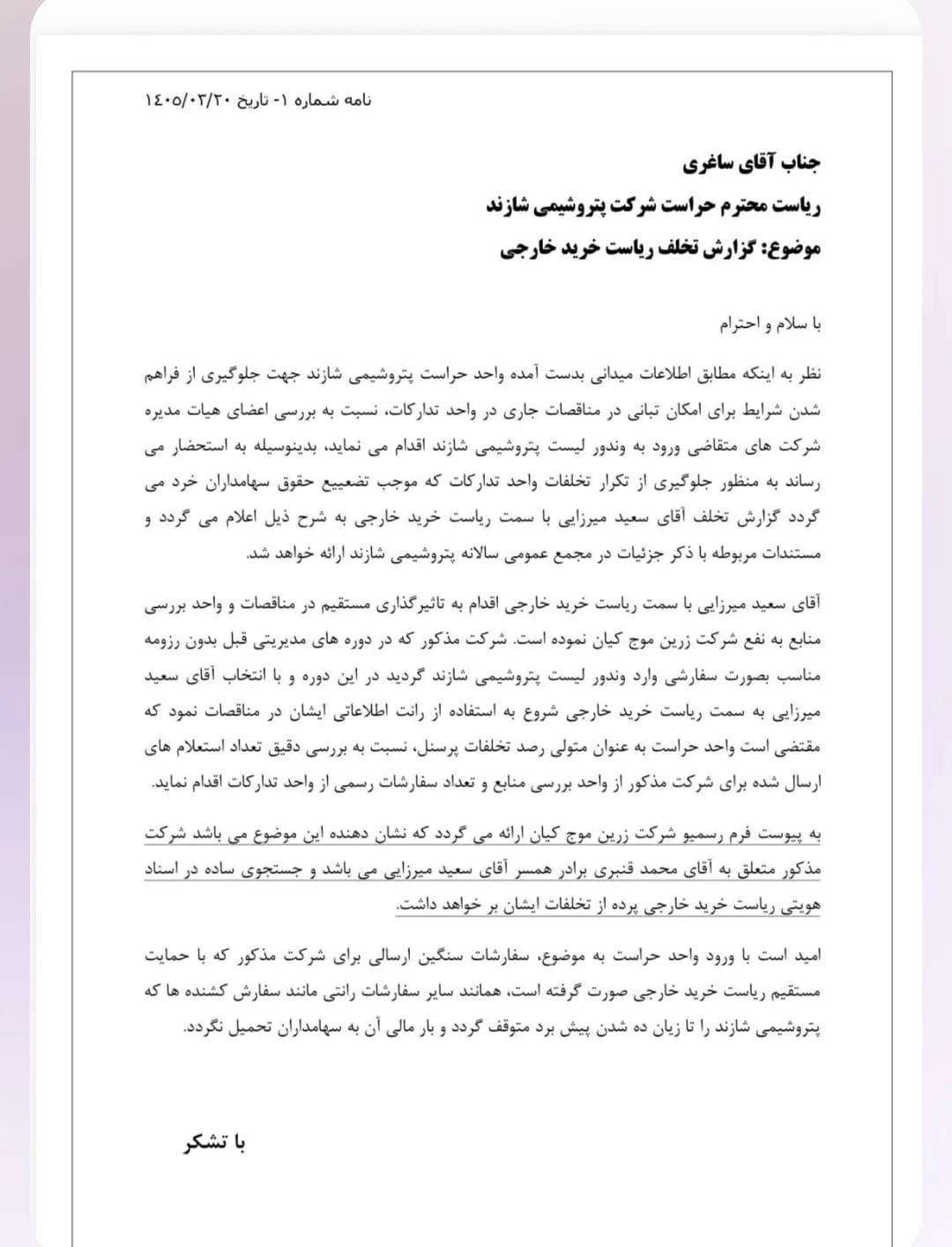
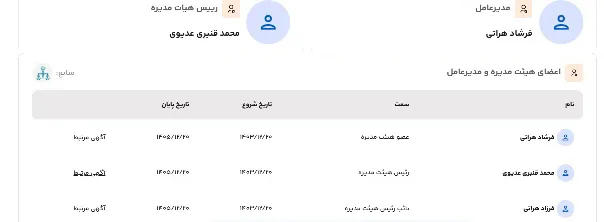
An internal letter at Shazand Petrochemical, dated 20 Khordad 1405, has revealed the involvement of a key official in the foreign procurement unit of this company, Saeed Mirzaei, in tenders and supplier evaluations benefiting the company “Zarrin Moj Kian”, exerting influence; a company whose one of the managers, according to the same letter, is introduced as Mohammad Ghanbari, Mirzaei's "brother-in-law." This internal document calls for security intervention in "heavy foreign orders" and warns that continuing this trend could push the company to the brink of loss. Review of registration records and financial data shows that part of the context of this issue is verifiable.
Collusion; from an Internal Letter to Serious Questions about Tender Integrity
The letter addressed to Saeed Sagheri, the security manager of Shazand, states that Mirzaei in a position related to foreign procurement has had "direct influence" on tenders and has "customarily" elevated Zarrin Moj Kian in the resource evaluation process. The letter's reporter has stated that this company "belongs to Mohammad Ghanbari, Saeed Mirzaei's brother-in-law" and the letter's attachment presents the company's "official form" as evidence.
Zarrin Moj Kian: Supplier or All-in-One for Shazand
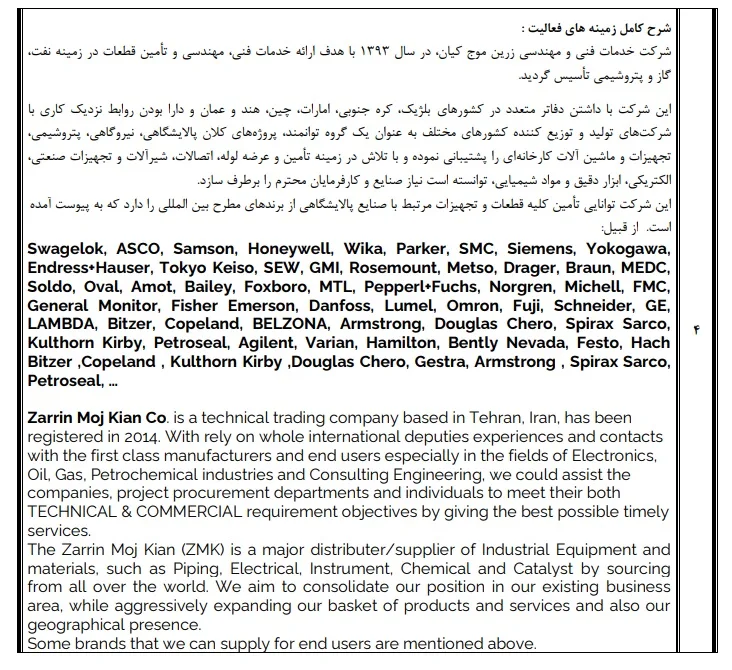
On the other hand, a significant part of the commercial background of the letter explicitly places Shazand Petrochemical in the list of entities where Zarrin Moj Kian (National ID 14004733439) is registered in their "resource evaluation unit." The same resume lists several order numbers (PO) for Shazand; including equipment: Swagelok , ABB , Flender , Hach which the official page of Mohammad Ghanbari Adavi also confirms his connection with this company.
The year 1404 was a year of two faces for Shazand: a decline in production and exports alongside a growth in net profit, with published data showing total production decreased from about 1.85 million tons in 1403 to 1.62 million tons in 1404; while operating and net profits have increased. Management has attributed part of the production decline to major repairs and the halt in gasoline exports.
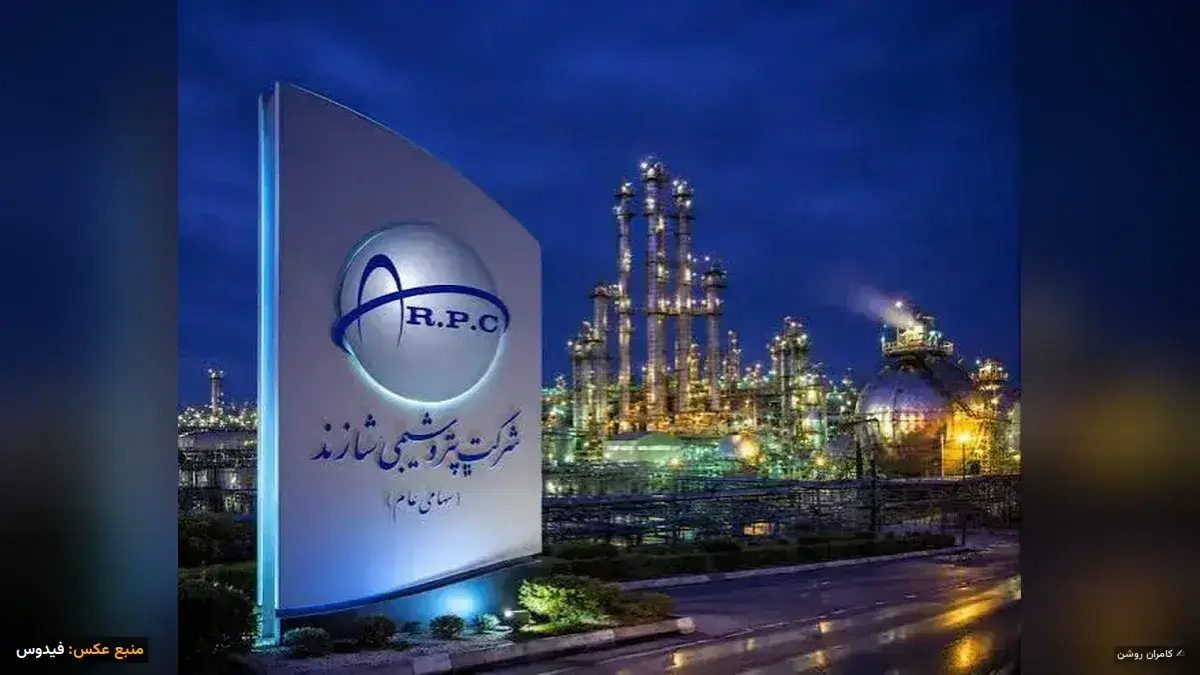
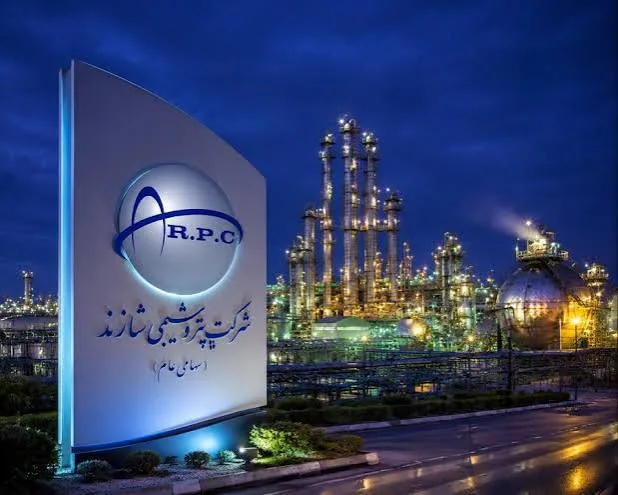
During the same period, dollar purchases of raw materials and equipment increased by about 200 percent. This increase, alongside the production decline, raises concerns about the integrity of foreign purchases; especially when an internal letter speaks of "information rent.". Shazand Petrochemical, with the stock symbol "Sharak," is one of the largest petrochemical complexes in Iran. In Esfand 1402, a 51.32 percent block of the company's shares, worth about 25 thousand billion tomans, was transferred from a group affiliated with Bank Melli to Tehran Oil Refining, a transaction that changed the company's managerial control and was met with protests from representatives and the involvement of the Article 90 Commission.
Special Audit and Legal Case Formation Against Former Managers
With the formation of a special audit committee, part of the corruption network of Shazand managers has been exposed, leading to the formation of a legal case against the former CEO and six former managers. The purchase of about 80 tractor units is an example of "unprofessional" decisions by the equipment procurement managers, indicating a long-standing history in Shazand Petrochemical's structure.
Unanswered Questions; What Can Clarify the Nature of the Case
To clarify the main nature of the corruption, Shazand's internal documents must be published by the inspection organization: the date of Zarrin Moj Kian's entry into the resource list, the members of the evaluation and transaction committee, competitors' prices in tenders, order amounts, transaction commission minutes, the method of declaring or not declaring conflicts of interest, and the role of individuals in purchase decision-making, which given the family relationship, the lack of public disclosure is a case of administrative violation and breach of tender integrity principles.
This case once again shows that the governance and oversight structure in Iran's petrochemical industry, under the shadow of the Islamic Republic, continues to struggle with a lack of transparency, conflicts of interest, and the absence of independent oversight mechanisms; weaknesses that threaten not only transaction integrity but also public trust and shareholder interests.
Publishing the results of the security review, tender documents, and the status of former managers' cases can clarify whether the 20 Khordad letter was merely an internal warning or an indication of a deeper problem in the procurement system of one of the country's largest petrochemical companies.