
If we only examine the oil trust case from the angle of a few traders' debts and the non-return of proceeds from oil sales, a more important part of the story is overlooked: who selected the trusts, what structure deemed them trustworthy, and how a network of intermediaries managed to access oil shipments and currency transfer routes for years?
The gathered information speaks of a network where some members introduced themselves as having connections with security agencies or, due to previous backgrounds in these structures, had the ability to infiltrate regulatory and executive sectors. However, the determining point is that the activities of this network should not necessarily be equated with the official performance of these institutions.
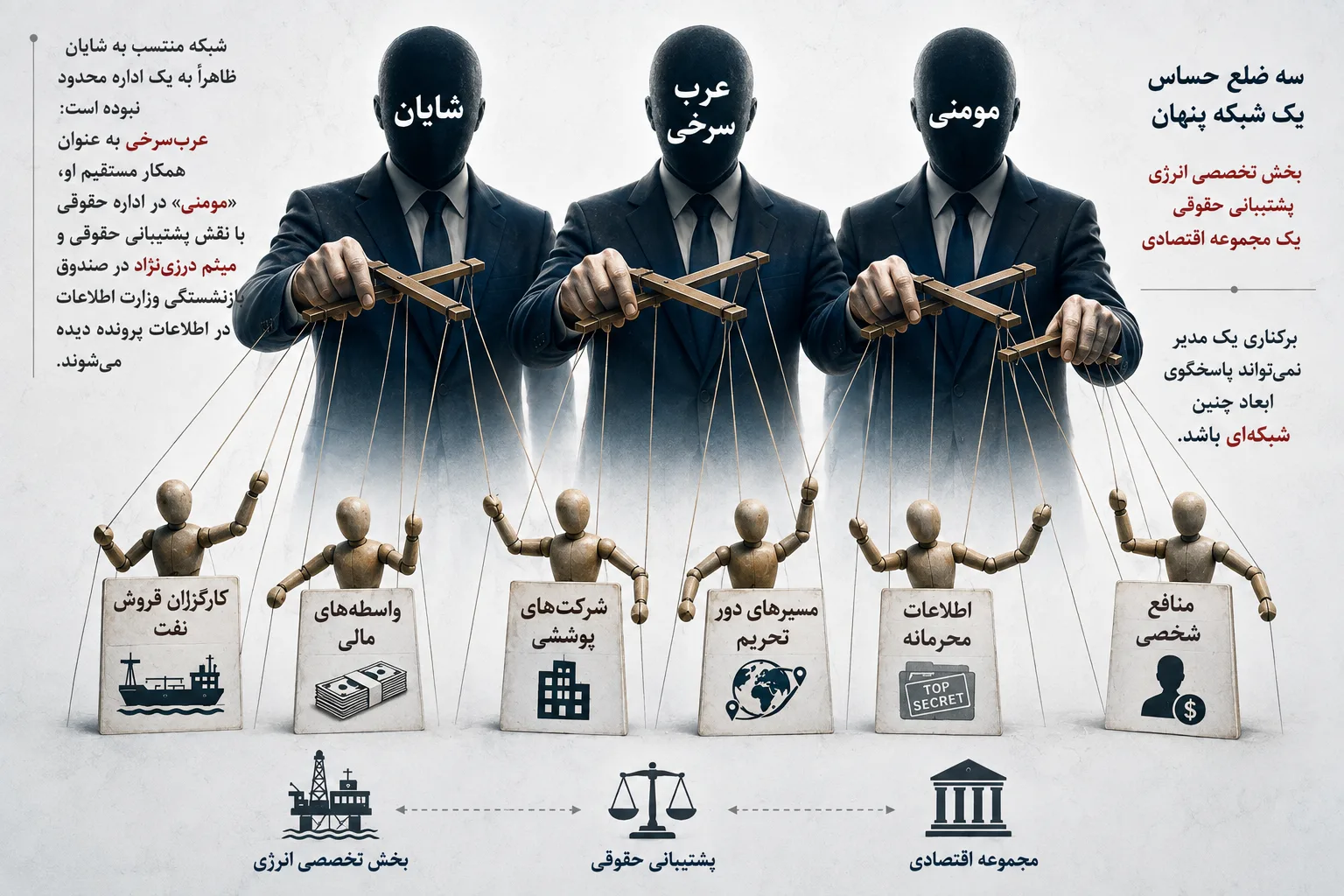
The image formed from the available information presents us with a circle of sidelined figures or those with a history of security activity who have managed to use past connections, collusion, influence, and according to sources, bribery, to place close individuals in critical points of the oil sales network, oversight, legal support, and intermediary selection.
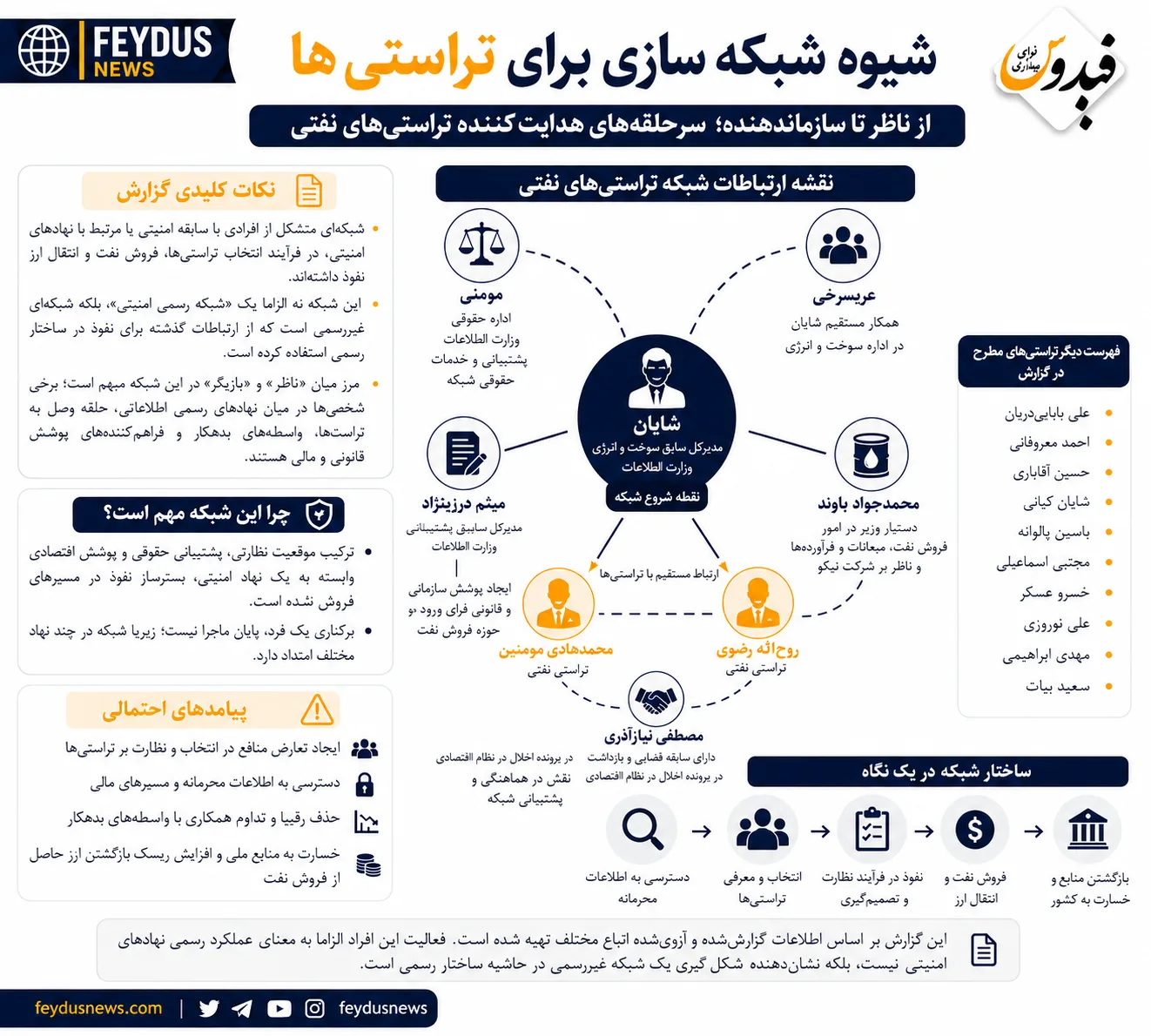
Shayan; The Starting Point of the Network
At the center of this narrative is an individual with the alias Shayan; a former Director General of Fuel and Energy at the Ministry of Intelligence, who according to the base report information, has been dismissed from his position. His position's importance stems from the fact that the Fuel and Energy Administration in the Ministry of Intelligence structure should essentially have a security and oversight role in the energy sector. However, the gathered information about the trust case claims that the network associated with Shayan gradually moved beyond a supervisory position and also took part in organizing and selecting trusts.
This role change is one of the most crucial points of the case. An institution that should assess the credibility of an oil sales intermediary, oversee the return of resources, and report on the continuation or termination of cooperation with a trust, if simultaneously influenced by individuals involved in introducing those intermediaries, the line between "observer" and "player" disappears.
The base report information shows that the circle associated with Shayan was not limited to the Fuel and Energy Administration. The name Arab-Sorkhi has been mentioned as Shayan's direct collaborator in this administration, and alongside him, an individual named Momeni in the Legal Department of the Ministry of Intelligence has been mentioned, who according to available information, was responsible for the network's legal support and services.
The name Meysam Darzi-Nejad, Director General of the Ministry of Intelligence's Pension Fund, is also mentioned in this case. According to documents, the Pension Fund was one of the routes that provided the possibility of creating organizational and legal coverage for entry into the oil sales sector.
A Network Beyond the Fuel and Energy Administration
Putting these pieces together is very important: on one side, the specialized Fuel and Energy Administration; on the other side, the Legal Department; and on the third side, an economic entity affiliated with the Ministry of Intelligence. The base report also concludes from this combination that Shayan's dismissal alone cannot mean the end of the case, because the main question is about the extent of a network that had spread across several different sections.
However, in the narrative of sources, these individuals should not be considered representatives of the entirety of a security institution. What needs to be examined is the formation of an informal network on the margins of the official structure; a network composed of individuals, some of whom have been sidelined from previous positions but have maintained the connections and access created during their active period and used them to create circles of influence in the executive and oversight structure.
Another important name in this case is Mohammad Javad Bavand. His importance is primarily due to his background combination. According to the base report, Bavand has a history of activity in the economic sections of a security structure and then entered the official structure of the Ministry of Oil.
He later assumed the position of Assistant to the Minister in Oil Sales, Condensates, and Products and oversaw the NICO company in a position directly related to Iran's foreign oil trade. His name is also associated with two important trusts in this case, Mohammad Hadi Momenin and Rouhollah Razavi.
Niazi-Azari and the Coordination Circle
This position raises an important question about the mechanism of selecting trusts. If oil sales intermediaries required security approvals and at the same time individuals with a history of presence in security structures had influence in the official oil sales sector, it must be determined to what extent the trust selection process was based on official regulations and to what extent it was influenced by informal networks.
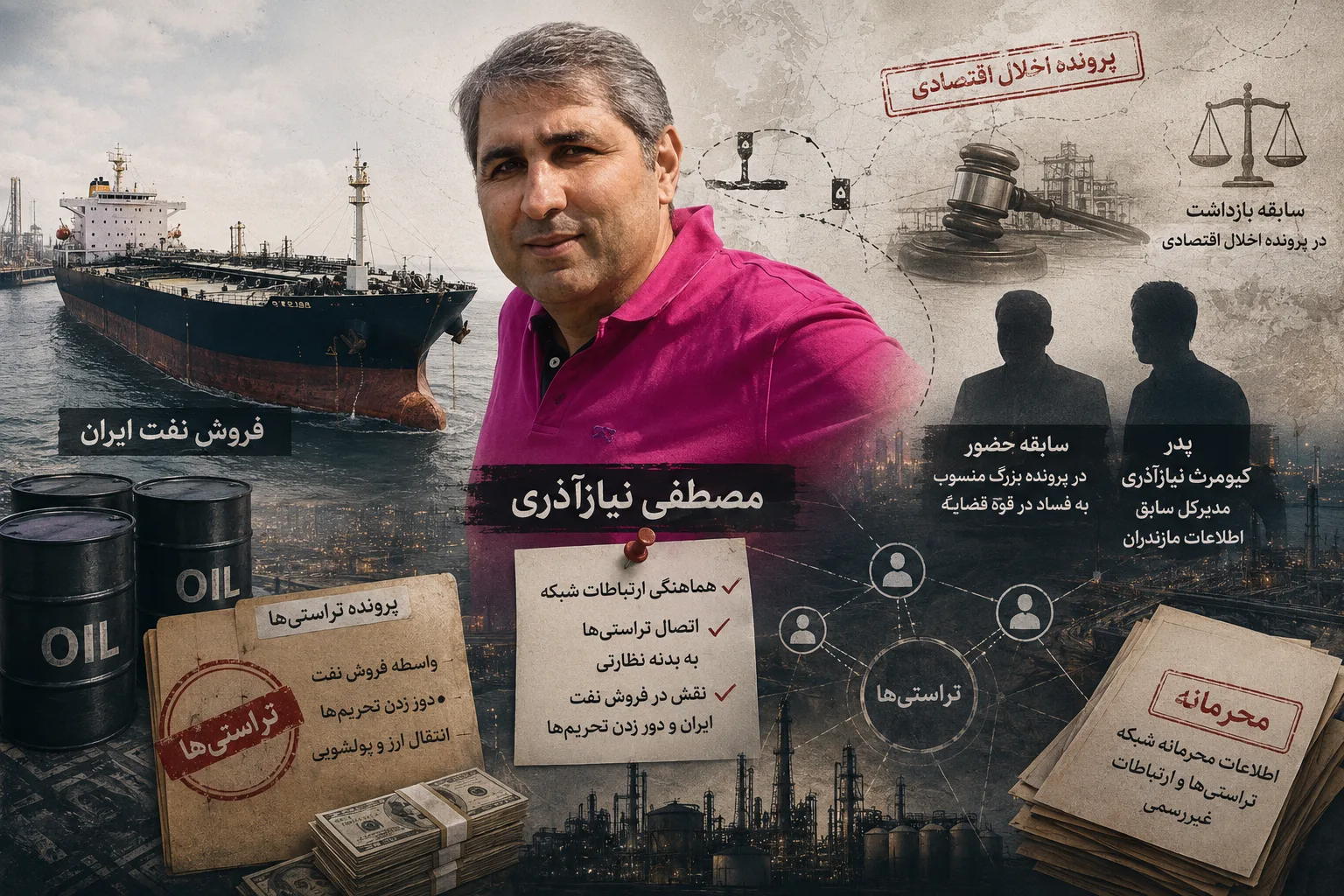
The name Mostafa Niazi-Azari is also mentioned in the gathered information about the trust network. He was previously mentioned as a defendant in one of the major cases attributed to corruption in the judiciary and has a history of arrest in the economic disruption case.
His family connection is also noteworthy. His father, Kiumars Niazi-Azari, is a veteran manager of the Ministry of Intelligence and former Director General of Intelligence in Mazandaran. In the narrative presented in the base report, Mostafa Niazi-Azari's potential role in coordinating the network's connections within the intelligence body is one of the topics deemed necessary for investigation.
In fact, if Shayan was at the center of the trust selection and organization network, Bavand was the connection point to the official oil sales structure, and Niazi-Azari was considered one of the potential coordination circles. At a lower level, trusts like Momenin and Razavi are positioned, who were given access to oil resources and the financial network.
Mohammad Hadi Momenin and Rouhollah Razavi in this report are no longer important from a company background perspective, but their position in the network is the focus. The available information describes Momenin and Razavi in a related network, and Bavand's name is also mentioned in connection with these two individuals.
Razavi, according to the base report, had become one of Shayan's trusted individuals, and his office in Kamraniyeh, Tehran, was introduced as the place for communications and negotiations related to oil transactions. Additionally, sources claimed that he provided information about some rival trusts to the network to eliminate them from the market.
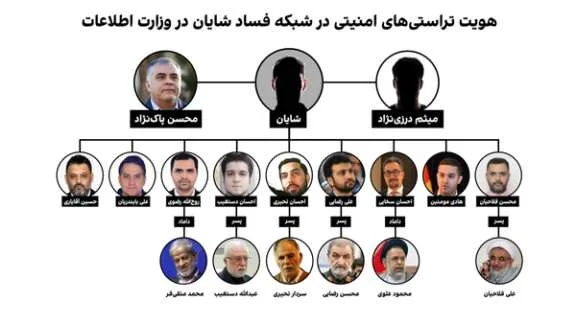
The list of individuals mentioned in the case is much broader. In the obtained documents, alongside Shayan, Bavand, Niazi-Azari, Momenin, and Razavi, the names Hossein Aghayari, Ali Bayandourian, Ahmad Maroufani, Ehsan Sokhaei, Ehsan Taheri, Mohsen Fallahian, Ali Rezaei, and Ehsan Dastgheib are also seen.
Some of these individuals are introduced as having family connections with political and security officials. Ehsan Sokhaei is introduced as the son-in-law of Mahmoud Alavi, the Minister of Intelligence in Hassan Rouhani's government. Ehsan Taheri is also introduced as a well-known currency exchange operator, with reports attributing the non-return of about 700 million dollars of oil resources to him. In the same narrative, his arrest and subsequent departure from the country are mentioned.
The name Ali Rezaei, son of Mohsen Rezaei, is also among the prominent figures in the case. The base report speaks of his long stays in Dubai and his recognition there as an oil trader.
Ali Bayandourian is also introduced as a more veteran figure who has been active in oil and petrochemical product sales through a network of registered companies in Iran and Southeast Asia. According to source narratives, he was operating in a parallel oil sales circle before joining Shayan's network, and this issue sometimes led to conflicts between him and Shayan. In the continuation of this narrative, Ahmad Maroufani is introduced as a rival that Shayan entered the field against Bayandourian.

The sum of this information does not present a picture of a single, centralized network; rather, the base report speaks of several parallel and sometimes rival political and security networks, each having their trusted trusts, banking channels, and currency exchanges, competing for a larger share of oil shipments.
In such a structure, a security background or presenting oneself as connected to security institutions can become an asset for building trust, accessing information, and infiltrating official processes. The issue that now needs to be clarified is how these informal networks managed to position their individuals in oversight and executive sections and how much of this infiltration was formed through relationships, collusion, and bribery.
For this reason, reducing the case to the arrest or pursuit of a few trusts leaves the main part of the story unanswered. The main issue is answering this question: Is the trust case the story of a few rogue brokers, or is it the story of a network that produced those brokers?