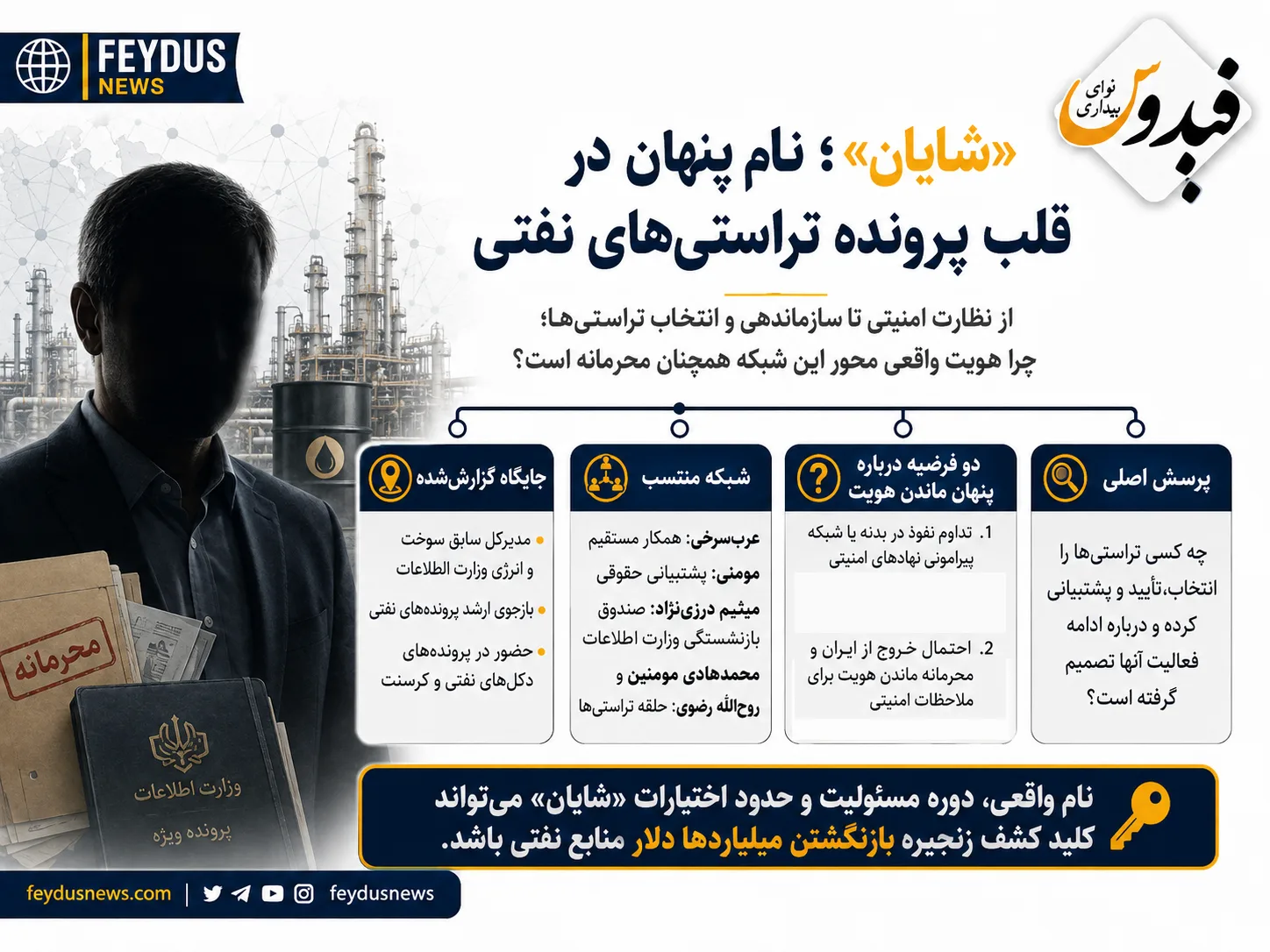
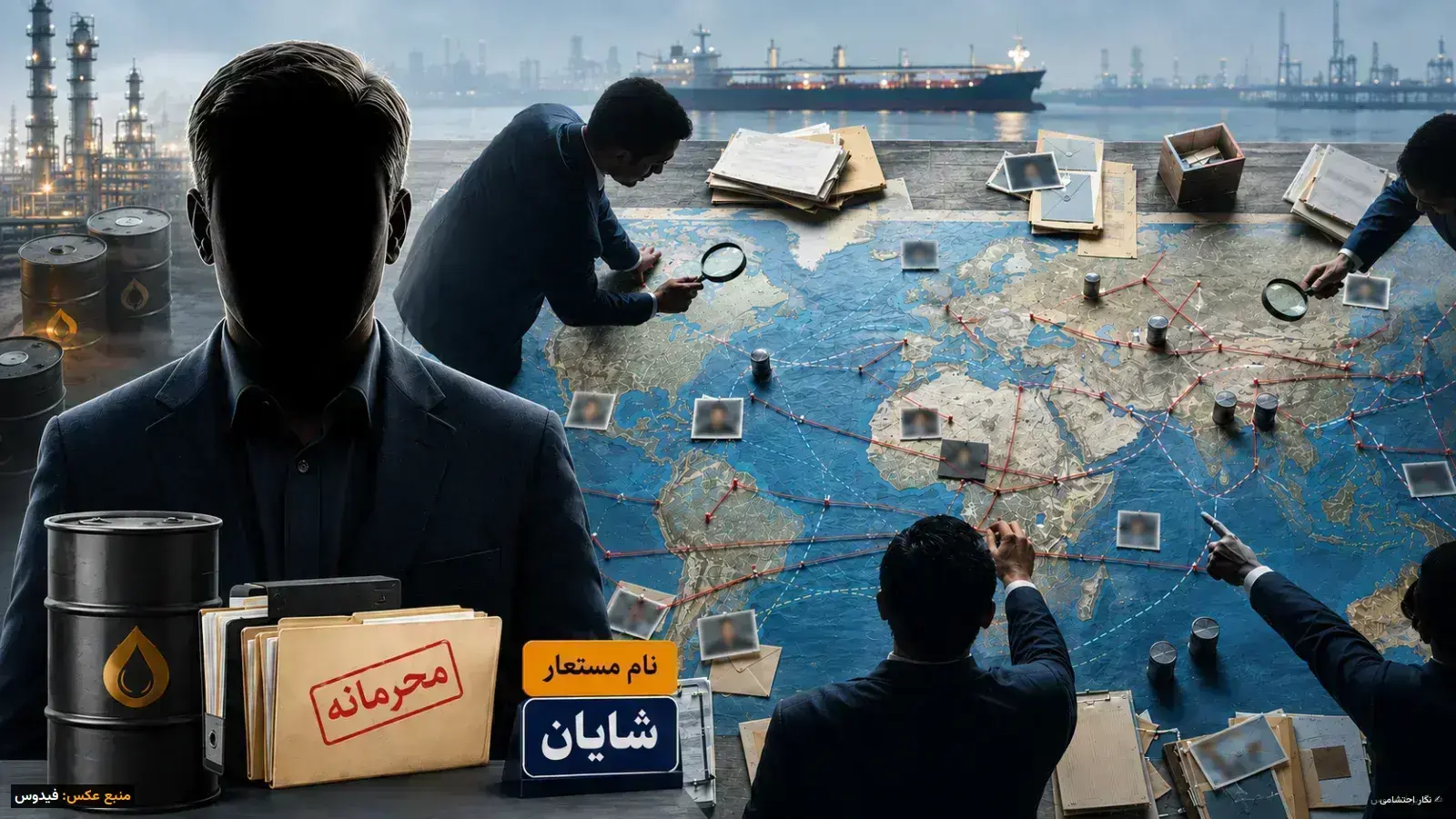
In recent weeks, the oil trusts case has been associated with numerous names, but one of the most enigmatic and important of these is 'Shayan'. This name is mentioned in reports as an alias, and the true identity of its owner has not yet been officially announced. Shayan is introduced as the 'former Director General of Fuel and Energy at the Ministry of Intelligence' and is said to have been dismissed from his position. Existing documents place him at the center of a network that likely exceeded its supervisory duties and engaged in the organization and selection of oil trusts.
Examining other sources does not help clarify his identity. Some media have reported that, in addition to managing the fuel and energy sector, Shayan was previously a senior interrogator at the Ministry of Intelligence in major oil cases and was involved in cases like oil rigs and Crescent.

A Network Beyond a Department
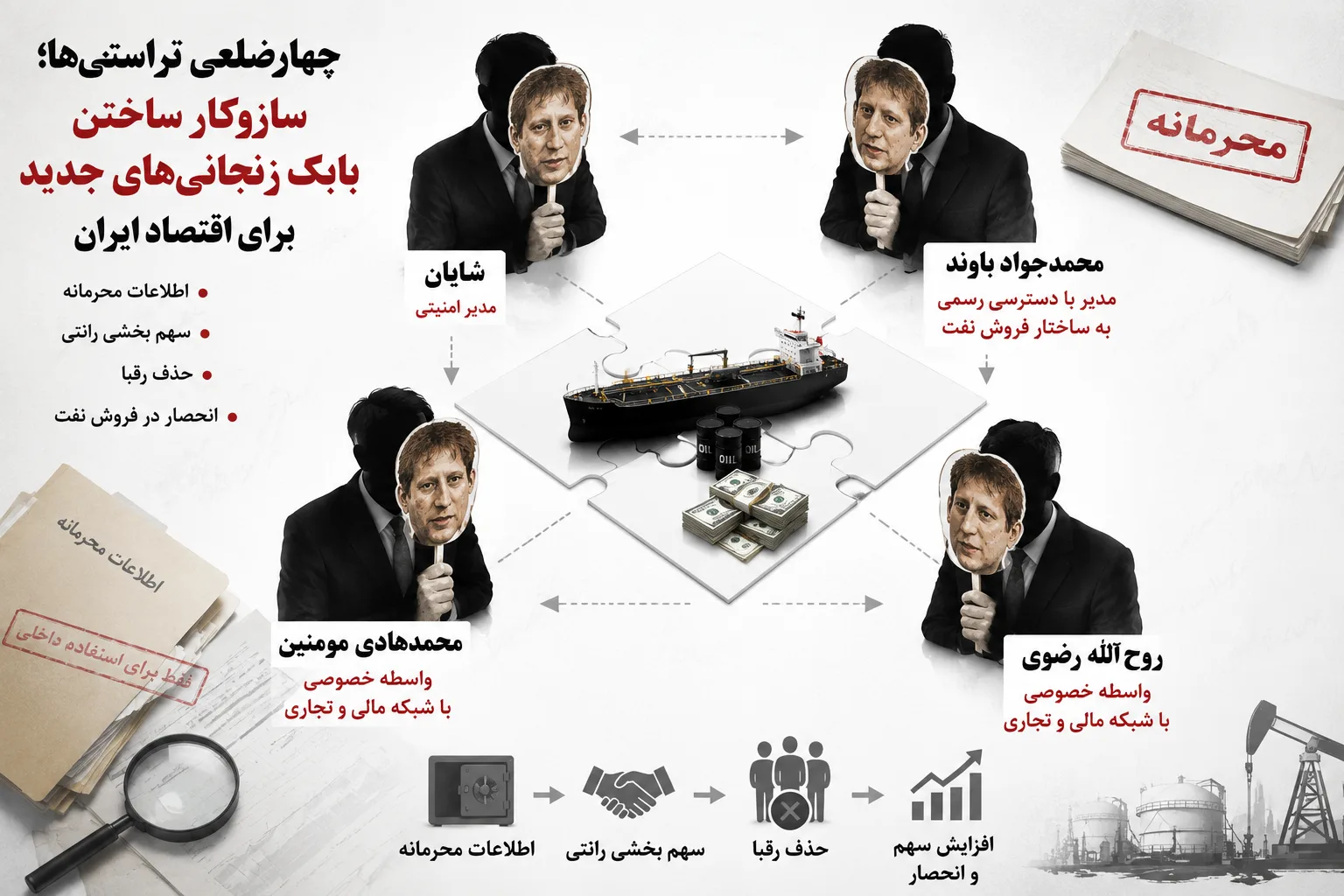
Shayan's significance is not limited to his position. Reports indicate that the network associated with him was not confined to the fuel and energy department. Names like Arab-Sorkhi as his direct colleague, a person named Momeni in the legal department of the Ministry of Intelligence as a legal support provider, and Meysam Darzi or Darzinejad, Director General of the Ministry of Intelligence's Pension Fund, have been mentioned in connection with this structure.
In the private sector, names of trustees like Mohammad Hadi Momenin and Rouhollah Razavi appear. It is even claimed about Razavi that he became Shayan's trusted person and provided information on rival trustees to remove them from the market. External reports also list individuals like Ali Bayandourian, Ahmad Maroufani, Ehsan Sokhaei, Ehsan Tahiri, Mohsen Fallahian, Ali Rezaei, and Ehsan Dastgheib as members associated with Shayan's network.
With such a range of connections, the question becomes more significant: why have almost all parts of the network been introduced by name and details, but the person introduced as its core remains behind an alias?
Hypotheses on Shayan's Hidden Identity
In the absence of official information, two hypotheses can be examined regarding this situation; hypotheses for which there is currently insufficient evidence to confirm either. The first hypothesis is that contrary to reports of Shayan's dismissal, he still has some presence or influence within the security bodies or their surrounding network. In this case, the remaining connections could serve as a shield to prevent the release of his real name and background. This hypothesis gains more importance when even reports claiming his imminent dismissal or confrontation have refrained from disclosing his identity. Although Shayan's dismissal, if true, is not the end of the story; because the network associated with him extended into specialized, legal, and economic sectors.
But the second hypothesis is more sensitive: the possibility of Shayan leaving Iran. Some figures associated with the trusts case have reportedly left Iran, and Tehran's prosecutor has announced that cases have been filed for 15 trustees and a red notice has been requested from Interpol for them. If Shayan has also left the country, revealing the true identity of a manager with a security background could make it easier for opponents of the Islamic Republic or foreign entities to identify his residence, travel history, and ultimately pursue him internationally.
This is merely a hypothesis, but considering Shayan's high security rank, revealing his identity and information outside Iran could be far more costly for the Islamic Republic from a security perspective than identifying a trader or oil intermediary. Another scenario along this hypothesis is conceivable: that the security apparatus, in the event of Shayan's departure, deliberately keeps his identity confidential to track and access him before his details become known to others. There is no public evidence for this scenario yet.

Despite all these hypotheses, one issue remains clear. Almost all published narratives about the 'Shayan network' place this individual at a decisive point between security oversight, trustee selection, and oil sales network organization. Analysts also see the issue as going beyond the non-return of funds and ask who selected the trustees, supported them, and decided on their continued activities.
Therefore, until Shayan's real name, exact position, term of responsibility, scope of authority, and his connection with the executive and supervisory managers of oil sales are clarified, delving into the depths of the trusts case will be challenging. The Shayan affair is not just about identifying an accused manager; it could be a key to finding other officials who enabled the selection, approval, and continuation of trustee activities now blamed for billions of dollars in unreturned oil resources.
As a result, perhaps the most important name in the trusts case is not the names that have been disclosed so far, but the one that no one has yet mentioned: the real name of 'Shayan.'