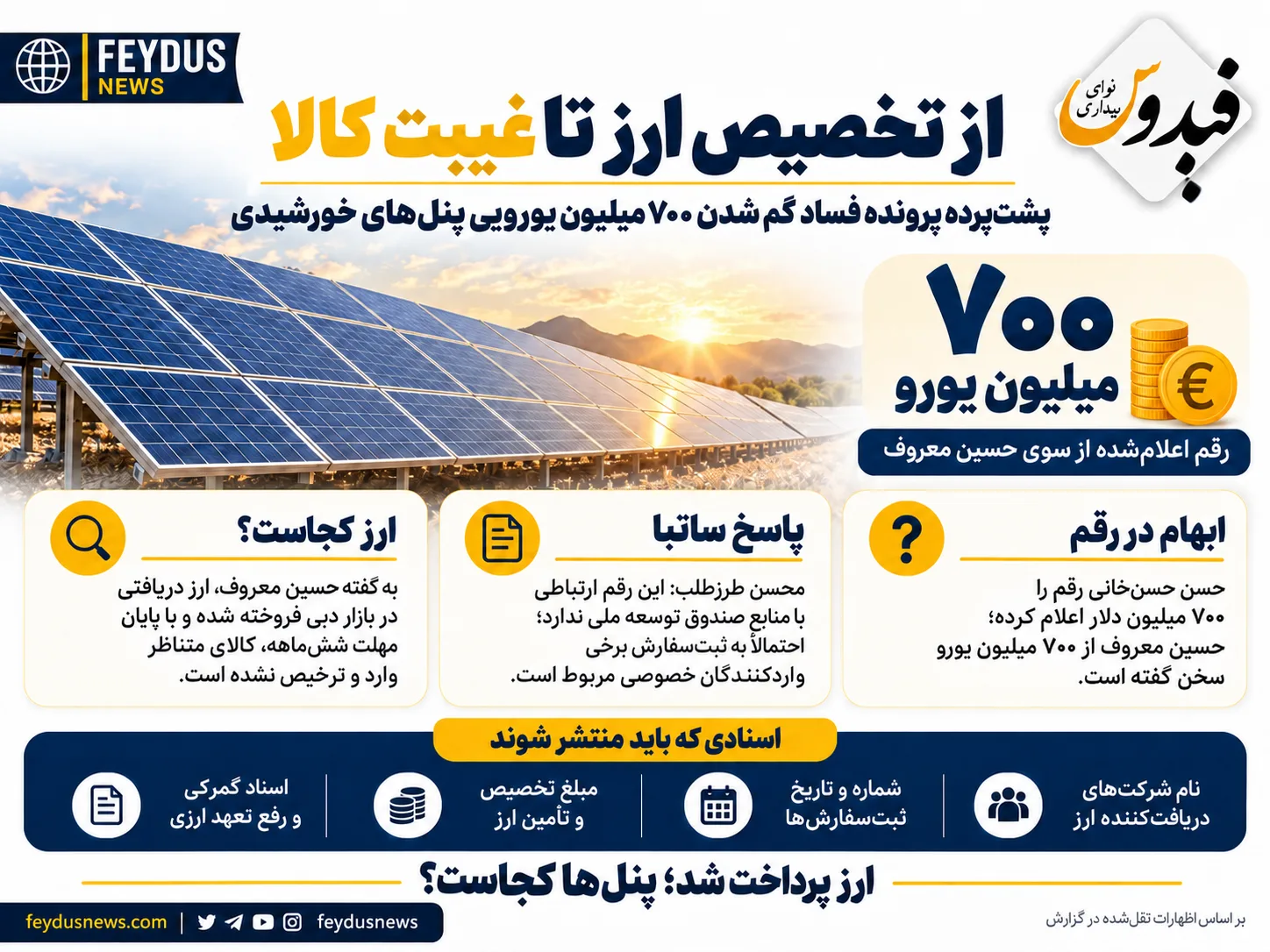
Amid the electricity crisis and government promises to develop renewable energy, the disappearance of about 700 million euros of government currency allocated for solar panel imports has become one of the most serious challenges to the economic transparency of the Islamic Republic. Responsible officials have not yet published the list of currency recipients, order registration numbers, and corresponding import documents, creating heavy questions about the currency allocation mechanism, customs oversight, and the role of senior economic managers.
Government Currency Went to Dubai, Panels Never Arrived
The main story began with a simple question: Where is the currency paid for solar panel imports? Hassan Hassan-Khani, an economic analyst, announced in September 1405 that about 1.5 billion dollars had been allocated for solar panel imports, but no panels have entered the country for 700 million dollars of it. A few weeks later, Hossein Maroof, a former member of the Chamber of Commerce, stated the figure as 700 million euros and said the six-month deadline for order registrations had ended without the corresponding goods being imported and cleared.
Maroof continued: The received currency was sold in the Dubai market, and the recipients are now waiting for the possibility of "order registration editing" to connect goods previously imported "without currency transfer" to these files. That is, order registration without currency transfer and the possibility of editing it existed in the official regulations of the year 1405 for some people.
Reaction of SATBA; Denial of Connection, No Answer to the Fate of the Currency
The Renewable Energy and Energy Efficiency Organization (SATBA) reacted on October 5. Mohsen Tarztalab, the head of SATBA, stated that the amount of 700 million euros "is not related to the resources of the National Development Fund" and speculated that the issue might be related to the order registration of "some private importers." He said that out of 1.84 billion dollars of predicted foreign exchange resources for renewable development, only about one billion dollars have been received.
This explanation separates SATBA from the alleged source but leaves the main question unanswered: If the order registrations were private, what are the names of the companies? How much currency was allocated and how much was provided? And why have none of the foreign exchange obligation release documents been published?
Tarztalab, a veteran manager in the Islamic Republic's electricity industry, was the CEO of the Thermal Power Generation Company before heading SATBA, a managerial structure known for decades for weak foreign exchange and customs oversight.
Repeating Pattern of Currency Corruption; From Mobile Phones to Tea
The solar panel case is not an exception but a new version of an old pattern repeatedly seen in Iran's multi-rate economy.
In 2018, over 220 million euros of government currency were allocated for mobile phone imports. Some phones were sold at free market rates or kept in warehouses. Legal cases were filed for several companies.
The Tea Case; 3.37 Billion Dollars and Unfulfilled Obligations
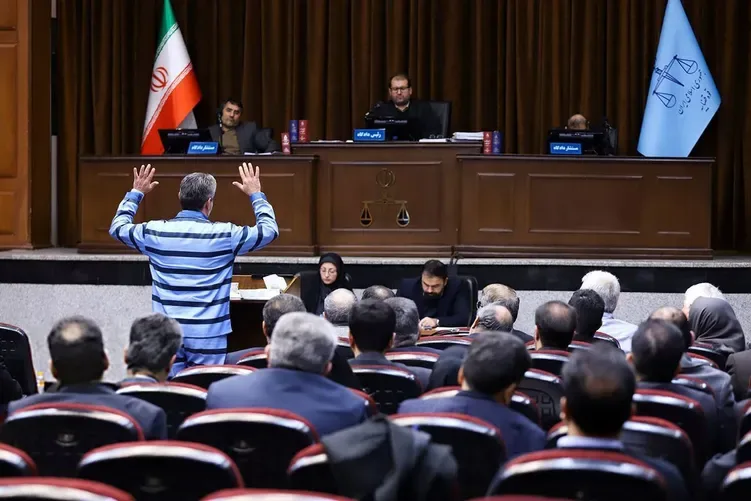
Between 2019 and 2022, the Dabesh Group received 3.37 billion dollars of preferential and official currency. Judicial investigations revealed that part of the foreign exchange obligations were not fulfilled, and the type and value of imported goods did not match the order registrations. Judicial rulings were issued in 2025. These records show that without document publication, public oversight is not possible, and this gap provides the ground for corruption.
In the solar panel case, none of the key documents have yet been published: the list of currency-receiving companies, order registration numbers and dates, currency allocation and provision amounts, remittance documents, customs declarations, foreign exchange obligation release status, and clearance permits, which Mohammad Ali Dehghan Dehnavi, head of the Trade Development Organization, himself confirmed in July that the import mechanism "without currency transfer" had been opened for some goods, a mechanism now at the center of special interests.
Transparency Test, Not Just an Import Case
The theft in "selling 700 million euros in Dubai" has not yet been legally pursued, but the non-publication of the names of currency recipients and the exact status of order registrations is a serious gap in the economic governance transparency of the Islamic Republic.
If indeed no violation has occurred, publishing the complete chain of documents can show it, and if the currency was paid but the ordered goods were not imported, the same documents will specify where the public money actually went.