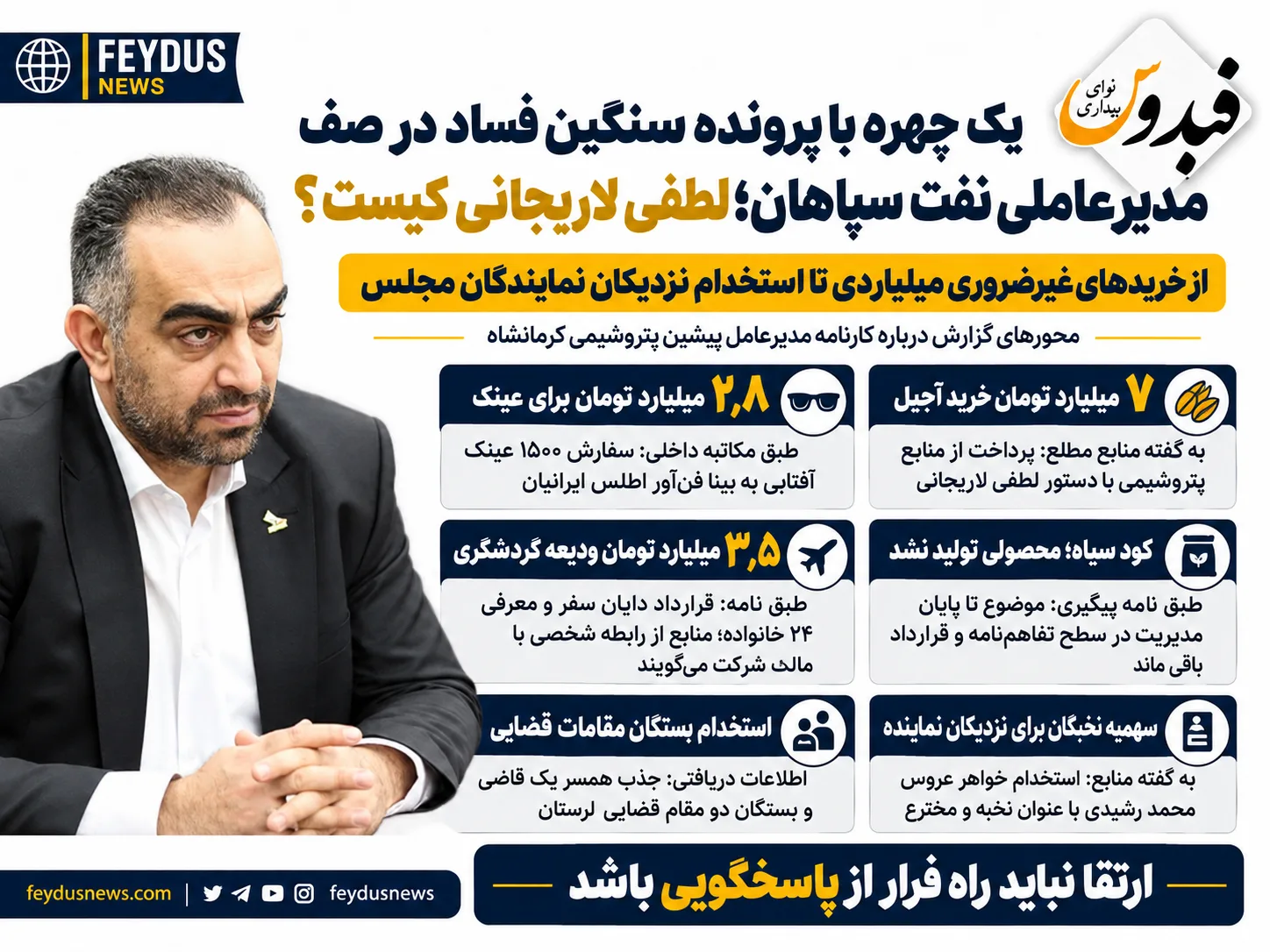
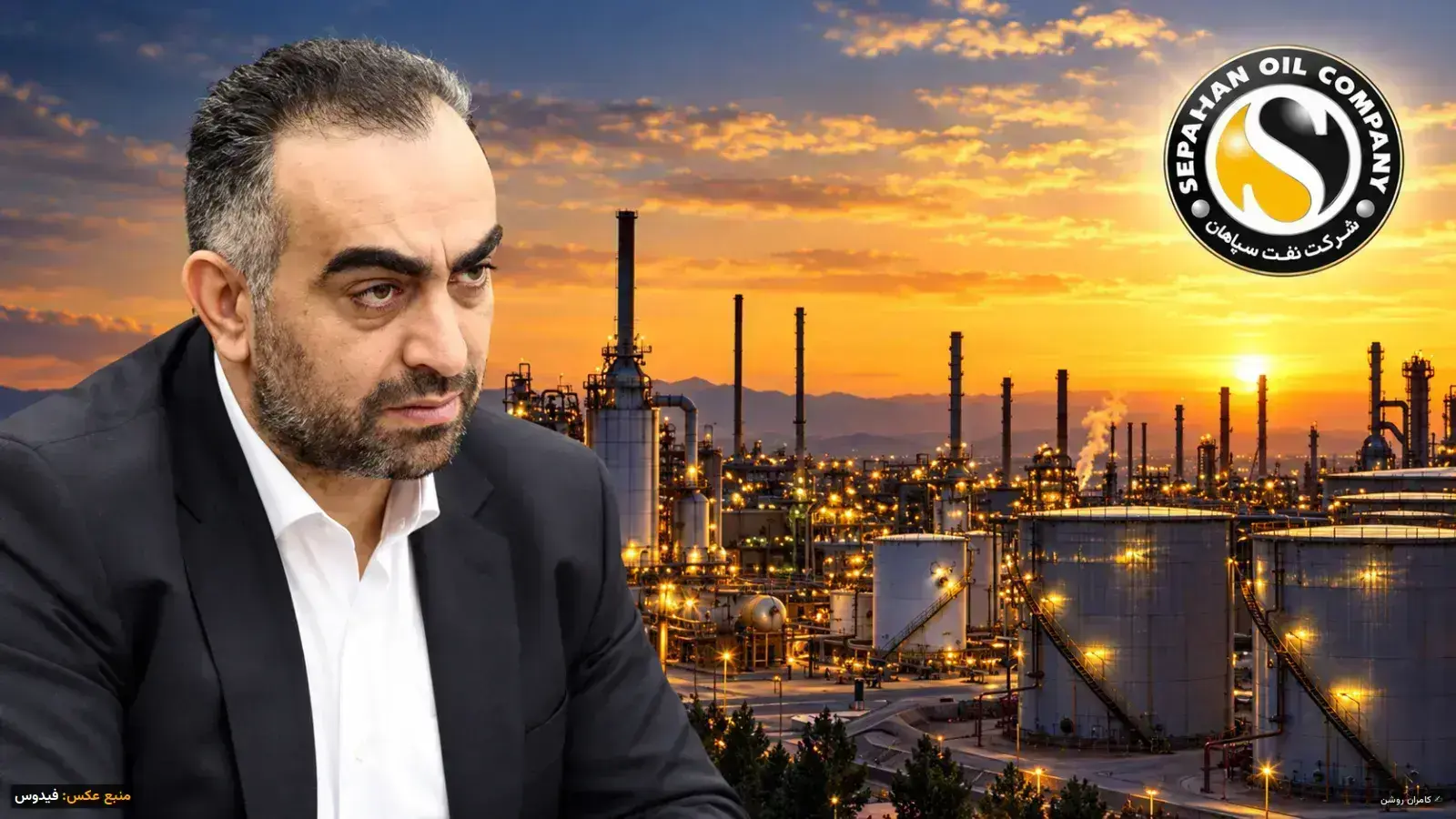
The mention of Amirhossein Lotfi Larijani's name for the CEO position at Sepahan Oil has once again brought the issue of accountability of energy industry managers to the forefront. The former CEO of Kermanshah Petrochemical, who is now on the board of Sepahan Oil, is among the potential candidates for managing this company, while his financial and hiring decisions during his tenure remain criticized.
Images of internal correspondence from Kermanshah Petrochemical take these criticisms beyond generalities: a three-billion toman order for sunglasses, entrusting billions of tomans in deposits to a tourism company based on personal relationships with the owners, and a letter explicitly rejecting Lotfi's claim of producing black fertilizer are just a glimpse of Lotfi Larijani's record filled with violations and corruption at Kermanshah Petrochemical.
A manager who was dismissed from Kermanshah Petrochemical due to this record of corruption and violations, instead of facing the judiciary and being accountable for the losses and corruption during his management, is now facing a proposal for a higher position.
Alongside these documents, received information about costly purchases and hiring close associates of influential figures underscores the necessity of reviewing Lotfi Larijani's record before any new promotion. The managers and shareholders of Sepahan Oil must explain which part of this record forms the basis of trust for entrusting a larger responsibility. Membership on the board and enjoying the support of influential individuals do not replace performance evaluation.
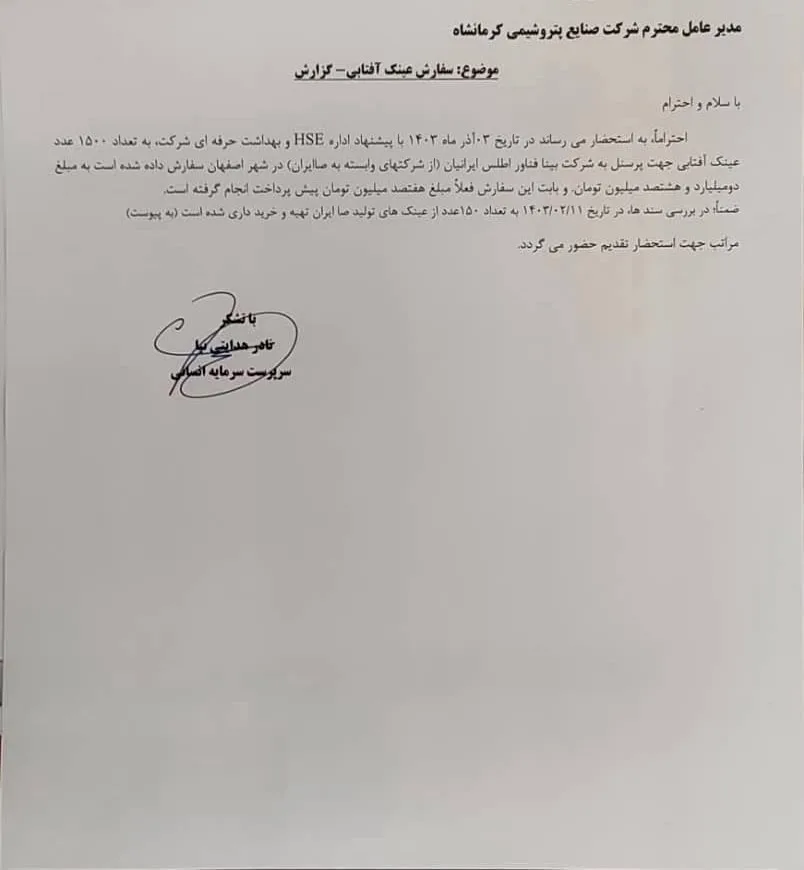
Unnecessary Billion-Toman Purchases of Sunglasses and Nuts
In a letter on the subject of "Sunglasses Order," the order of 1500 pairs of sunglasses to Bina Fanavar Atlas Iranian Company, amounting to two billion and eight hundred million tomans
is mentioned. In the same correspondence, the proposal of the HSE and Occupational Health Department and the previous purchase of 1500 Iranian-made sunglasses is also mentioned.
This issue contradicts the approved cost by Lotfi Larijani, raising suspicions about the possibility of receiving a share in exchange for inflating the actual price of the sunglasses.
Additionally, informed sources within the company have stated that the pattern of unnecessary purchases with amounts in the tens of billions was repeatedly seen during Lotfi Larijani's management, such that in one instance, seven billion tomans were paid for purchasing nuts from Kermanshah Petrochemical's financial resources under Lotfi's direct order.
Billions of Tomans at the Disposal of a Tourism Company
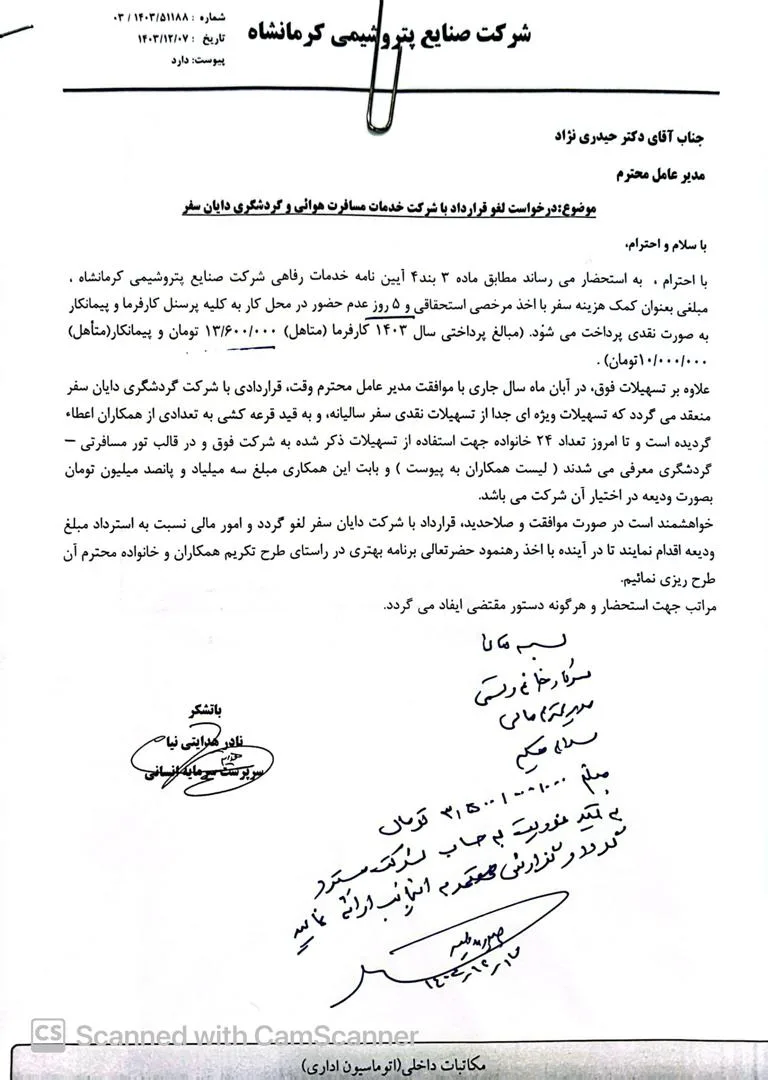
The letter regarding "Request to Cancel the Contract with Dayan Safar Air Travel and Tourism Services Company" provides a thought-provoking image of the welfare decisions during the previous management period.
According to the text of this correspondence, the company, in addition to the usual travel allowance, had signed another contract to provide tourism facilities with the approval of the then CEO. By the time of drafting the letter, 24
families had been introduced to use these services, and three billion and five hundred million tomans in deposits were at the disposal of the tourism company.
Based on received information, the contracted company belonged to one of Lotfi Larijani's friends and acted as an intermediary for services like villa rentals. This part of the information adds the accusation of conflict of interest to the contract: using managerial authority for a contract where the other party had a personal connection with the manager.
Black Fertilizer; Fabricating Achievements for Record Building
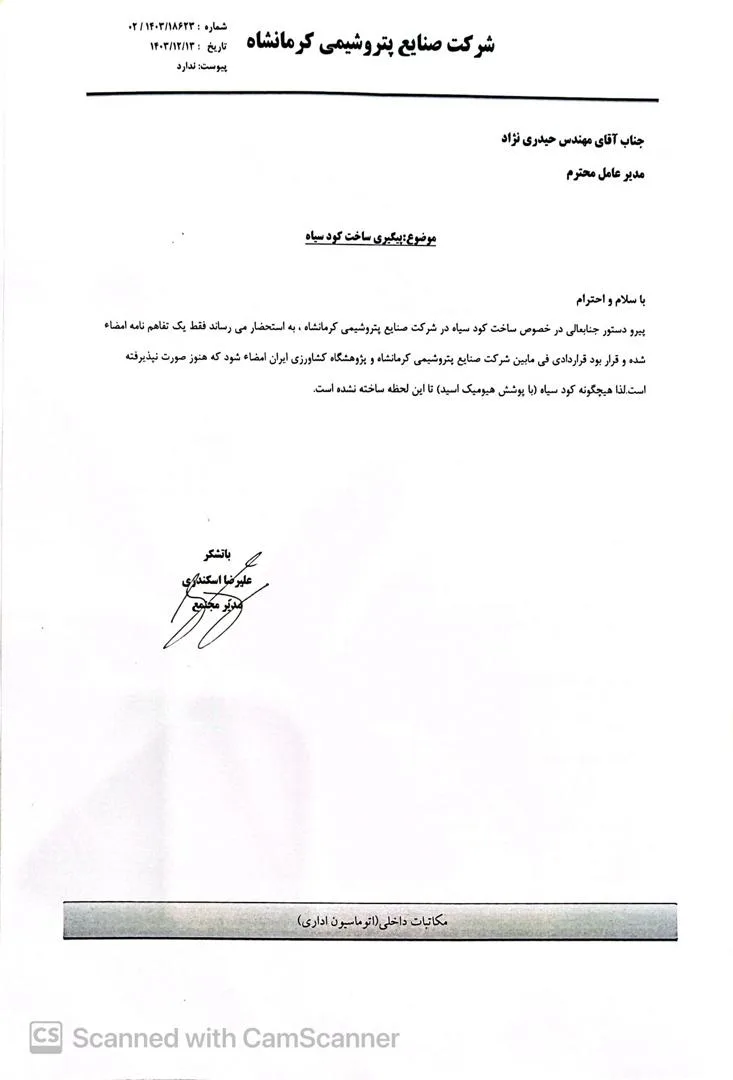
In the letter regarding the follow-up on the production of black fertilizer, addressed to Heidarinejad, CEO of Kermanshah Petrochemical, it is explicitly stated that contrary to Lotfi Larijani's official claim of producing black fertilizer during his management period, the issue remained at the level of signing a memorandum of understanding and a planned contract with the Iranian Agricultural Research Institute, and no product named black fertilizer or potassium humic acid was produced by the end of Lotfi's term.
Accusation of Hiring to Build a Power Base
Another part of the received information raises the issue of hiring relatives of judicial officials during Lotfi Larijani's management period:
the wife of a judge in Kuhdasht, the brother of a judicial official, and the nephew of another judicial official in Lorestan province, where behind these irregular hires, personal goals aligned with Lotfi Larijani's individual interests are seen.
The aim of recruiting these individuals is to create a backing against investigations into violations that were repeatedly committed during Lotfi's management and covered up in the judiciary. Using the hiring capacity of an economic entity to strengthen the manager's personal position is an action that turns job opportunities into a tool for relationship-building with power holders.
Inventor Hiring Quotas at the Disposal of Relatives of Parliament Representatives
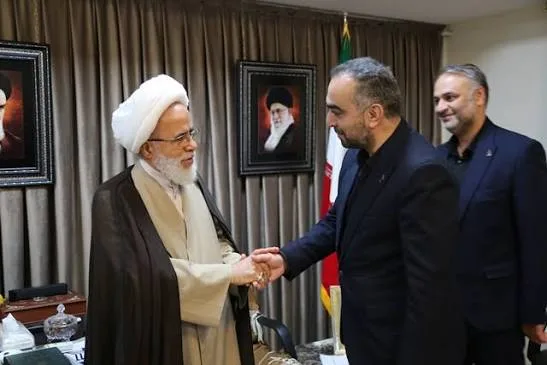
One of the strangest parts of Lotfi Larijani's record is the repeated pattern of hiring individuals at the request of parliament representatives. In a case that can reveal the level of this political lobbying and collusion with representatives, the issue of hiring a relative of Mohammad Rashidi, the representative of Kermanshah in parliament, is highlighted.
According to informed sources, the sister-in-law of Mohammad Rashidi was hired as an elite and inventor under the elite quota in Kermanshah Petrochemical, while this individual's registered invention was "grooved sanitary napkin.".
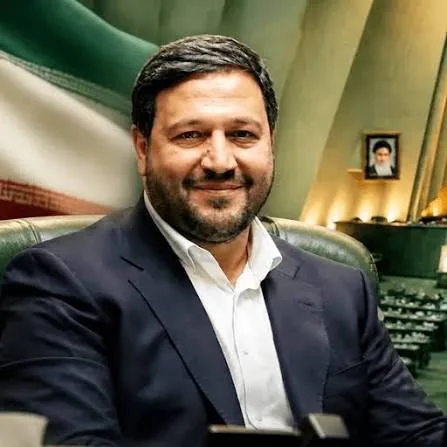
Allocating a specialized quota in a field related to petrochemicals to an individual with this level of background solely based on their kinship with a parliament representative shows how Lotfi Larijani has used the company's hiring capacity for personal gain in exchange for political support. Meanwhile, in Kermanshah itself, many young elites and university graduates with qualifications related to the petrochemical industry remain behind the doors of employment at this petrochemical plant.
Promotion Should Not Be a Way to Escape Accountability
In such circumstances, reviewing Lotfi's record clearly shows how the CEO position of a large company like Sepahan Oil is intended to be entrusted to candidates whose records are nothing but corruption, loss-making, and inefficiency.
Insisting on promoting Lotfi Larijani before providing these answers undermines the credibility of the CEO selection process and strengthens the criticism that behind-the-scenes relationships and support prevail over performance evaluation.
The board and shareholders must publish the selection criteria, reviewed records, and reasons for preferring each candidate.
Managing Sepahan Oil is not a reward for having influential supporters. Anyone seeking more authority must accept responsibility for their previous record before receiving a new appointment.