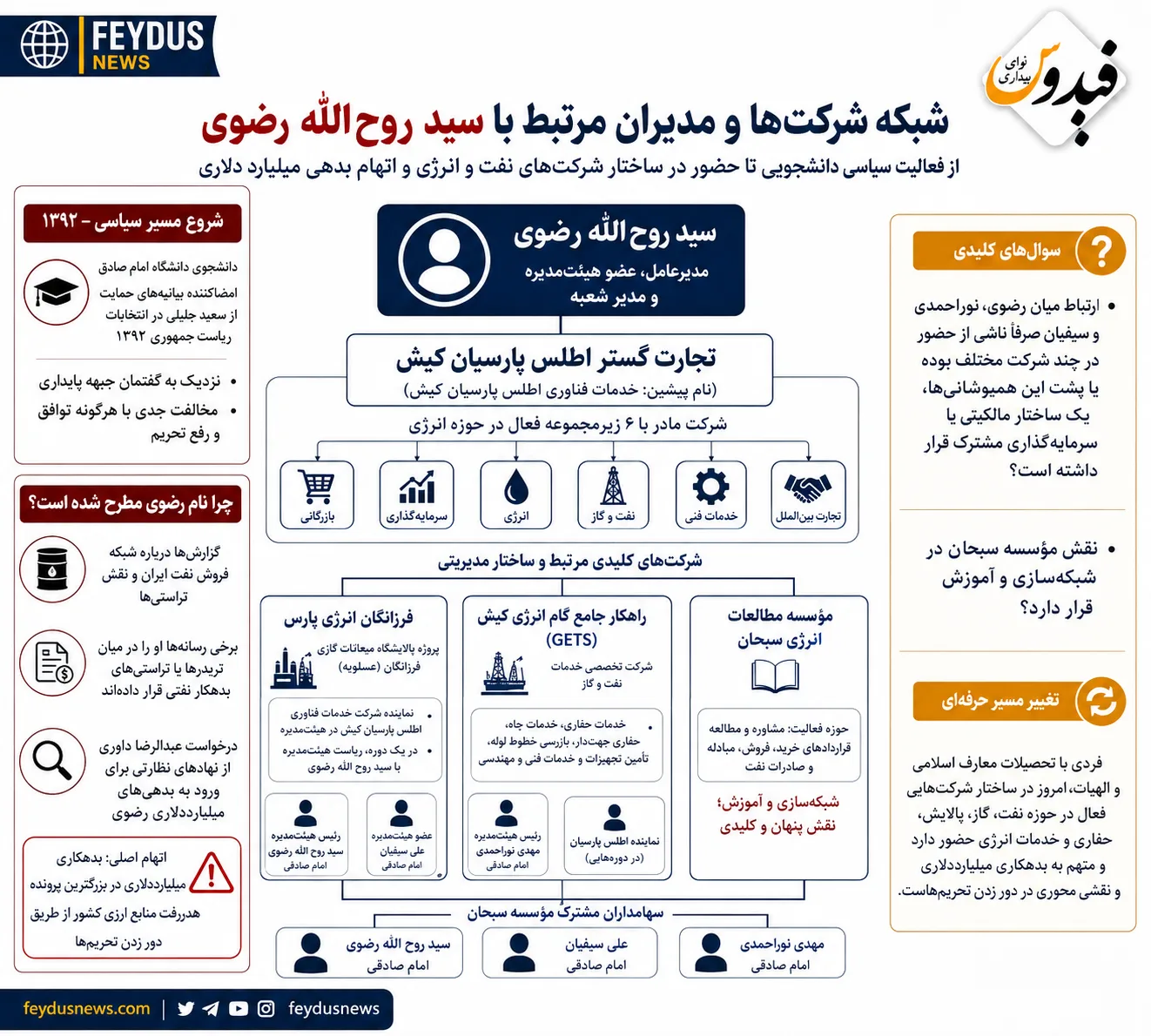
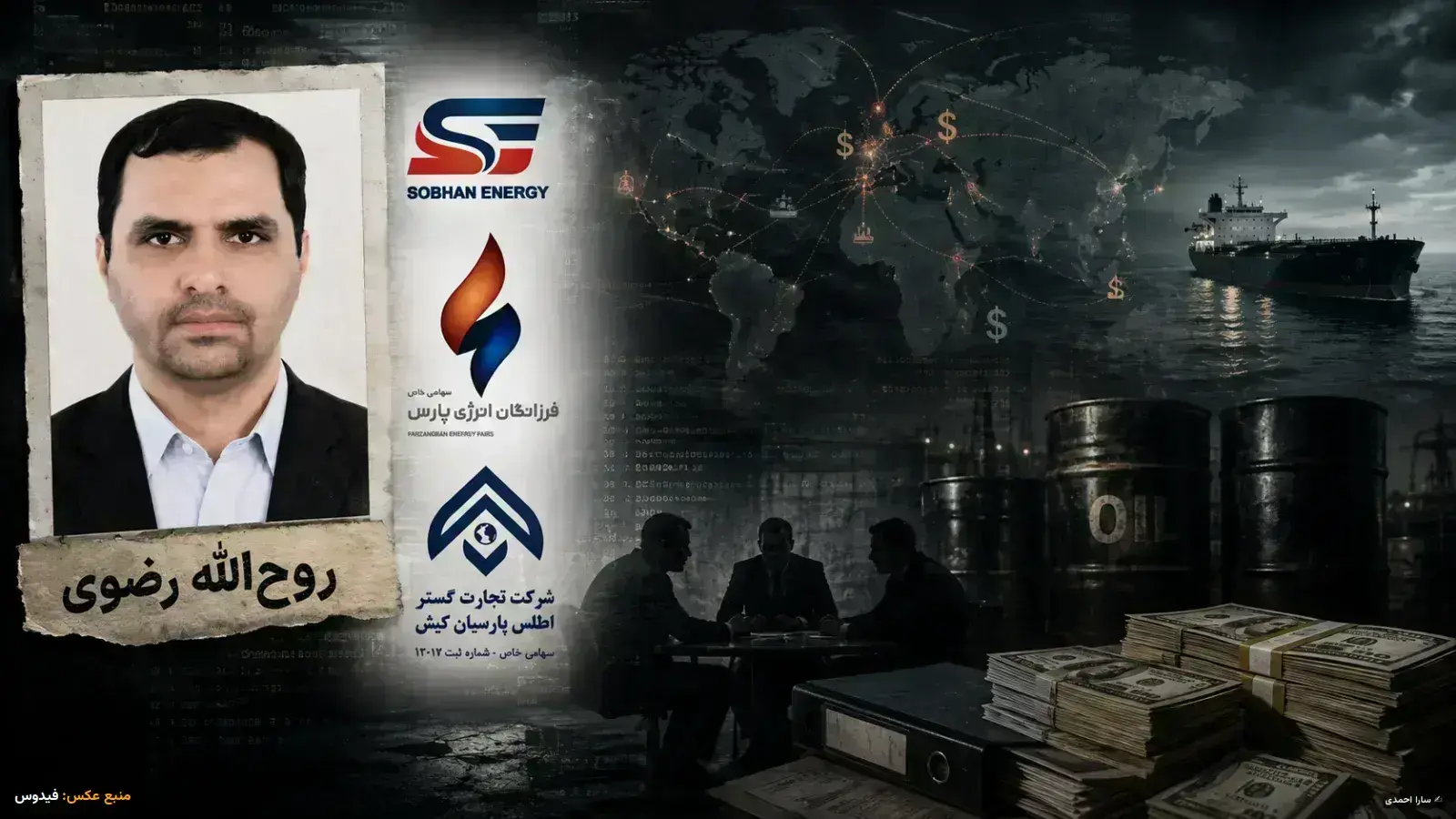
The name Seyyed Rouhollah Razavi has been mentioned in recent months in reports and discussions related to oil sales, trusts, and foreign currency debts. Alongside new revelations, there is a different yet noteworthy image of his past: a person whose name has been visible in the political sphere close to the Stability Front since his student years and later appeared in the management structure of companies active in the energy and oil sector.
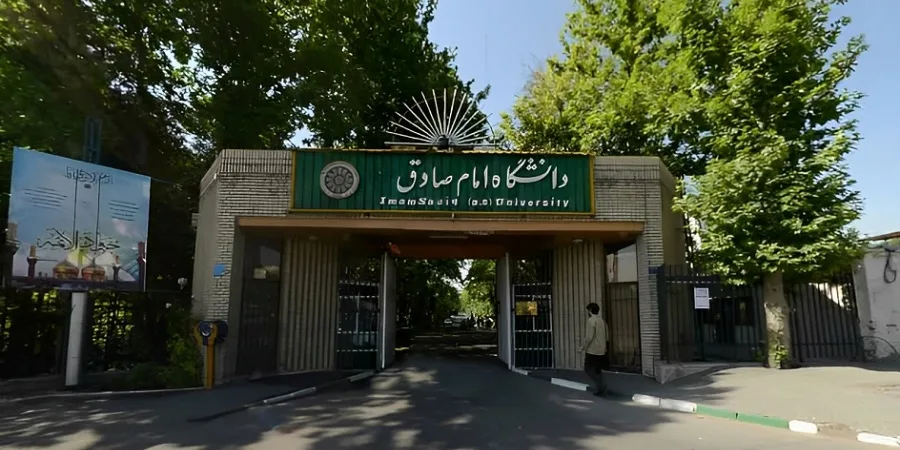
Razavi's footprint in the political space of 2013, when he was a student at Imam Sadiq University, is evident. Perhaps the point where his political connections with the Stability Front began, which later turned into a familial connection, is that today he is the son-in-law of Majid Motaghifard, the spokesperson of the Stability Front, and his name is tied to supportive statements for Saeed Jalili in the 2013 presidential election.
These statements reflected a highly critical discourse towards 'technocratic ideas' and political and economic currents after the war, especially in strong opposition to any agreement. This point shows how opponents of lifting sanctions have used the tool of sanctions as an opportunity for rent-seeking and profiteering in individual interests, which requires the continuation of sanctions and creating opportunities to circumvent them through paths leading to a black economy.
Another question that Razavi's background raises is: How did someone with Islamic studies and theology education appear a few years later in the structure of specialized oil and gas companies and energy projects?
Shift from Theology to Energy Economics
The answer to this question cannot be found solely in Razavi's university degree. What emerges from his background is that Razavi gradually entered a set of companies active in commerce, investment, energy, and oil.
Among these, the name Atlas Parsian Kish Trade Expansion — and its previous name, Atlas Parsian Kish Technology Services — gains special importance. Razavi is active as CEO, board member, and branch manager, and this company appears with six subsidiaries in the energy sector. Therefore, to understand Razavi's professional path, Atlas Parsian is a key link.
One of the most important observable points on this path is Farzanegan Energy Pars. This company has been active in the Farzanegan gas condensate refinery project in Assaluyeh; a project with a design capacity of about 40,000 barrels per day. The importance of this company for Razavi's case is that his name appears in its board of directors structure.
Seyyed Rouhollah Razavi has represented Atlas Parsian Kish Technology Services in the board of directors of Farzanegan Energy Pars and has chaired the board for a period. This point has a significant difference from some existing narratives: Razavi does not necessarily appear here as a 'personal owner'; rather, he is placed in the company's structure as a representative of a legal entity.
Razavi and Ali Seyfian; Two Names on One Board
During the same period, the name Ali Seyfian — another Imam Sadiq University graduate — is also seen in the composition of the board of directors of Farzanegan Energy Pars. This is important for examining the corporate relationship network. Razavi, as chairman of the board, and Seyfian, as a board member, were together in the management structure of an active energy company for a time.
The importance of Atlas Parsian increases when we trace its footprint in another company: Comprehensive Energy Step Solution Kish. GETS is a specialized company in the field of oil and gas services, pursuing activities such as drilling services, well services, directional drilling, pipeline inspection, equipment supply, and technical and engineering services.
Representatives of Atlas Parsian Kish Technology/Trade Expansion have also been present in the board of directors of GETS at times in their management history. On the other hand, the name Mehdi Nourahmadi — another Imam Sadiq University graduate — is seen, who has chaired the board.
Dr. Mehdi Nourahmadi holds a Ph.D. in International Oil and Gas Contracts Management and is an economics graduate from Imam Sadiq University. His management experience is recorded in several oil companies, including Iran Marine Industrial Company, Sarok Kish, and Fasa Petrochemical. Most importantly, according to the official explanation of Shasta, he has been the CEO and board member of the Subhan Energy Studies Institute.
The name Nourahmadi is important because alongside Razavi and Seyfian, he is one of the figures close to Rouhollah Razavi. From here, a more serious question can be raised: Is the connection between Razavi, Nourahmadi, and Seyfian merely due to their presence in several different companies, or is there a shared ownership or investment structure behind these overlaps?
The answer to this question is only possible by examining the shareholders and the ultimate beneficial owner of the companies. Another name mentioned in this network is the Subhan Energy Studies Institute. All three mentioned individuals, Rouhollah Razavi, Ali Seyfian, and Mehdi Nourahmadi, are shareholders of Subhan.
The field of activity of Subhan is consulting and studying contracts for the purchase, sale, exchange, and export of oil; not that it has owned and traded oil itself. But more importantly, it is networking and training, which has not been officially announced.
But why is Razavi's name now being discussed in the context of trusts? In recent months, reports have been published about the network of Iranian oil sales and the role of trusts. In these reports, Razavi's name has also been mentioned, and some media sources have placed him among the traders or indebted oil trustees.
Simultaneously, Abdolreza Davari has also requested supervisory bodies to intervene regarding what he calls 'Rouhollah Razavi's billion-dollar debts' in a media stance. Perhaps the most intriguing part of Razavi's story is not an accusation but his professional career change.
A person who had laid a foundation of rent and corruption for himself with hypocritical slogans of justice-seeking is now seen in the structure of companies whose activities relate to oil, gas, refining, drilling, technical services, and energy trade, and is accused in the media of billion-dollar debts and playing a pivotal role in the largest case of resource wastage in the country under the name of circumventing sanctions.