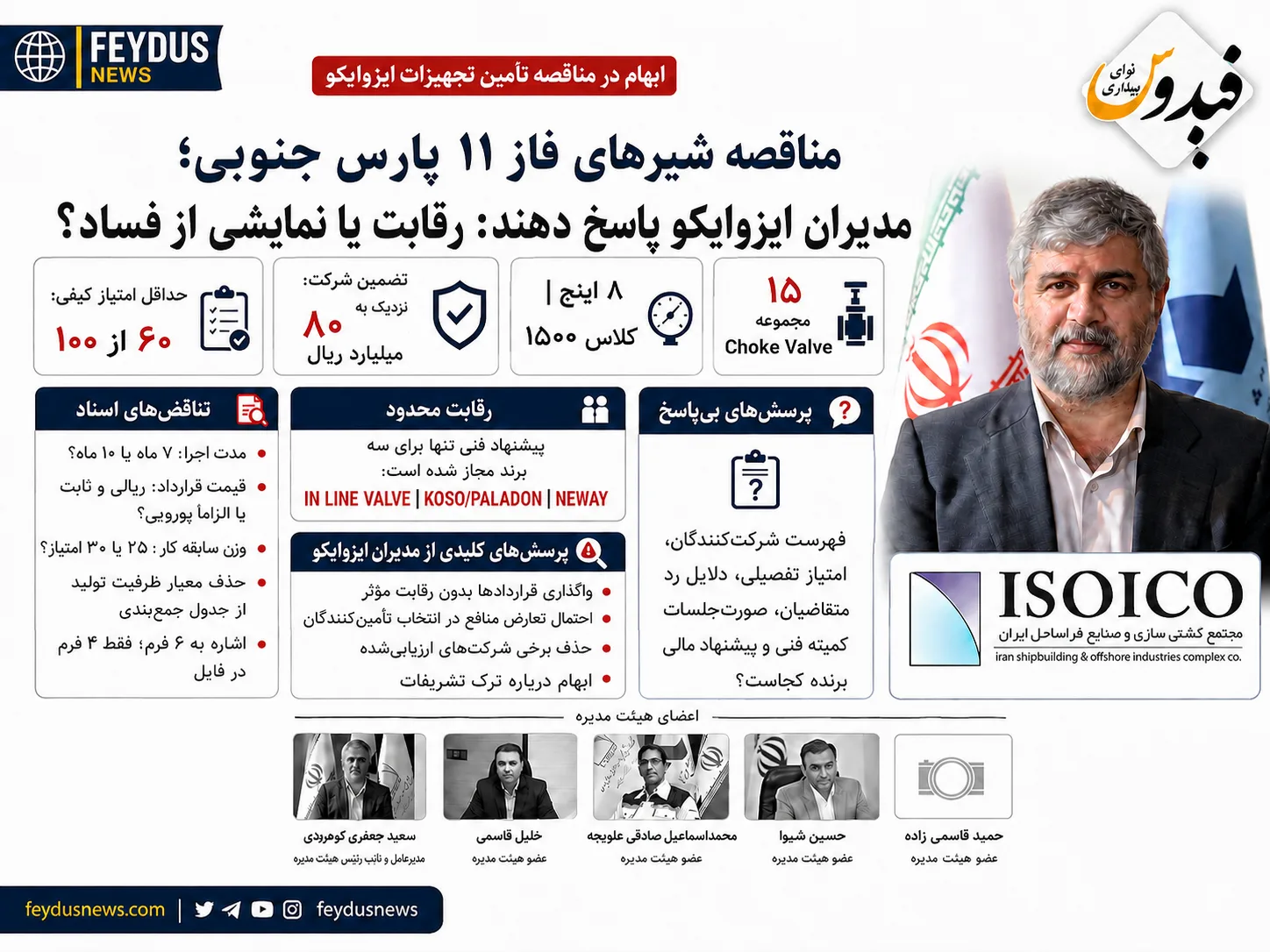
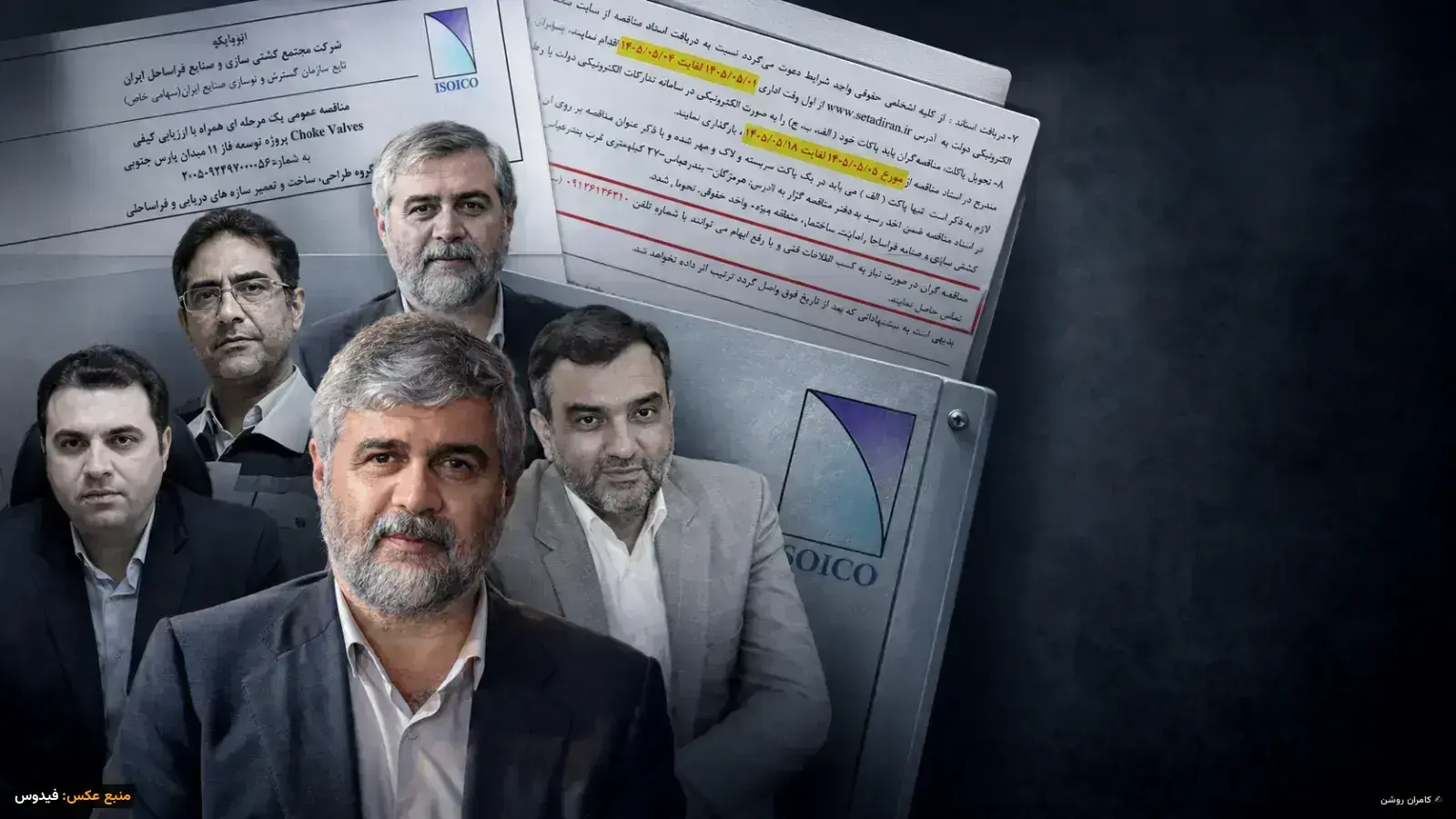
The documents related to the tender for supplying wellhead valves for Phase 11 of South Pars seemingly present an image of a formal, staged, and competitive process; however, a simultaneous study of the technical purchase request, tender conditions, quality evaluation forms, information registered in the government's electronic procurement system, and a report from a source on the performance of ISOICO's commercial department reveals a set of contradictions and ambiguities.
From disagreements over the contract duration and currency unit to changes in the weighting of evaluation criteria and the limitation of brands that can be proposed, all raise the question of whether the supplier selection process is truly designed to achieve the best quality and price or if the tender conditions could narrow the competition in favor of predetermined limited options.
This issue clearly points the finger of accusation at Saeed Jafari Karahroudi, CEO, Hossein Shiva, Khalil Ghasemi, Hamid Ghasemi Zadeh, Mohammad Esmaeil Sadeghi Alavicheh as board members, and Farrokhandeh Damirchali, ISOICO's commercial deputy.
Especially since the managers of this company have a special insistence on obtaining contracts for
Phase 11 of South Pars, and this issue was officially requested by the company's deputy CEO from the Governor of Hormozgan. This insistence, with the disclosure of the wellhead valve tender documents, indicates that the reason was to create opportunities for the financial interests of some managers through manipulating tenders and selecting contractors aligned and connected with themselves.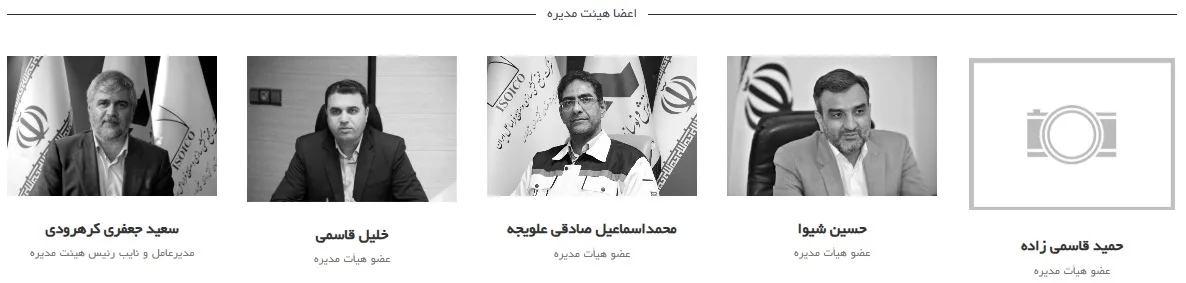
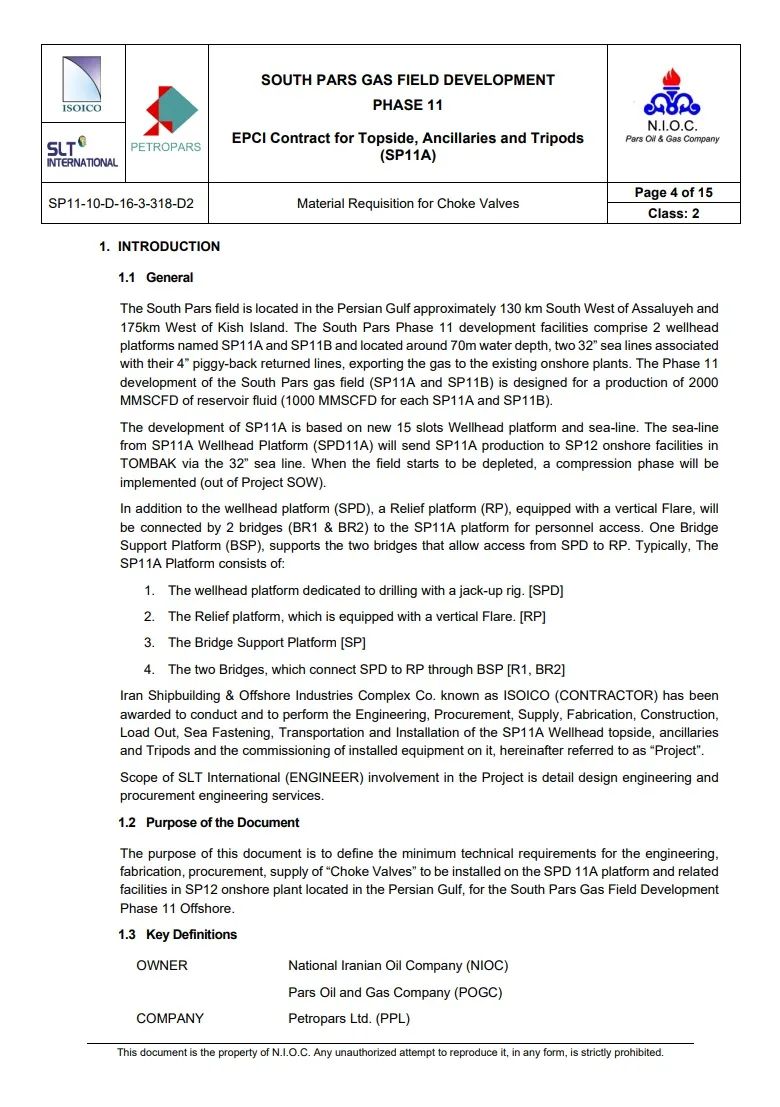
The subject of this tender is the supply of 15 sets of Choke Valve 8-inch class 1500 with flanged connection and one-way hydraulic actuator for platform SP11A . These valves are a critical part of the flow control equipment of gas wells and their supply is not just a routine purchase. The seller must undertake the design, engineering, manufacturing, testing, inspection, painting, packaging, and preparation for shipment. Startup spare parts, two-year operational parts, special tools, and factory acceptance testing are also within the scope of purchase. These specifications are listed in the supply scope table
The technical documents introduce the project owner as the National Iranian Oil Company and Pars Oil and Gas Company, the project company as Petropars, the contractor as ISOICO, and the project engineer as SLT International . The main document with number SP11-10-D-16-3-318-D2 was issued on November 16, 2024 with the status "Approved for Construction"
However, the tender for supplying the equipment was published in August 1405; a significant gap between the approval of the technical request and the start of this stage of the procurement process, which ISOICO must explain regarding the reasons and potential impacts on the project timeline.
Integrated Evaluation; Public Competition or Multi-Stage Filtering?
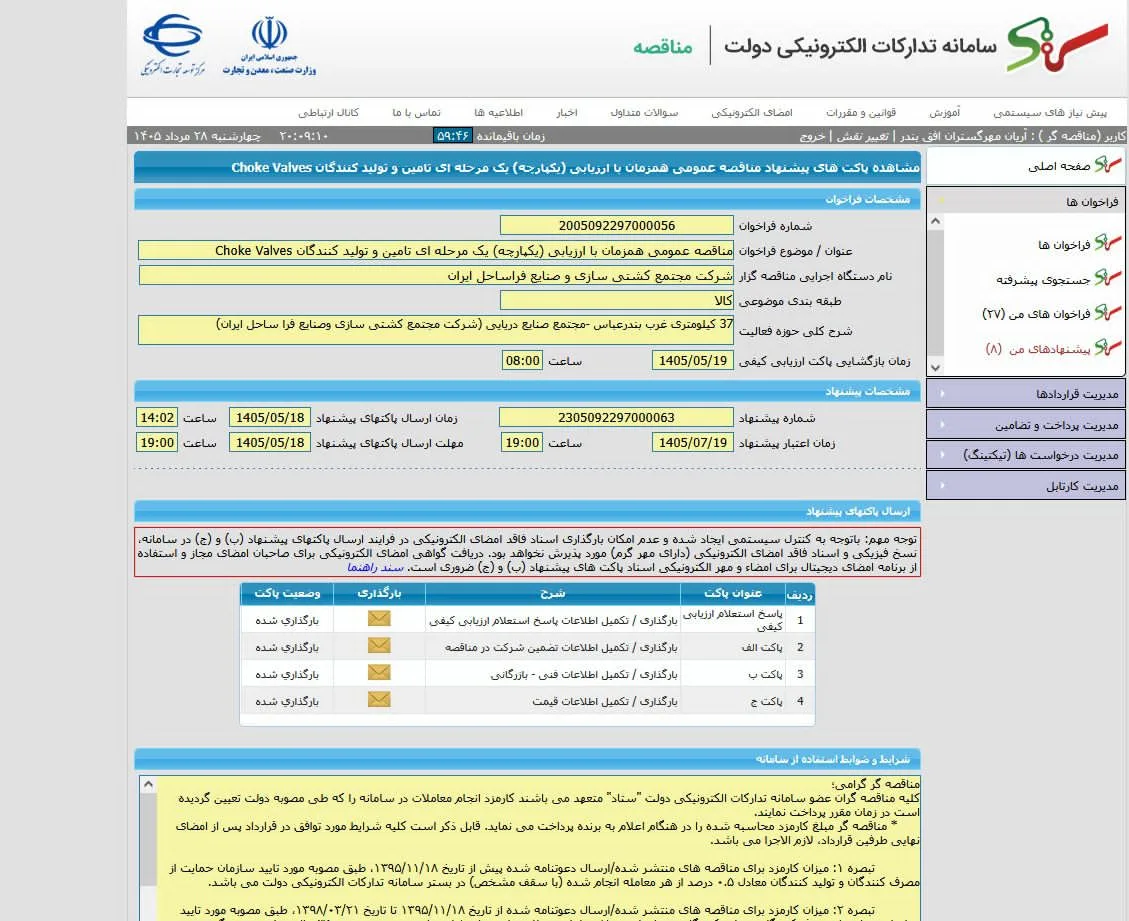
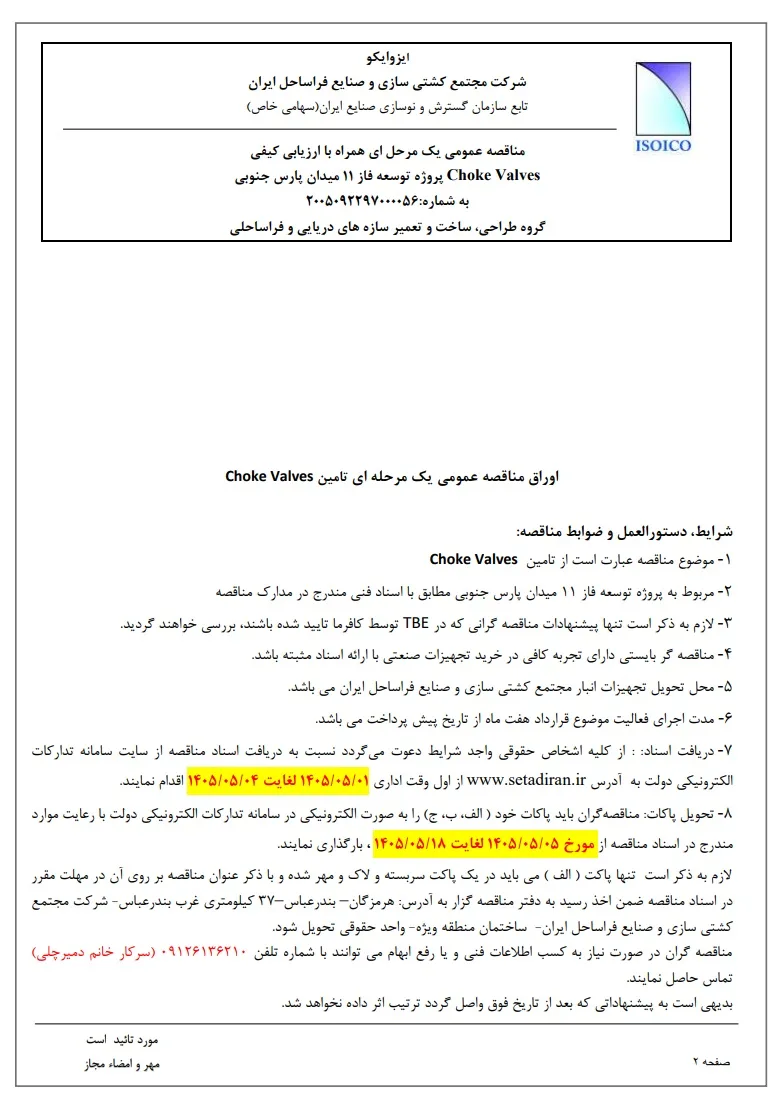
According to the information registered in the Setad system, the call with number 2005092297000056 is registered as a "Public Tender with Simultaneous One-Stage Integrated Evaluation". The time for opening the quality evaluation envelope is eight in the morning on August 19, 1405 and the deadline for submitting proposals is announced as August 18. The system image shows that the registered proposal with number 2305092297000063 was submitted at 14:02 on August 18; while the system deadline was at 19 on the same day. This timing does not in itself prove a violation, but it shows that at least one proposal was registered in the last five hours of the process, and publishing the complete records of proposal entries can clarify the real number of competitors.
The quality evaluation form stipulates that only companies that score at least 60 points and also receive approval from the main client of Phase 11 will enter the tender stage. Applicants must also provide at least three similar experiences in manufacturing or supplying this product. The tender conditions file also states that only the proposal of companies that are approved in the technical-commercial evaluation or TBE by the client will be reviewed
The existence of technical evaluation for such sensitive equipment is natural; however, the issue is the lack of transparency in its result. The evaluation file is merely a blank form: neither the names of the companies are listed, nor the scores, nor the committee's result, nor the signatures of the evaluators. Therefore, from the existing documents, it is not possible to understand how many companies applied, which companies were eliminated, and what score the admitted company or companies achieved.
A more significant ambiguity is the inconsistency among the forms themselves. The main table allocates 25 points for financial capability, 15 points for customer satisfaction, 15 points for quality certificates, 25 points for experience, 15 points for warranty, and five points for production capacity. However, the summary table increases the experience score from 25 to 30 and removes the production capacity criterion.
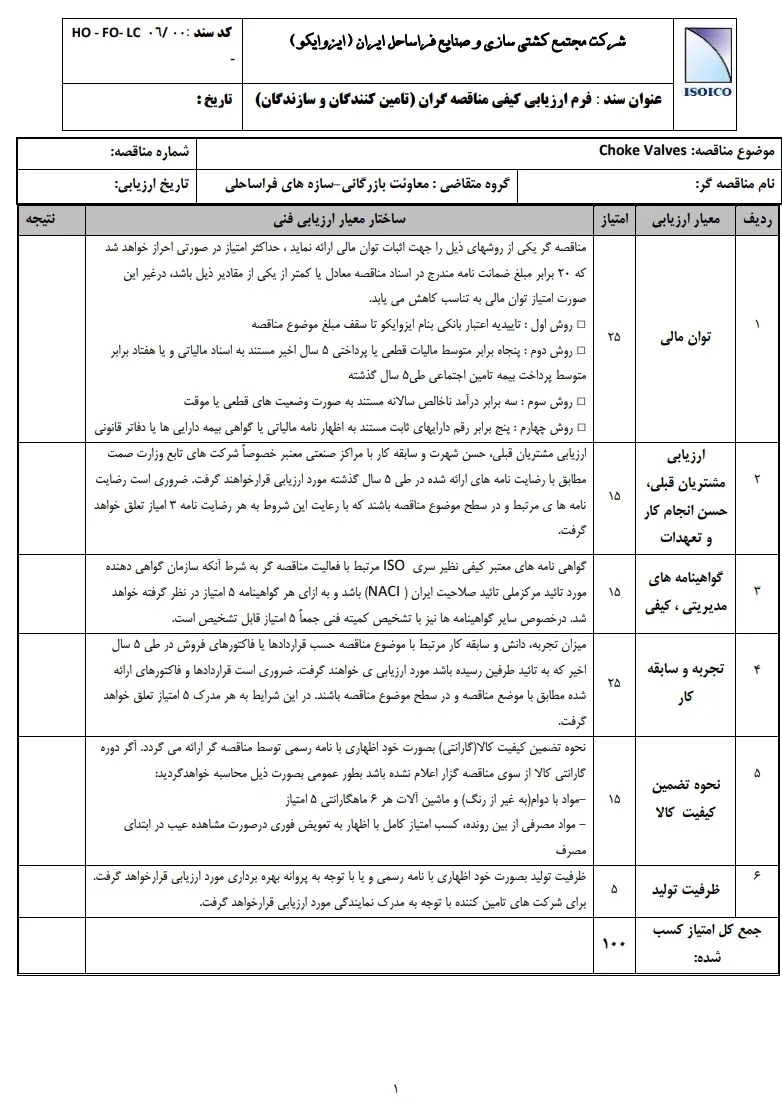
The documents claim to extract scores from "forms one to six," while the file only contains four detailed forms; a separate form for quality certificates and production capacity is not seen in the set. This five-point discrepancy may seem small, but when the passing threshold is 60, changing the weight of a criterion can change the fate of an applicant. ISOICO must clarify which version of the scoring table is valid, why forms five and six are not in the file, and which formula the evaluation committee actually used.
Three Authorized Brands and Questions About Competition Engineering
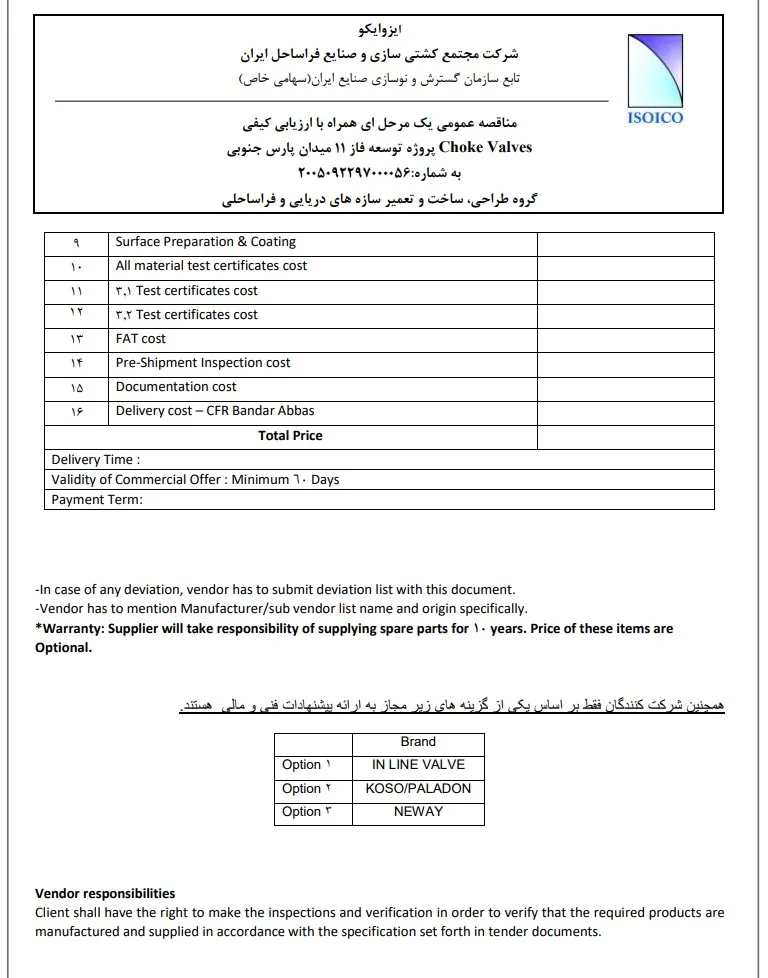
The price proposal table allowed participants to propose only one of three options: IN LINE VALVE, a combination of KOSO/PALADON or NEWAY . Simultaneously, the tender conditions emphasize that the brand must be explicitly stated in the technical proposal and cannot be changed after submission.
Limiting the brand in the purchase of strategic equipment can have technical reasons; for example, compatibility with design, performance history, access to parts, or client standards. However, when a tender is called public, it is necessary to publish the technical report of selecting these three brands and the reason for excluding other standard-compliant manufacturers. Otherwise, brand limitation could become a tool for limiting the number of suppliers and steering competition towards companies with commercial ties to representatives of these same manufacturers.
These violations become clearly evident in the information sent by informed sources. According to the available data, some of ISOICO's purchases in the past two years have been made without effective competition, and in more than 20 cases, contracts have reached the signing stage with the proposal of only one supplier. It has also been revealed that some managers in the commercial department have had significant connections with suppliers, targeted influence in company selection has been practiced, manipulation of evaluations and elimination of some qualified companies to ensure the success of the manager's preferred company has become a common practice.
For example, the child of Farrokhandeh Damirchali, ISOICO's commercial deputy, has been employed in one of the supplier companies and contracting parties of the organization. Damirchali's name is also mentioned in the tender documents as the person responsible for responding to technical ambiguities and receiving applicant calls.
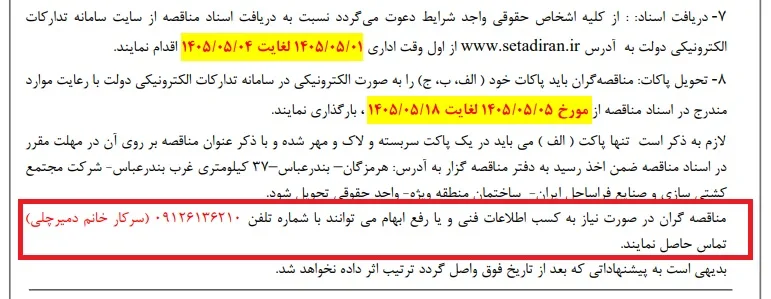
Listing his name in this position reveals a conflict of interest. Considering the employment relationship mentioned, the issue should be reviewed by publishing the name of the supplier company, its contracts with ISOICO, the start date of cooperation, and the manner of announcement. Silence in response to such a question undermines trust in the impartiality of the process.
A Contract with Two Durations and Two Currency Logics
The documents regarding the duration of the work are also inconsistent. The initial tender conditions announced the activity duration as seven months from the date of advance payment, but the draft contract text considers the duration of obligations to be 10 months from the contract's effective date. In the delivery section, the seller is obliged to deliver all equipment within 10 months after the approval of engineering documents and advance payment.

These three starting points — advance payment date, contract effective date, and engineering document approval time — are not necessarily the same and can affect the calculation of delays and damages in the future. Another contradiction relates to the contract currency. The draft states that the contract price is fixed in Rials throughout execution and no adjustment applies. However, the final price proposal conditions emphasize that amounts must be stated in Euros.
On the other hand, the tenderer accepts by signing the documents that in case of an increase in the SANA system exchange rate, the contractual guarantees will be updated. Therefore, if the base price is in Euros but the contract is in Rials, the conversion rate and date must be specified without ambiguity. The absence of this clarity can create an unbalanced cost or risk for the buyer or seller during currency rate jumps and provide grounds for negotiation, annexation, or future disputes. More importantly, the document itself states that payment terms will be updated at the time of contract signing. This means some of the factors affecting price and liquidity can change after the competition ends.
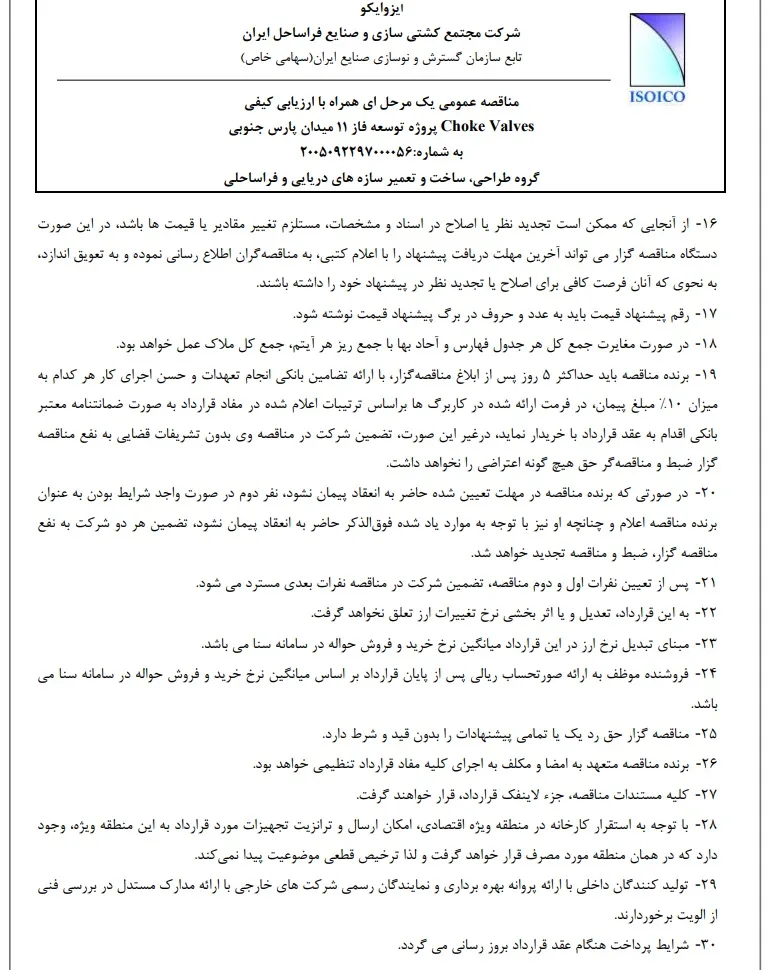
The current payment plan includes 10 percent advance payment, 20 percent after raw material entry, 10 percent at 50 percent progress, 30 percent upon construction completion, 10 percent after final inspection, 10 percent upon delivery, five percent for final documents, and five percent for spare parts. Meanwhile, the evaluation document states that accepting the first payment of 35 percent after preparing the initial material has "significant points" for the applicant. This difference also requires explanation: was the 35 percent model an advantage outside the official table, or were the payment terms changed later?
The Necessity of Publishing Minutes Before Contract Signing
The issue of awarding the project for the construction of a beam plate worth about four million euros to the "Petro Arshia" company through bypassing formalities, excluding some evaluated companies, and awarding to "Petro Arshia" and "Novandish" is another example of repeating this corruption pattern. This issue, alongside the matter of settling about 300 million dollars in the Phase 14 project, clearly exposes the extent of these violations within the company's management structure.
Critics remind that to resolve ambiguities, ISOICO must publish the complete list of participants, the detailed score of each company, the names of the technical-commercial committee members, evaluation minutes, reasons for rejecting applicants, correspondence with the main client, price inquiries, the report on selecting the three brands, and finally, the winning financial proposal.
The existing documents, including blank forms, discrepancies in scoring criteria, absence of promised forms, time and currency contradictions, brand limitations, and the ability to change payment terms, are points that increase the possibility of discretion. In a transaction related to public resources and one of the country's most important gas projects, an appropriate response to these ambiguities is not a general denial but the publication of decision-making documents. Until the minutes and actual evaluation results are published, the title "public tender" alone will not guarantee the existence of real competition.