While Iran's economy is under the pressure of inflation, sanctions, and shrinking national production, facing an unprecedented trend of structural weakening and erosion, the name of a family in the oil and gas contracting network has once again become the focus of media and public attention.
Over the past two decades, the Radpour family and the Persian Rad Group (Peradco) have become one of the active contractors in government oil projects. According to informed sources, the origin of this wealth is attributed to benefiting from oil rent and special quotas paid to the judiciary, as factors in the accumulation of the family's wealth.
The network of related companies, extensive financial powers, sensitive flare gas contracts, and labor protests also present a picture of an economic structure where the lack of transparency has paved the way for the formation of family economic powers.
Oil Contracting in a Rentier Economy; What's the Core Issue?
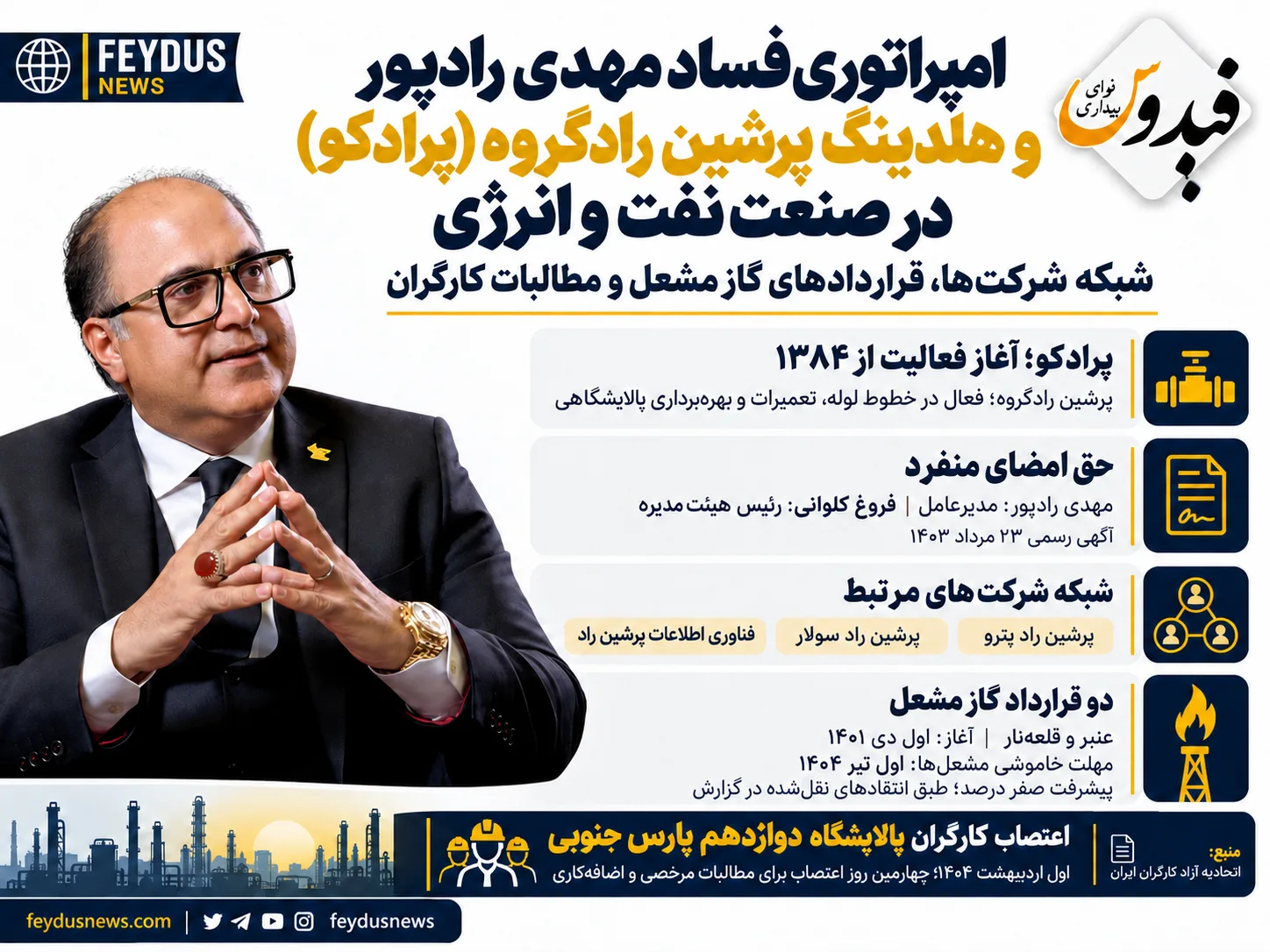
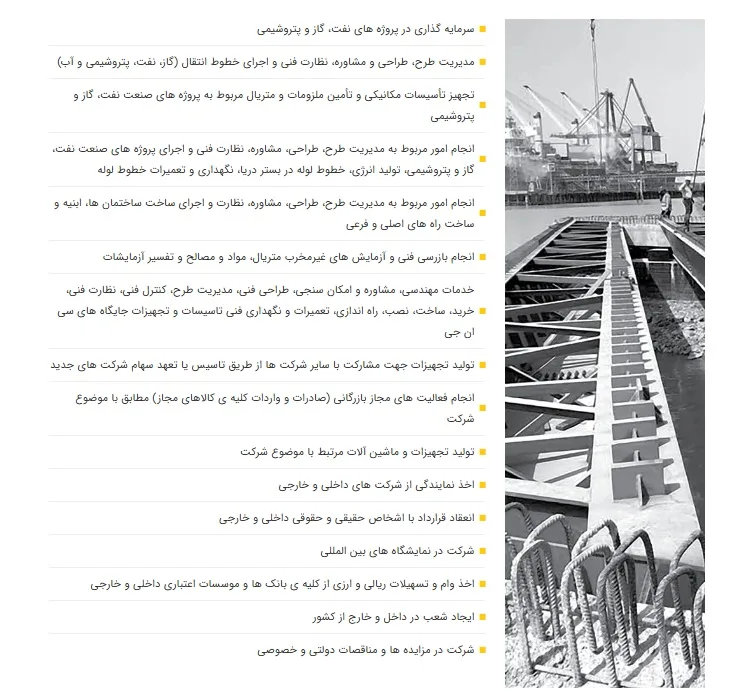
At the center of this case is the Persian Rad Group ; a conglomerate that, according to registration documents, started its activities in 2005 and is now involved in pipeline projects, facility repairs, refinery operations, and associated gas collection projects.
In the official announcement dated August 14, 2024, Mehdi Radpour was introduced as the CEO and Forough Kalvani as the Chairman of the Board. According to the same document, each of these two individuals had the sole signing authority for government contracts and binding documents. Such a level of financial authority in Iran's oil contracting structure allows for the signing of multi-billion toman contracts by a single person.
Alongside these two individuals, three legal entities are also present on the board: Persian Rad Petro, Persian Rad Solar, and Persian Rad Information Technology. The shared management of these companies paints a picture of a family holding; a structure that, in Iran's oil economy, in the absence of precise oversight, has led to the concentration of power and wealth.
Flare Gas Contracts; A Traceable Point
In the narrative about this family's economic rise, the turning point of the Radpour's wealth accumulation traces back to the "judiciary's oil quotas" in 2009 and the "connection to the Larijani circle". Reports from Al Jazeera and Iran International in 2026 also mentioned a debt of 10 to 11 billion euros owed by intermediaries selling Iranian oil.
Two flare gas collection contracts in the Anbar and Qaleh Nar regions are central to this case. According to the "Oil Thoughts" trade report on February 19, 2025, these contracts with numbers 120-91-53 and 123-91-53, started on January 2023, and the deadline for extinguishing the flares was set for July 2025. In the criticisms raised, the physical progress of these projects has been reported as zero percent to date.
Labor Protests; The Only Documented Part
On April 21, 2025, the Free Union of Iranian Workers reported that contract workers at the South Pars Phase 12 refinery had gone on strike for the fourth day. Their demand was the payment of last year's leave and overtime dues. According to this report, despite the end of the contractor's contract, Peradco, full settlement with the workers had not been completed.
The Radpour case highlights one of the mechanisms of economic power formation in Iran's oil industry: contractors close to decision-making networks can, in the absence of financial transparency, become family economic powers.
The existence of multiple companies with shared managers, sole signing authorities, rentier and guaranteed government contracts, and the absence of public financial statements create a structure where public oversight becomes nearly impossible. In such a situation, the real level of competition in tenders is not measurable, and the flow of money and profit distribution of companies is not clear. Meanwhile, workers experience the direct effects of this structure in their employment status and payment of their dues. This is the rentier economy where wealth is derived from access to resources and decision-making centers rather than innovation.
The Radpour family case is an example of how economic power is formed in the oil structure of the Islamic Republic; a structure where the lack of transparency provides the ground for the growth of family holdings.
Flare gas contracts, the network of related companies, and labor protests show various aspects of this situation and extend the issue from the performance of one family to the mechanisms of Iran's rentier economy. As long as contracts, financial relations, and the method of allocating privileges in this structure are not transparent, the concentration of power and accumulation of wealth will remain in the hands of specific groups with economic privileges.