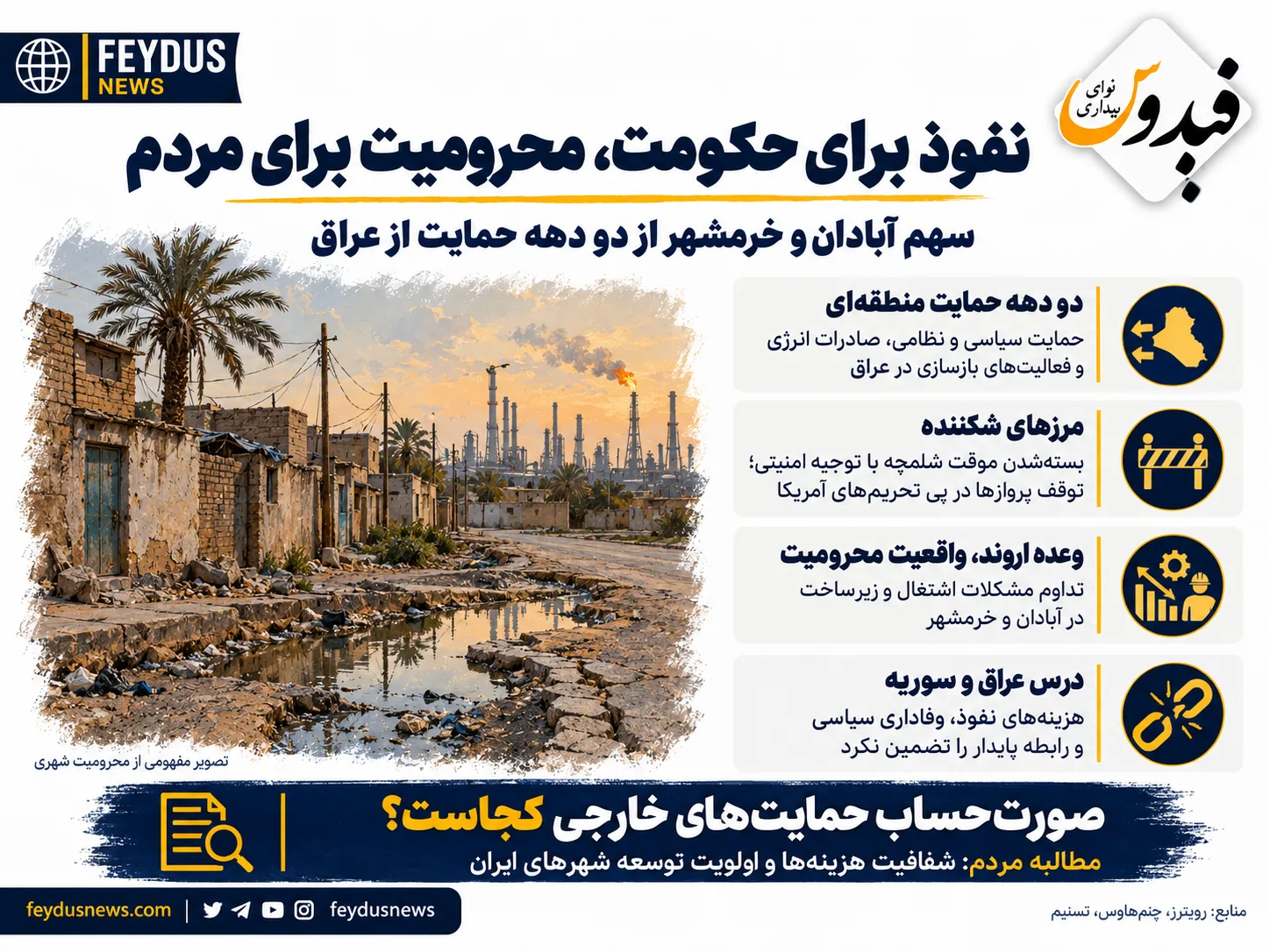
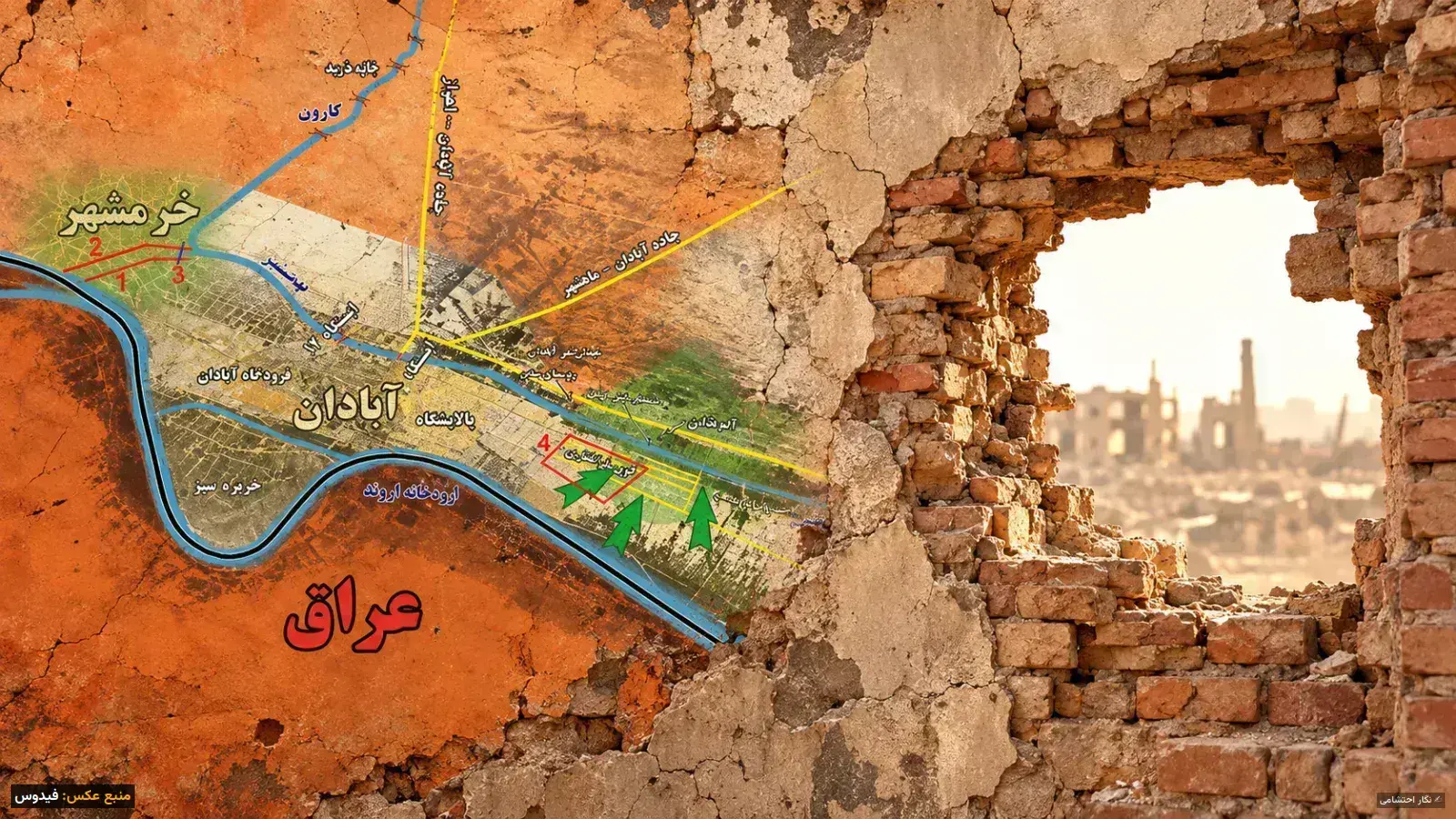
The Islamic Republic of Iran has been supporting aligned governments, parties, and armed forces in Iraq for over two decades, presenting this action as an investment for security and regional influence.
However, for the people of Abadan and Khorramshahr, the measure of success of these policies is not limited to the number of Tehran's allies in Baghdad; rather, it depends on meeting basic needs such as clean water, employment, an active port, and a city free from the scars of war. This gap between the claim of regional power and the living conditions of border residents raises a clear question: why does a government that mobilizes resources to expand influence in the neighborhood fail to meet the basic needs of its own cities?
After the fall of Saddam Hussein, Tehran expanded its relations with Iraqi political and armed movements. Military support, economic cooperation, energy exports, and reconstruction activities were different components of this relationship. Iran's assistance in combating ISIS is also part of this record. However, turning this collection into a guarantee of political loyalty was a fundamental mistake. Research shows that Popular Mobilization Forces operate in connection with political and economic structures and have complex interests and relationships; networks that cannot be explained solely by dependency on Tehran.
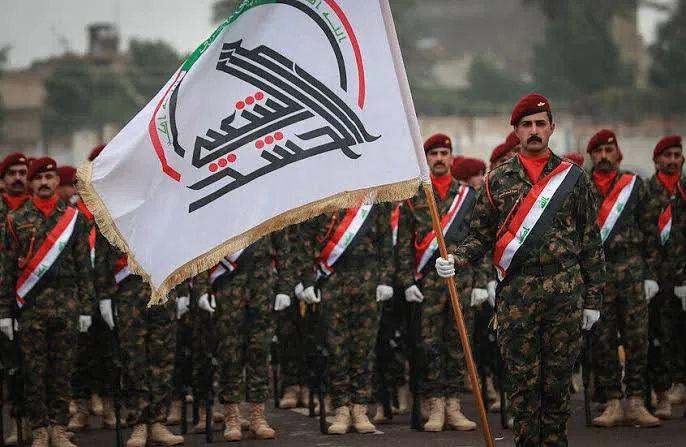
Borders that Revealed the Fragility of Influence
Recent limitations have revealed the gap between political influence and ensuring economic relations. According to Reuters, Iraq in September 2026 ordered the closure of the Shalamcheh border after drone attacks on Saudi Arabia, citing security precautions. Therefore, attributing this specific decision to US sanctions is inaccurate; however, its consequence for an economy dependent on open borders remains serious. Baghdad's security decision can disrupt the livelihood of Iranian border residents, without Tehran's years of political support preventing it.
In the aviation sector, compliance with US sanctions was more explicit. Iraq halted flights and then requested exceptions for pilgrimage, medical, and educational trips. Reuters reported on September 29 about receiving limited exemptions for resuming Iraqi flights. This back-and-forth shows that Tehran's support did not exempt Baghdad from calculating Washington's pressure. The political interpretation of this situation could be disregard for past support; however, the more fundamental issue is the inability of the Islamic Republic to convert the costs of influence into a sustainable and crisis-resistant relationship.
In the narrative of Iranian border residents, some southern Iraqis have welcomed the restrictions and consider economic influence and IRGC interventions as part of the factors of their country's crisis. This narrative cannot be generalized to all Iraqis; however, social opposition to the Islamic Republic's influence has documented precedence. In the 2019 protests, demonstrators protested against corruption, weak services, and politicians' dependency on foreign powers, especially Iran, and set fire to the Iranian consulate in Najaf. Supporting aligned forces has not necessarily turned into popularity among the people.
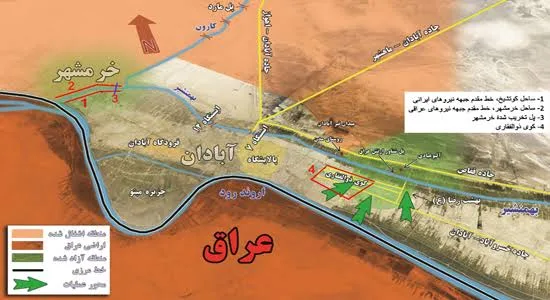
Now the opinion and remarks of some Iraqi citizens who express satisfaction with the restriction of Iranian movement or make insulting remarks, have found a meaning beyond a border dispute for some southern people: an old wound reopening.
According to some Khuzestani citizens, Iraqis, while supporting the closure of the border, say with an insulting tone: "The Iranian beggar's bowl has been collected." An accusation that recalls the waste of billions of dollars by Iran, which instead of developing Khuzestan's municipalities, has contributed to the development of southern Iraq.
Arvand; Promise of Prosperity, Continuation of Deprivation
The Arvand Free Zone was supposed to turn the border position of Abadan and Khorramshahr into an opportunity for trade and investment. But trade without urban infrastructure, competitive production, and responsive management does not bring development. In June 2015, the representative of Khorramshahr, in statements published by Tasnim, criticized unemployment, unfinished sewage infrastructure, and the failure of the Free Zone to develop the city. Economic reports in 2024 also continued to speak of the employment deadlock in Abadan and Khorramshahr. The persistence of these issues shows the gap between the promises of the Free Zone and the lives of the people.
For people who compare projects across the border with their unmet needs, this gap signifies a reversal of priorities. However, proving that specific reconstruction funds for Khorramshahr have been directly spent on developing Iraq requires financial documents. Documented criticism is based on "opportunity cost": what share could the resources and capacities allocated to regional goals have had in domestic development? Why are the invoices for support and the criteria for measuring their returns not available to the people?
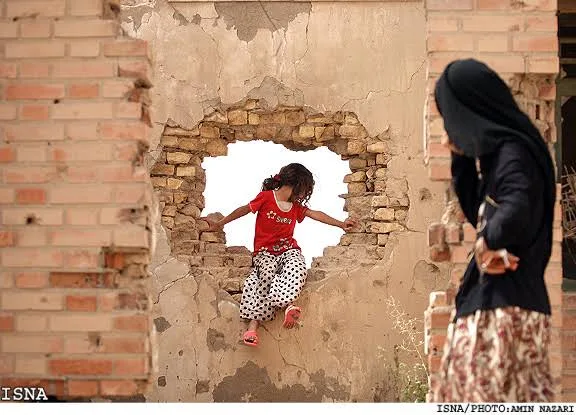
Syria also showed the limitations of this logic. The fall of Bashar al-Assad's government in December 2024, after years of Tehran's support, revealed the fragility of investing in the survival of a government. This event cannot simply be called "Syria turning its back"; the issue was tying Iran's long-term interests to the fate of a political structure that collapsed. Costly support did not guarantee the survival of the ally.
The final account of this policy should be examined in the lives of the Iranian people. Abadan and Khorramshahr cannot continue to bear the costs of decisions for which they do not receive clear explanations about the budget, necessity, and outcome. The government is obliged to publish the costs of foreign support, contracts, uncollected claims, and economic achievements. As long as external influence takes precedence over internal welfare, every border restriction will be a reminder of the same contradiction: people bear the cost of a policy that, in times of crisis, does not even guarantee their daily trade continuity.