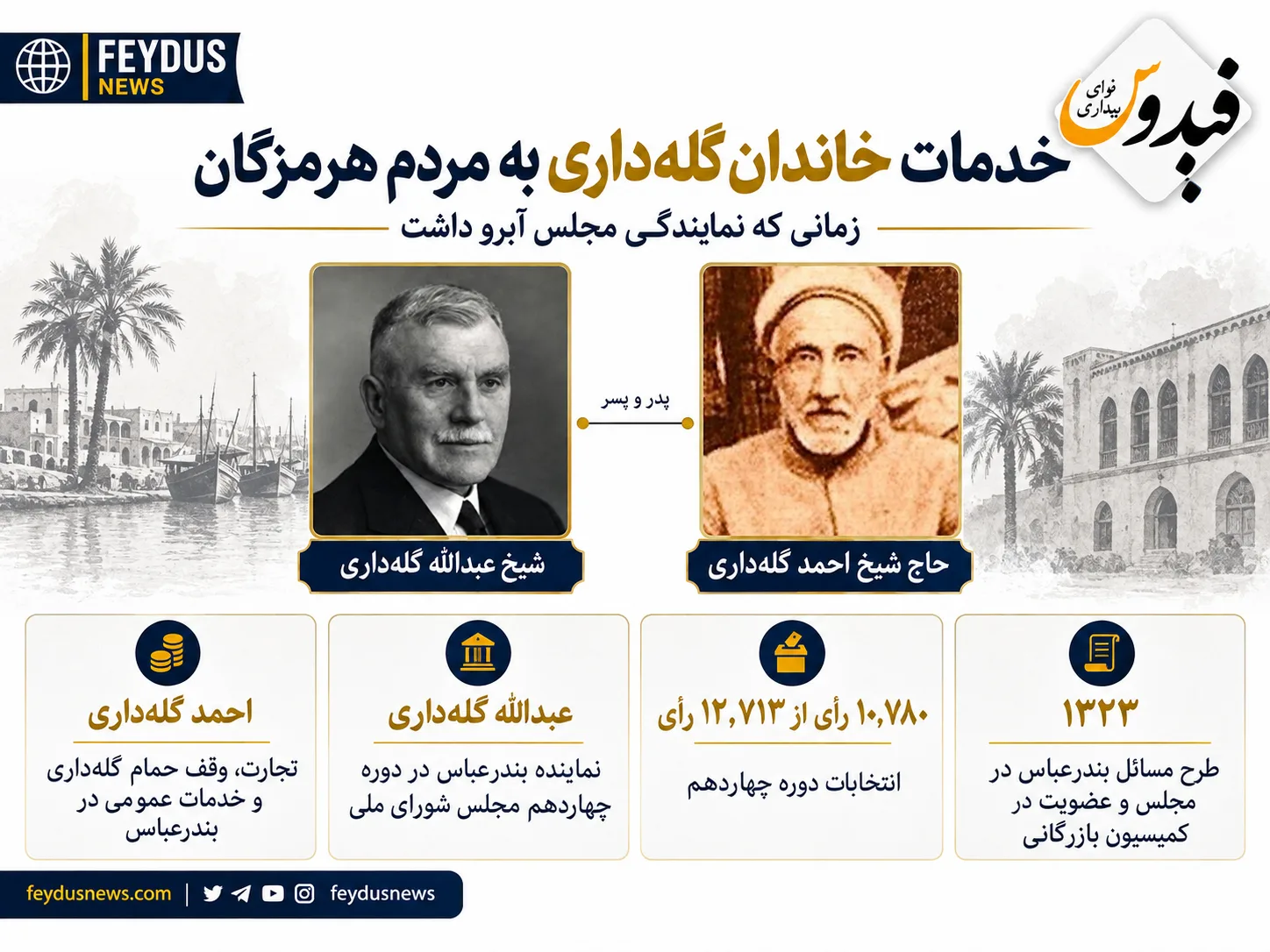
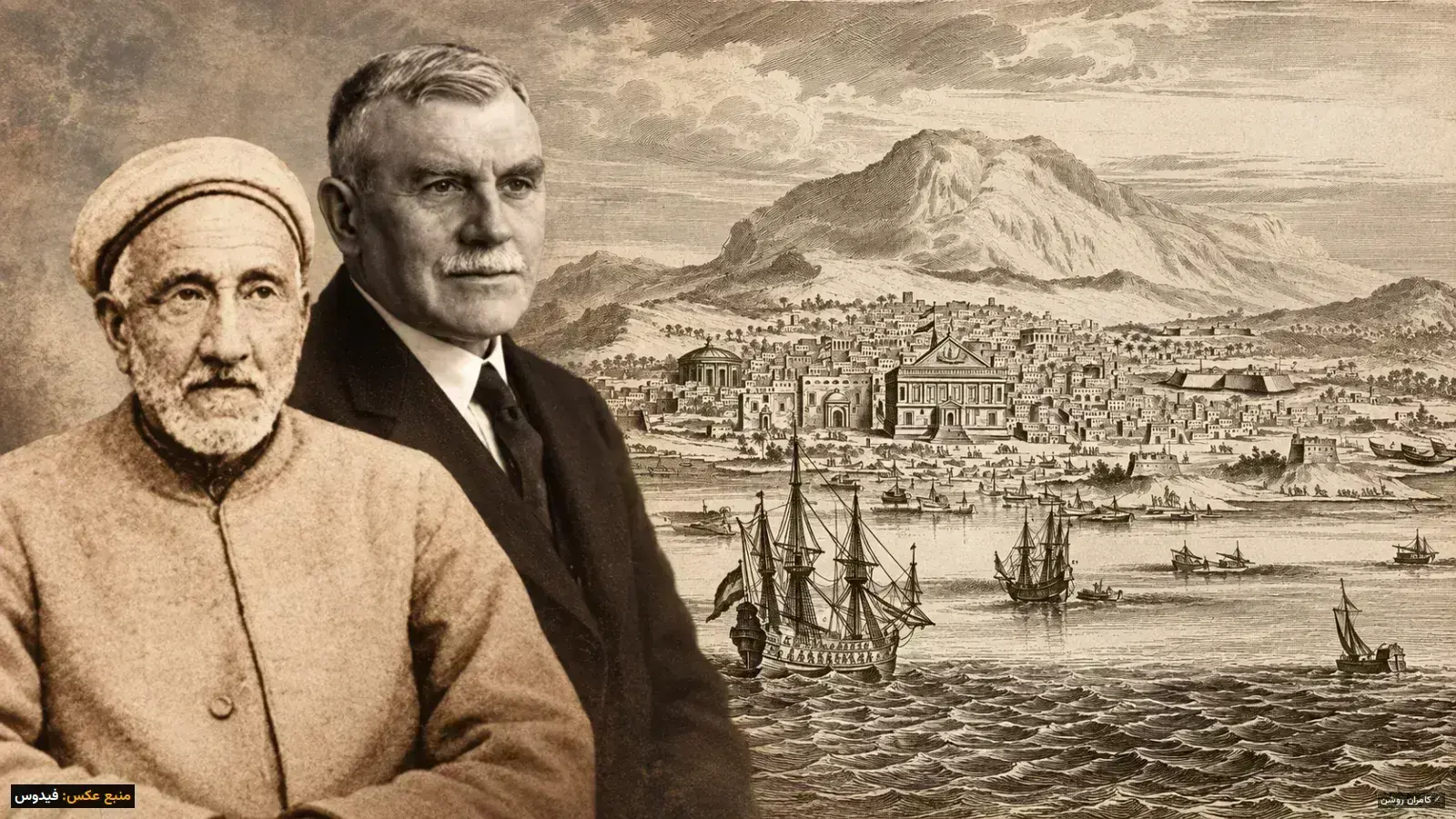
Haj Sheikh Ahmad Gallehdari was known for trade, endowments, and establishing public infrastructure in Bandar Abbas, and his son, Sheikh Abdullah Gallehdari, took this social and economic influence to the national political arena, representing Bandar Abbas in the fourteenth term of the National Consultative Assembly and serving on the Commerce Commission. The remaining documents from the Assembly and historical monuments of Bandar Abbas depict a family whose activities spanned from maritime trade and charitable affairs to politics and international relations.
Ahmad Gallehdari; Trade in the Service of the City
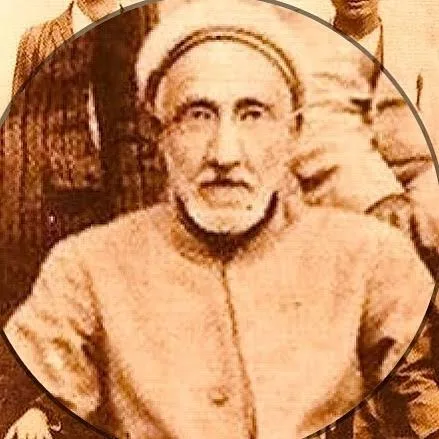
In Bandar Abbas during the late Qajar and early Pahlavi periods, when many of today's urban services did not exist, the major southern traders were not only economic actors but also provided public services through endowments and personal investments. Haj Sheikh Ahmad Gallehdari was one of the well-known figures of this commercial class.
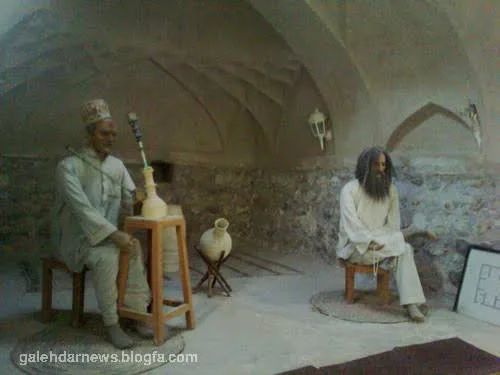
His most notable legacy is the Gallehdari Bathhouse in Bandar Abbas; a building that historical and tourism sources attribute to the Qajar period and specify that Haj Sheikh Ahmad Gallehdari's trading house created and endowed it for public use. This bathhouse was later listed as a historical monument and is today recognized as part of Hormozgan's cultural and anthropological heritage.
The importance of such an initiative should be assessed in the context of Bandar Abbas at that time. The city did not yet have an extensive piped water network and modern sanitary facilities, and public baths were one of the essential urban living infrastructures. Sources related to the building state that the Gallehdari Bathhouse was used by the public until piped water became widespread in the following decades.
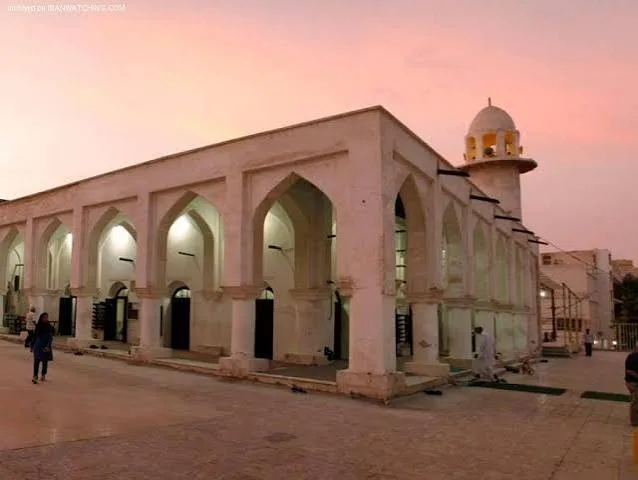
Local narratives and writings about the Gallehdari family also mention Haj Sheikh Ahmad's participation in the construction or support of mosques, water reservoirs, and charitable affairs. The endowment of the bathhouse and the activities of his trading house clearly demonstrate this family's social role in Bandar Abbas.
Ahmad Gallehdari's activities were not limited to charitable affairs. He was one of the major traders of Bandar Abbas, and the family trading house was active in the economic network of southern ports. In a city whose economy was based on seafaring, trade, and connections with India and the Gulf sheikhdoms, such trading houses played a crucial role in the transfer of goods, capital, and foreign relations.
Abdullah Gallehdari; The Next Generation's Entry into National Politics
Sheikh Abdullah Gallehdari, Ahmad's son, later chose a different path and entered politics. In the elections for the fourteenth term of the National Consultative Assembly, he was elected from the Bandar Abbas constituency with 10,780 votes out of a total of 12,713 votes.
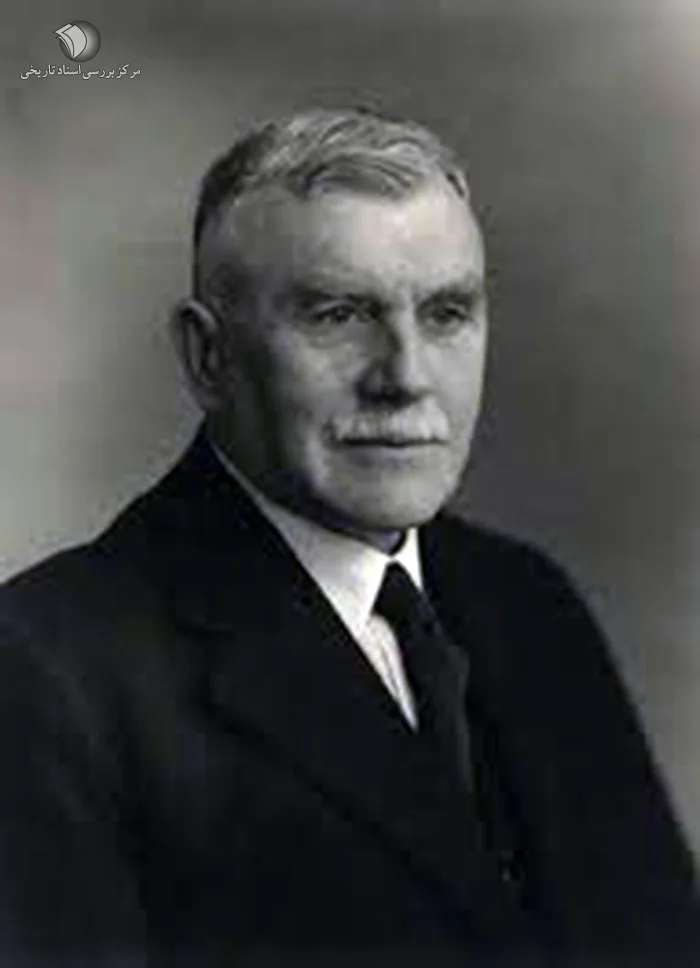
The report of the sixth branch of the Assembly on July 1, 1944 announced that no complaints regarding the election results had been submitted to the Supervisory Board or the Assembly within the legal period, and his representation was approved by the Assembly vote.
However, separate Assembly documents show that the Ministry of Interior attempted to influence the Bandar Abbas elections. The important point is that in the same correspondence, the Ministry's preferred candidate was someone else, and Gallehdari was ranked third in the reported list. Therefore, the existing documents do not inherently indicate that Abdullah was the government’s chosen candidate at the time.
The Voice of Bandar Abbas in the Assembly
One of the interesting documents from Abdullah's term in office dates back to the session on August 15, 1944. In that session, Amir Timur, a member of the Assembly, requested the presidium to allow Gallehdari to present "an important telegram" related to Bandar Abbas to the Assembly.
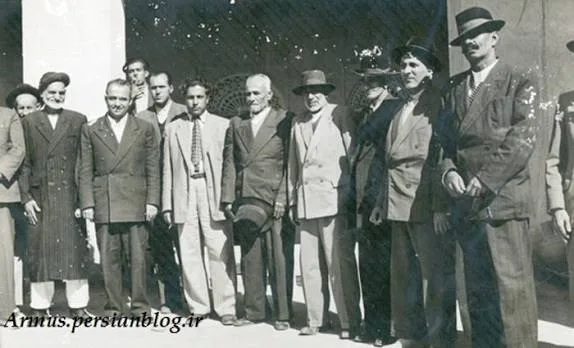
This brief phrase indicates that Gallehdari used the Assembly's mechanisms to convey the issues of his constituency to the center. The full text of that telegram is not included in the same minutes, but his effort to raise the issue of Bandar Abbas in the Assembly is documented.
A few months later, the representatives elected Abdullah Gallehdari as a member of the National Consultative Assembly's Commerce Commission. In the session on October 15, 1944 his name was listed among the 18 members of this commission.
This responsibility was of particular importance for the representative of Bandar Abbas. At that time, Bandar Abbas and the southern ports largely derived their economy from trade, customs, shipping, and maritime exchanges, and the presence of the regional representative in the Commerce Commission provided the opportunity for more direct participation in reviewing the country's economic and trade laws.
From a Local Trading House to a Network Beyond the Persian Gulf
In the continuation of Abdullah's life, his activities extended beyond Bandar Abbas and Tehran. Documents later registered in the archives of the British Foreign Office show that in the 1960s, he acted as a mediator in negotiations between some Gulf sheikhs and American oil companies. Thus, the social capital and international connections that began in the family's commercial environment evolved into a transnational network in Abdullah's generation.
Overall, the legacy of Ahmad and Abdullah Gallehdari can be seen in two different periods: Ahmad played a role in the social development of Bandar Abbas through trade, endowments, and public services; Abdullah expanded the family's presence from the local economy to the national decision-making structure by entering the Assembly, serving on the Commerce Commission, and raising Bandar Abbas's issues to the national political level.
Remaining works such as the Gallehdari Bathhouse and official Assembly documents show that the name of this family is part of the social, economic, and political history of Bandar Abbas and the region that was later named "Hormozgan".