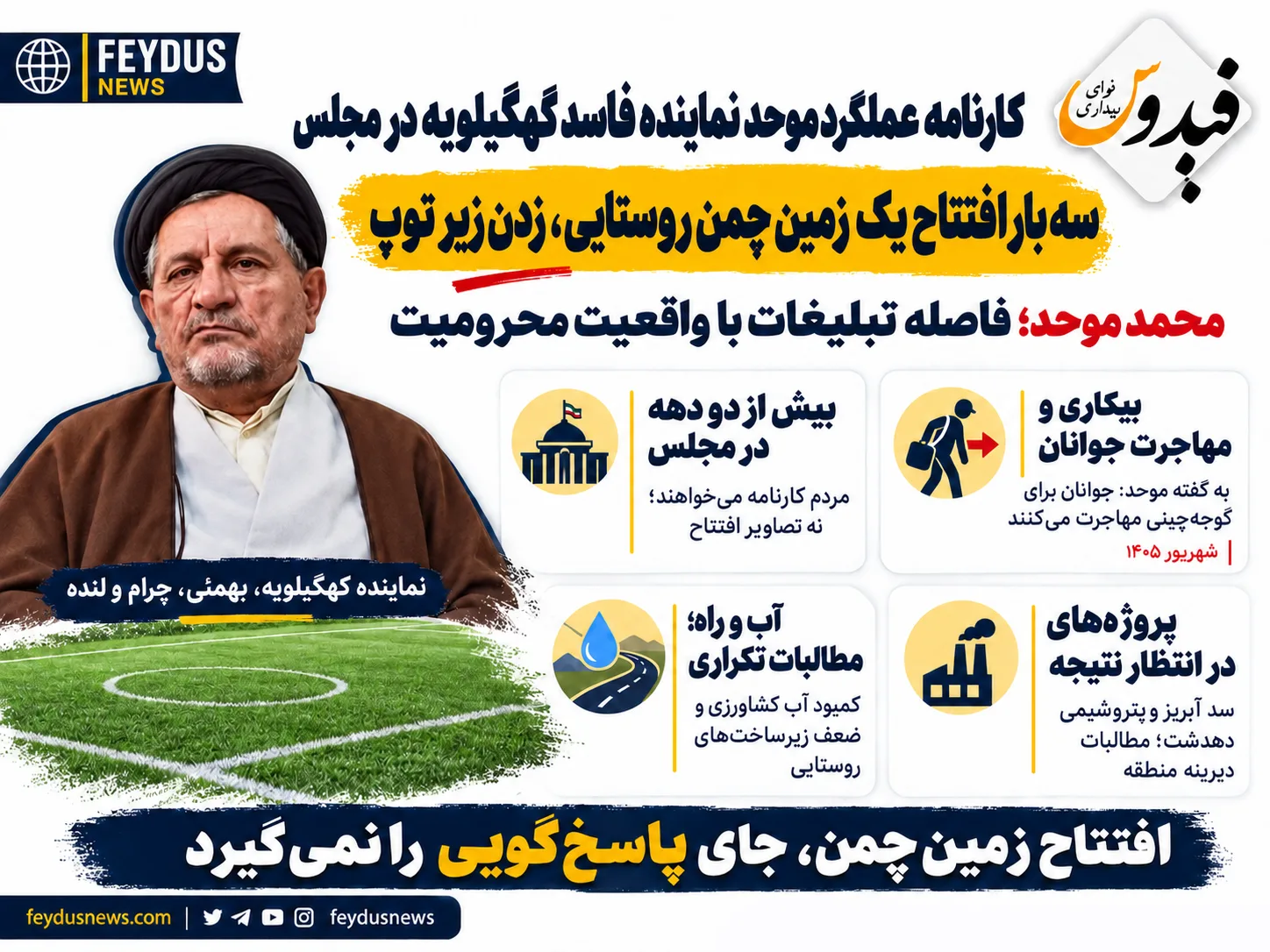
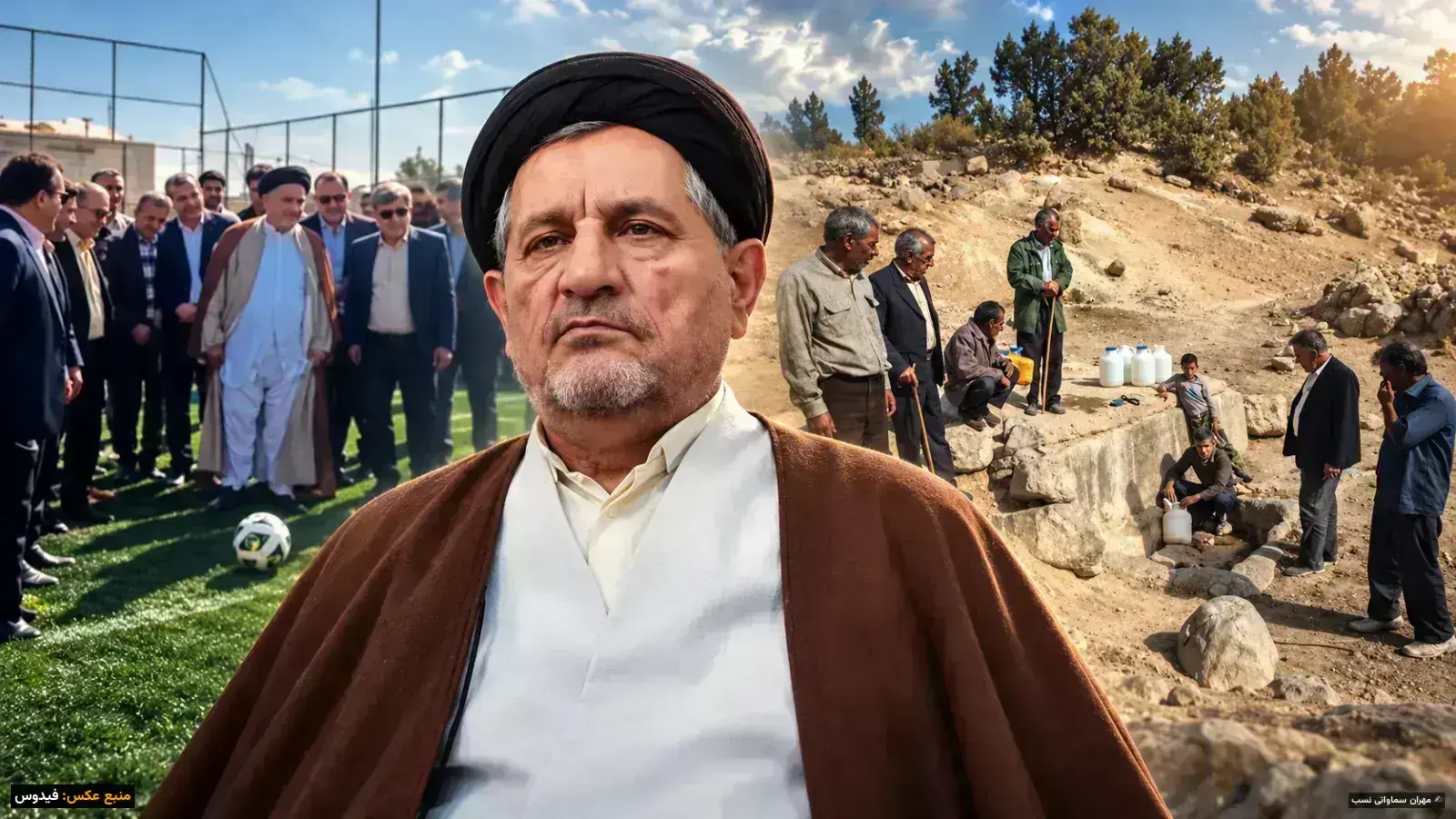
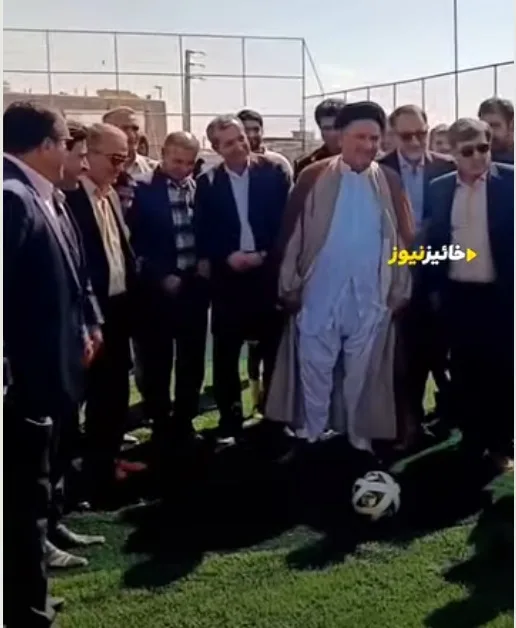
When a representative with over two decades of parliamentary experience turns the inauguration of a football grass field into his promotional showcase, it primarily reflects the level of expectation he has set for accountability to the people. Especially since reports of the field's inauguration have been seen before.
In a province with abundant deprivation and infrastructural issues, making an achievement out of inaugurating a grass field clearly reveals the representative's attention to the problems of his electoral district and explains why this linchpin of rent and corruption in Kohgiluyeh and Boyer-Ahmad is seen by locals as a clear symbol of political corruption and executive inefficiency.
In a region plagued by unemployment, water scarcity, and decaying infrastructure, when Mohahed feels like a people's hero by kicking a ball on a small local grass field, it is a worrying sign of the gap between promotions and the reality of people's lives.
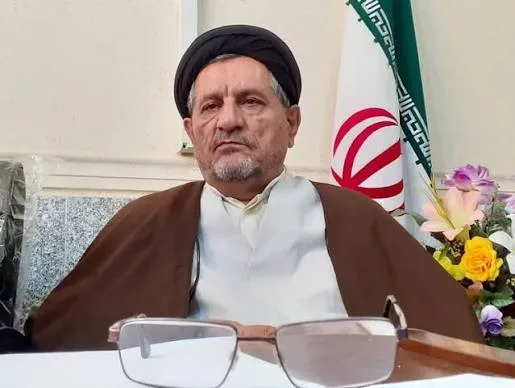
Mohammad Mohahed, the representative of the counties of Kohgiluyeh, Bahmai, Charam, and Lendeh, is not a newcomer politician who needs time to understand the region's problems. His long-standing presence in the power structure makes his responsibility heavier. People have the right to know what exactly has changed in their lives as a result of all these years of access to ministers, managers, and decision-making centers. The record of representation should be measured by sustainable employment, access to services, and reduction of deprivation; the number of meetings and inauguration photos do not replace these indicators..
Two Decades of Mohahed's Parliamentary Record Equals Nothing
The dimensions of failure can even be seen in Mohahed's own words. In September 2026, he described the unemployment situation in his electoral district as dire and said that the youth of Kohgiluyeh migrate for tomato picking. This statement, for a representative with such a background, is not merely a protest against the government; it is an admission of the continuation of a crisis for which he must also account for his share in controlling it. A young person who goes to others' farms for daily wages has the right to demand the practical result of years of employment promises..
The same contradiction is evident in the issue of water and agriculture. In his May 2025 speech, Mohahed spoke of the lack of agricultural water and the compulsion of the region's youth and women to work in others' fields; a situation that, according to him, is accompanied by long commutes, accidents, and social harms. A representative who knows this reality must show how he has used legislative and supervisory tools to change it. Repeating the description of deprivation from behind the podium, after years of responsibility, is no longer considered an advantage on its own..
Unmet Demands of the People; Representative Engaged in Futile Display
The list of demands is not new either. In Mohahed's meetings with the people of Charusa in April 2022, issues of roads, water, electricity, gas, and rural infrastructure were raised. At that time, promises were made about improving roads and addressing shortages. This history shows that the region's fundamental issues have been on the officials' table for years. People have not been silent about their pains; what has been lacking is a clear response regarding the time of implementation, the extent of progress, and the responsibility for delays. Every new promise should be measured against the fate of the previous one..
The Abriz Dam and Dehdasht Petrochemical are still introduced in official literature as longstanding demands and symbols of regional development. In October 2026, it was again mentioned that these projects are accelerating. For the people, the value of such news depends on the date of operation, the resources provided, and the real job opportunities it creates. Phrases like "continuous follow-up" and "serious determination," when repeated without showing a corresponding output, become a formula for postponing accountability..
The weakness of representation becomes evident when the public's right depends on personal visits and phone calls. Even Mohahed's own promotional pages, in reporting on public meetings, acknowledge that employment is at the top of public requests. This clearly highlights the performance crisis of the province's representatives in the eyes of the people.
Inaugurating a grass field cannot cover the gap between a long history of power and the continuation of deprivation. Mohahed must provide an assessable record: which promise has been fulfilled, which project is delayed, and for which failure has he used the parliamentary oversight tools? The responsibility of the government and executive bodies is clear, but the representative cannot claim the credit for inaugurations and at the same time shift all responsibility to others when it comes to accountability. The people of Kohgiluyeh want their share of development. After all these years, the camera frame is no longer a sufficient response..