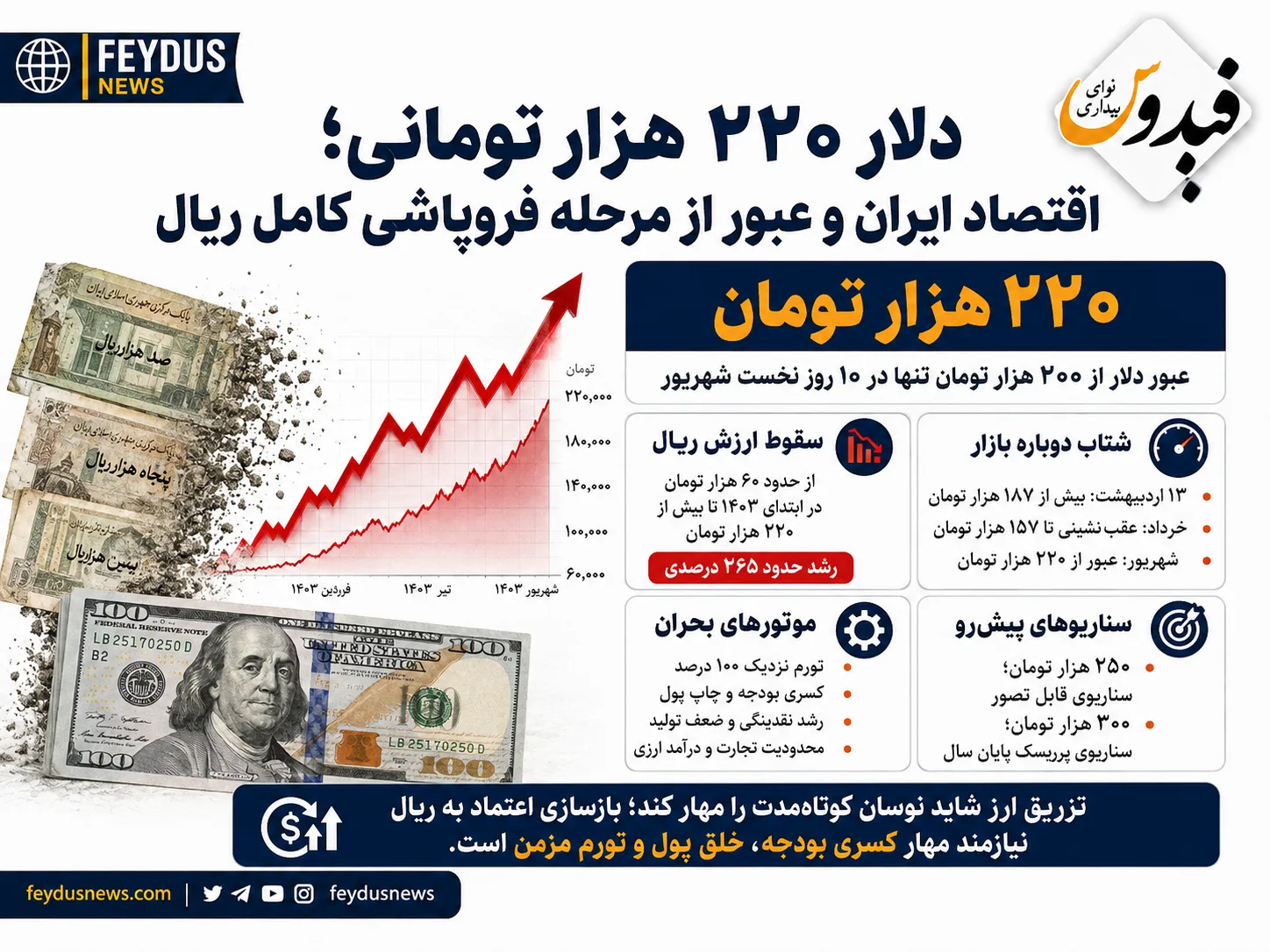
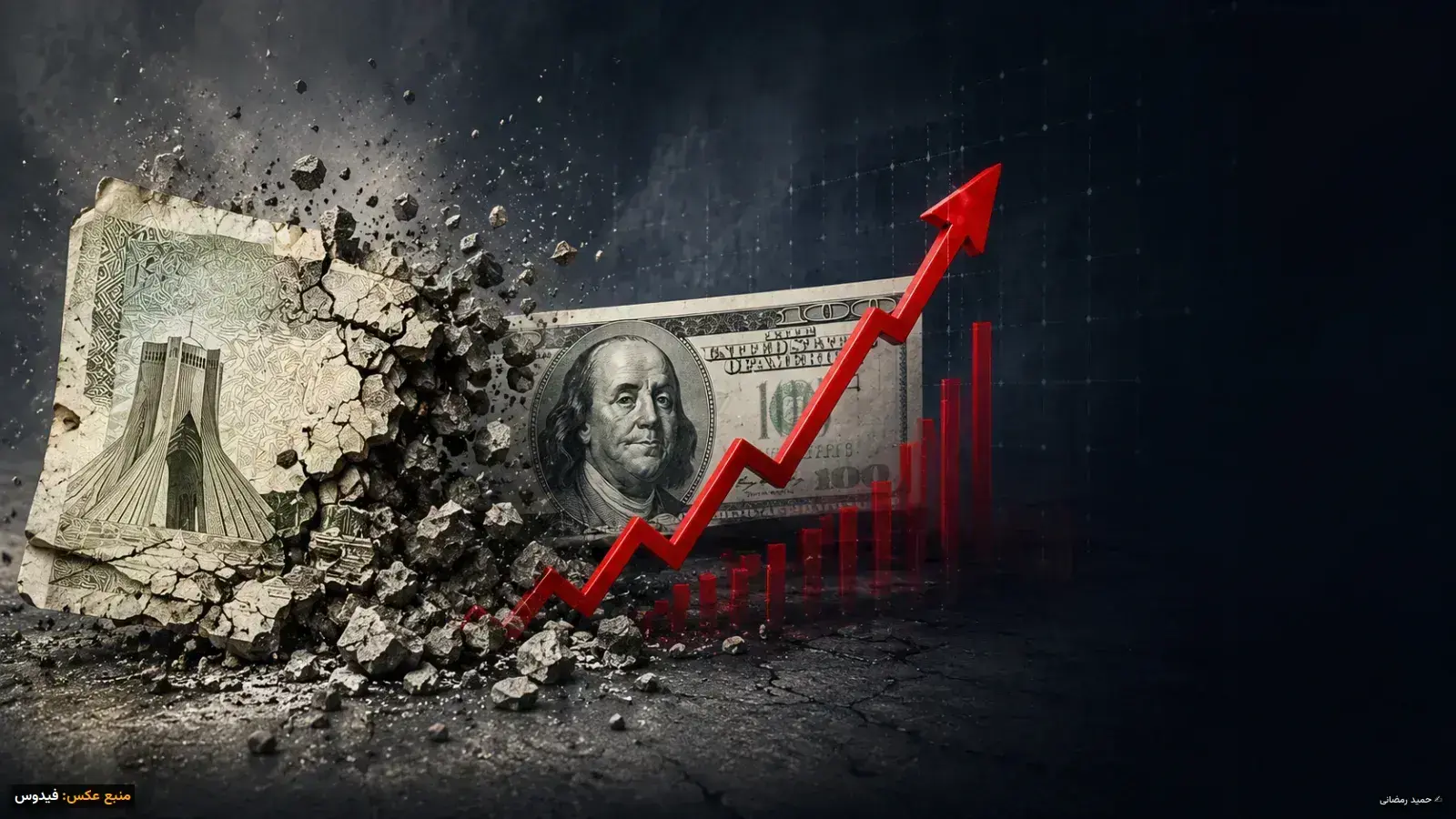
The crossing of the dollar price in Iran's free market over the 220,000 toman threshold can no longer be considered merely a short-term fluctuation in the currency market. The dollar, which had surpassed the 200,000 toman mark on the first day of Shahrivar, reached over 220,000 tomans only about 10 days later; an increase that indicates the acceleration of the fall in the national currency's value amidst intensified political uncertainty, limited foreign exchange earnings, heavy inflation, and government budget deficits.
The main question for Iran's economy now is no longer whether the government can lower the exchange rate for a few days or weeks; the question is whether the current economic policies and available foreign exchange resources have the capacity to stop the long-term decline in the value of the rial.
From 60,000 to 220,000 Tomans in Less Than Two and a Half Years
In the early days of 1403, the dollar was traded in the free market for about 60 to 62 thousand tomans. On the 4th of Farvardin of the same year, the rate was reported at 61,800 tomans. Now, the dollar has surpassed 220,000 tomans; meaning the price of the US currency has increased by about 265% compared to that period.
The pace of this fall has also been notable in recent months. On the 13th of Ordibehesht this year, the dollar had reached over 187,000 tomans, retreated to about 157,000 tomans in parts of Khordad, but re-entered an upward wave in Mordad and Shahrivar, reaching over 220,000 tomans in just the first 10 days of Shahrivar.
Such a movement is more than just about the price of a foreign currency; it reflects the loss of confidence in the rial and its collapse as a tool for domestic trade.
Now, although the national currency is still the official means of payment in Iran and thus one cannot speak of the 'end of rial transactions,' in an economy with such inflation, households and businesses measure the price of assets, housing, cars, raw materials, and even the profit of economic activities by the exchange rate.
89% Inflation; The Internal Engine of Rial's Fall
Another determining factor is inflation. According to the latest statistics from the Iranian Statistics Center, point-to-point inflation in Mordad 1405 has reached nearly 100% and annual inflation has exceeded 100%. Food inflation has also been above the general average, directly impacting the lower income deciles.
These figures double the importance of the exchange rate increase. Unlike periods when the dollar's jump was mainly a product of political shock and part of the price increase would return with reduced political risk, this time Iran's economy is simultaneously facing very high domestic inflation.
Even government officials have acknowledged a significant part of this issue. Executive Deputy Masoud Pezeshkian has stated that the government is forced to print money due to budget imbalance; an action that itself leads to increased inflation.
For this reason, even if the Central Bank, as Abdolnaser Hemmati emphasized, has the necessary foreign exchange resources to meet market demand, the supply of currency can only manage part of the short-term fluctuations. Injecting dollars alone cannot resolve the budget deficit, liquidity growth, chronic inflation, production decline, and foreign trade restrictions.
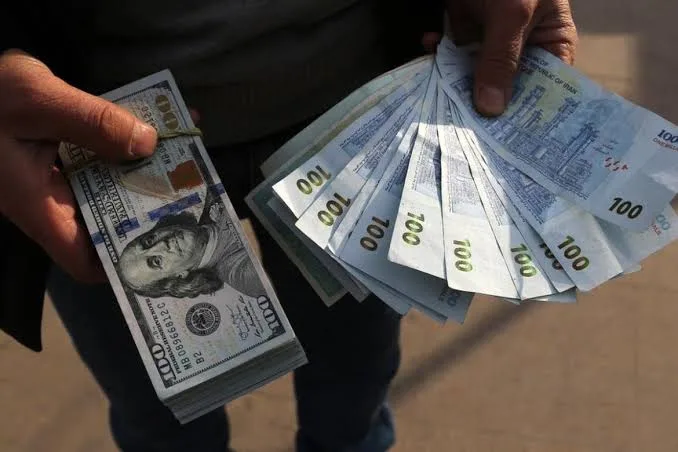
250,000 Toman Dollar; From Warning to a Conceivable Scenario
The prediction of a 250,000 toman dollar in the coming month is now seen in the analysis of some market experts. Kamran Soltani, former secretary of the Exchange Bureau, has indicated that the general inflation has transferred to the currency market, and reaching the dollar to around 250,000 tomans is not unexpected.
Another analysis based on the differences in inflation, liquidity, and oil revenues estimated the average dollar rate in 1405 in the range of approximately 191 to 258 thousand tomans under the continuation of the current situation.
Although the 300,000 toman scenario is more pessimistic, it has not been completely removed from economic discourse. Some models, in case of continued high inflation, liquidity growth, and intensified foreign exchange resource constraints, have proposed the range of 220 to 300 thousand tomans for the end of the year. However, 300,000 tomans should be considered a high-risk scenario.
Even analyses conducted on purchasing power show that with a 250,000 toman dollar, the dollar value of the minimum wage will significantly decrease, and the dollar surpassing 300,000 tomans could bring the real wage level to unprecedented levels in contemporary Iran's economy.

Even an Agreement Won't Solve the Problem Overnight
The important point is that reducing political risk or even reaching a foreign agreement does not necessarily mean the immediate return of Iran's economy to the conditions of two or three years ago.
The experience of recent months has shown that the release of positive political news can lower the dollar in the short term. In Khordad, simultaneously with increased optimism about negotiations, the dollar retreated to the range of 157,000 tomans.
But the fundamental problem of Iran's economy is not just sanctions now. Budget deficits, liquidity growth, banking system issues, investment decline, production weakness, and inflation that has reached 100% point-to-point are factors that will not quickly disappear even with reduced foreign tensions. For this reason, the crossing of the dollar over 220,000 tomans might be considered a 'point of no return' in a technical sense and the crossing of Iran's economy over an important psychological and structural boundary: a stage where restoring confidence in the rial is no longer possible with daily Central Bank intervention or currency injection.
The government needs something much more than controlling the currency market to change this path; curbing the budget deficit, limiting money creation, reviving foreign trade, increasing sustainable foreign exchange income, and ultimately rebuilding public confidence in the national currency.
Otherwise, reaching 250,000 tomans for the dollar will be an expected leap and the continuation of a path that Iran's economy is currently on; and 300,000 tomans will transform from an unimaginable number to a scenario that the market will have to seriously consider in its calculations.