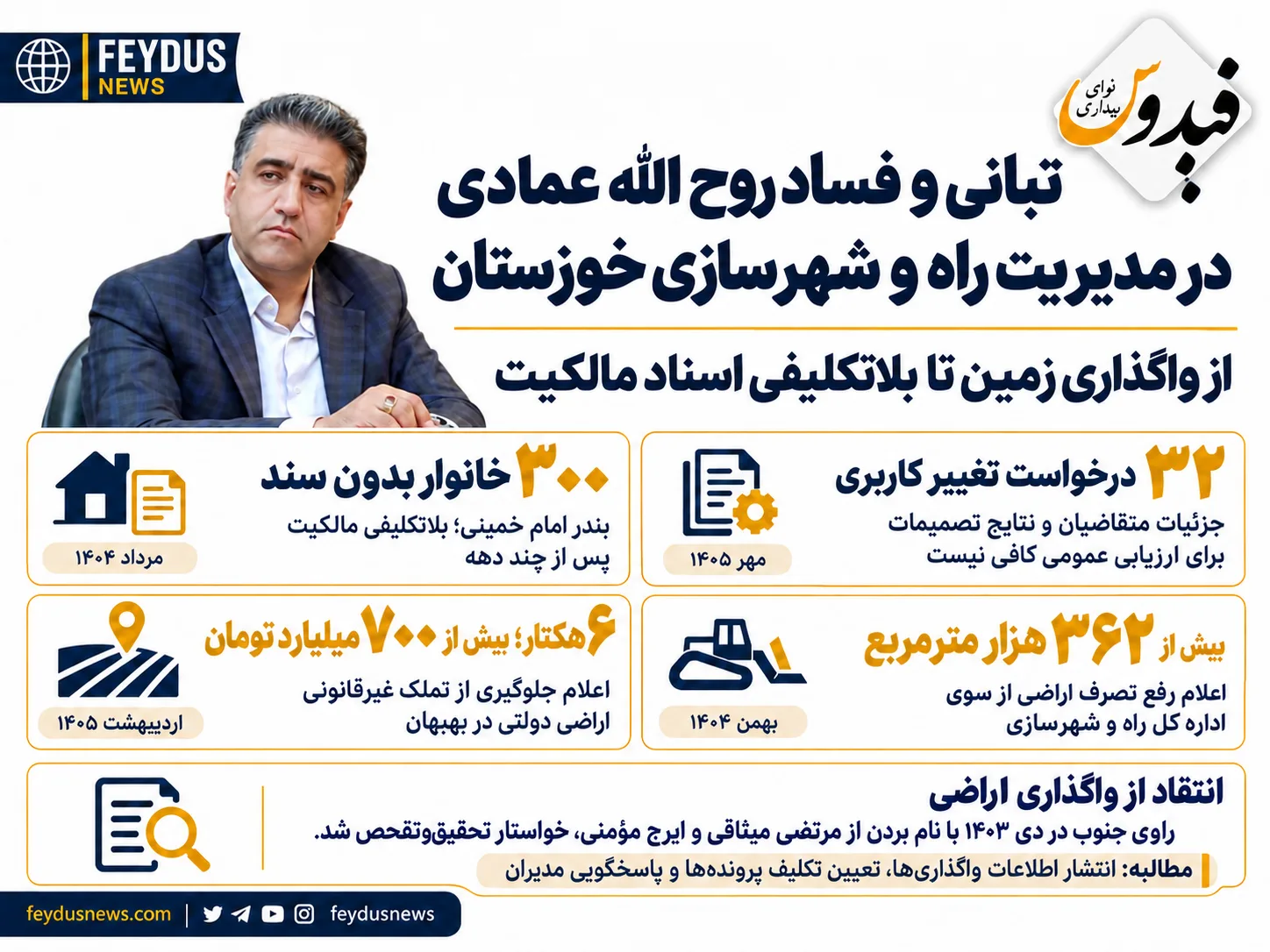
While the managers of the Khuzestan General Directorate of Roads and Urban Development report on the issuance of thousands of ownership documents and combating land grabbing, media reports indicate ambiguity in the allocation of state lands, criticism of the performance of the Property and Legal Affairs Deputy, and long delays in resolving land ownership issues. The continuation of these problems underscores the necessity for accountability regarding land management and addressing citizens' cases; a responsibility that cannot be fulfilled by merely publishing official statistics.
Reviewing reports published over the past two years shows that the Khuzestan General Directorate of Roads and Urban Development, as one of the most important agencies responsible for managing state lands and housing policy in the province, has faced a series of criticisms regarding decision-making transparency, the process of handling ownership cases, and the performance of its subordinate sections.
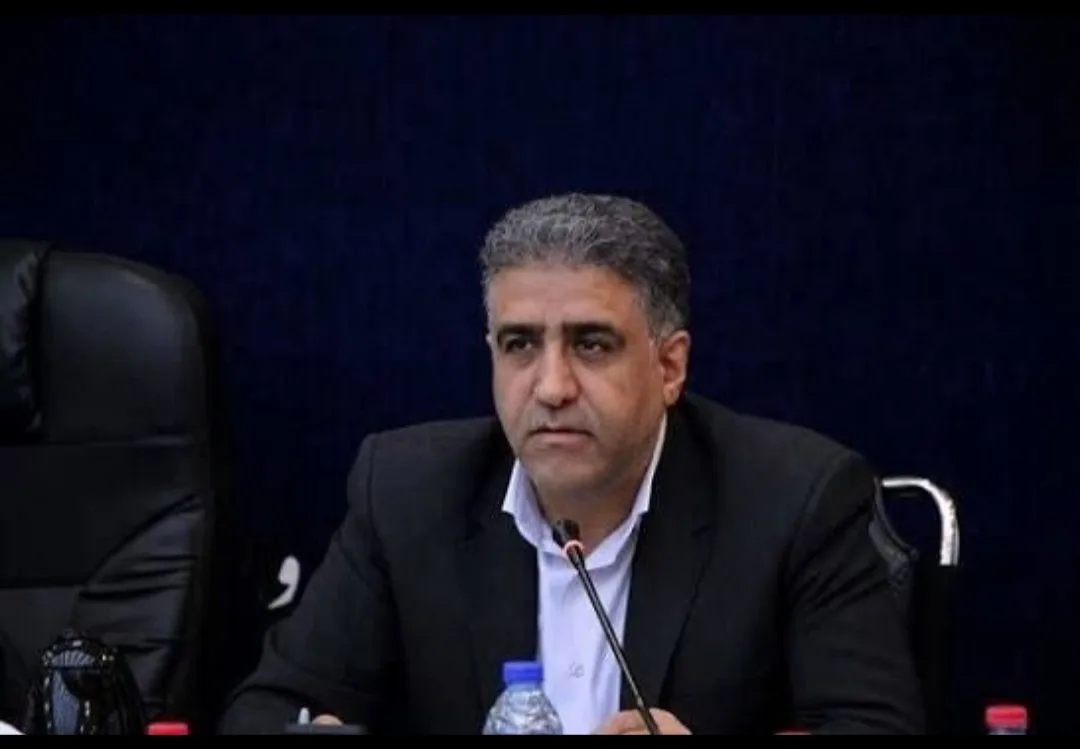
Rouhollah Emadi, the Director General of Khuzestan Roads and Urban Development, holds responsibility for this organization while a significant portion of land and ownership issues in the province remain unresolved. Although some of these problems have roots going back decades and emerged before his tenure, their continuation does not absolve the current management of the responsibility to pursue and remove obstacles.
Ambiguity in the Allocation of State Lands
One of the main points of criticism is the performance of the Property and Legal Affairs Deputy of the Khuzestan General Directorate of Roads and Urban Development; a section that plays a direct role in managing government real estate assets, resolving land issues, and handling legal cases.
The news outlet "Ravi Jonub" in January 2025, named Morteza Misaghi, the then Deputy of Property and Legal Affairs, and Iraj Momeni, the then Head of Ahvaz Housing and Urban Development, calling for an investigation into the performance of this organization. This media outlet criticized the lack of transparency in publishing information on the allocation of state lands, raising ambiguities about the allocation of certain lands to specific individuals.
These claims, without the publication of contracts and detailed land specifications, do not prove misconduct; however, their examination requires the publication of a list of allocations, the legal basis of decisions, and the specifications of lands subject to allocation to enable a documented evaluation of the organization's performance.
The Khuzestan General Directorate of Roads and Urban Development must also clarify the mechanisms to prevent discrimination in land allocation and how decisions by the Property and Legal Affairs Deputy are supervised. Clarifying the scope of authority, decision-making stages, and the responsibility of supervisory bodies is part of the accountability regarding the management of public assets.
Uncertainty of Documents; The Cost of Inefficiency on the People
Delays in issuing ownership documents are another point of criticism against the performance of the Khuzestan Roads and Urban Development organization. In August 2025, the CEO of the National Land and Housing Organization announced decisions to resolve ownership issues in Bandar Imam Khomeini, Behbahan, Sharafat Shushtar, and Arvandkenar.
According to published reports, in Bandar Imam Khomeini, about 300 families still lacked official ownership documents after several decades. In Behbahan, the illegal sale of state lands by an individual had caused legal and service issues for buyers.
These cases show that weaknesses in organizing land ownership can affect families' lives for years. Continued uncertainty, especially in cases with a long history, increases the necessity for coordination among responsible agencies and continuous pursuit until final resolution.
In such circumstances, announcing the number of issued documents only shows part of the organization's performance picture. A more accurate evaluation requires announcing the number of unresolved cases, explaining obstacles to resolution, and providing a specific timeline for addressing remaining issues.
Land Use Change and Land Grabbing
Land use change is also a sensitive decision-making area in Khuzestan that requires effective oversight and the publication of details. In October 2026, it was announced that 32 land use change requests in the province had been reviewed. Officials emphasized the protection of fertile lands, but the published information is insufficient for public evaluation of these requests' details.
The specifications of individual and corporate applicants, the number of approved or rejected requests, and the economic value of lands subject to decisions are among the necessary information for reviewing these cases.
Land use change, especially in areas with urban and industrial development potential, can significantly increase the economic value of land. Therefore, transparency about the decision-making basis and how requests are handled is essential for monitoring compliance with regulations and preventing discriminatory actions. Reviewing these 32 cases does not in itself indicate misconduct. What matters is the publication of sufficient information and enabling independent oversight of decisions that can create significant economic benefits for owners and applicants.
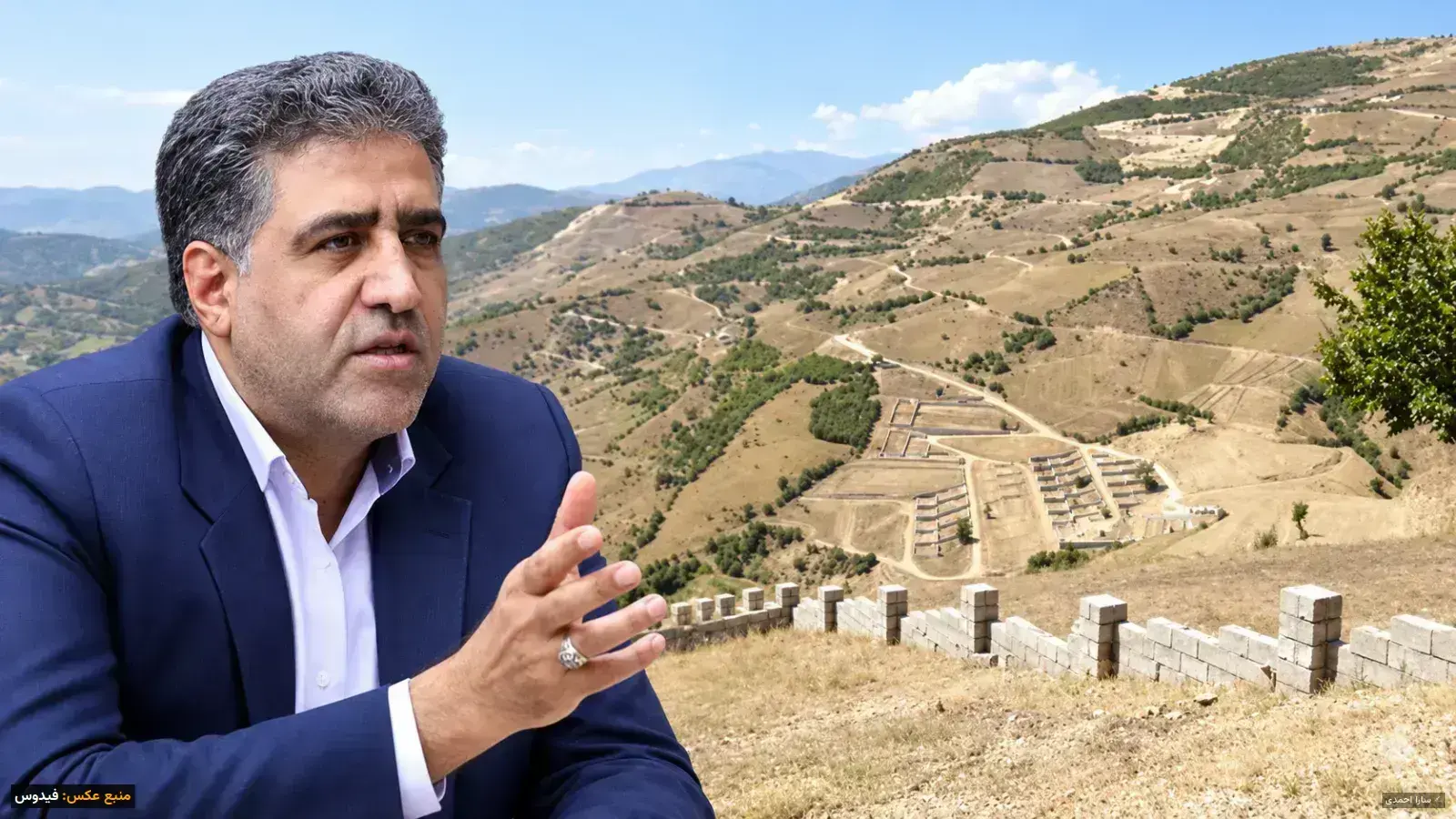
In May 2026, Rouhollah Emadi reported preventing the illegal acquisition of about six hectares of state land in Behbahan; lands with an expert value of over 700 billion tomans. According to the Director General of Khuzestan Roads and Urban Development, individuals using false documents attempted to acquire these lands, but legal pursuit resulted in a ruling in favor of the government.
Preventing the acquisition of these lands is a positive action in protecting public property. However, the economic value of the lands in question highlights the importance of strengthening mechanisms for early detection and prevention of illegal acquisition attempts. Effective protection of state lands requires oversight that identifies and stops such actions before reaching complex legal stages, in addition to legal pursuit.
In February 2026, the Khuzestan General Directorate of Roads and Urban Development also reported the recovery of over 362,000 square meters of land. The extent of these cases shows that protecting state lands in the province still faces serious challenges, and evaluating performance in this area must include preventive measures alongside statistics on land recovery.
Khuzestan Roads and Urban Development managers in various periods have reported the issuance of thousands of ownership documents and the recovery of state lands. These statistics reflect part of the organization's performance, but accountability regarding ambiguities in land allocation, unresolved cases, and decisions related to land use change is also part of management's responsibility. Rouhollah Emadi must explain the actions taken to address criticisms related to land allocation, reduce unresolved cases, clarify land use change decisions, and evaluate the performance of the Property and Legal Affairs Deputy. Accountability in this area requires providing verifiable information about the outcome of investigations and plans to address issues.
The responsibility of managing a government agency includes addressing remaining problems and overseeing the performance of subordinates, in addition to announcing achievements. Publishing the status of ownership cases, land allocation information, and the results of complaint investigations can serve as a basis for evaluating management performance and the progress of corrective actions.
Land and housing are among the most valuable public assets, and their management directly affects citizens' rights. The people of Khuzestan have the right to know how state lands are allocated, the identity of beneficiaries of these allocations, and the reasons for the long wait some families face in receiving ownership documents. Realizing this right depends on the continuous publication of information and resolving cases that have remained unresolved for years.