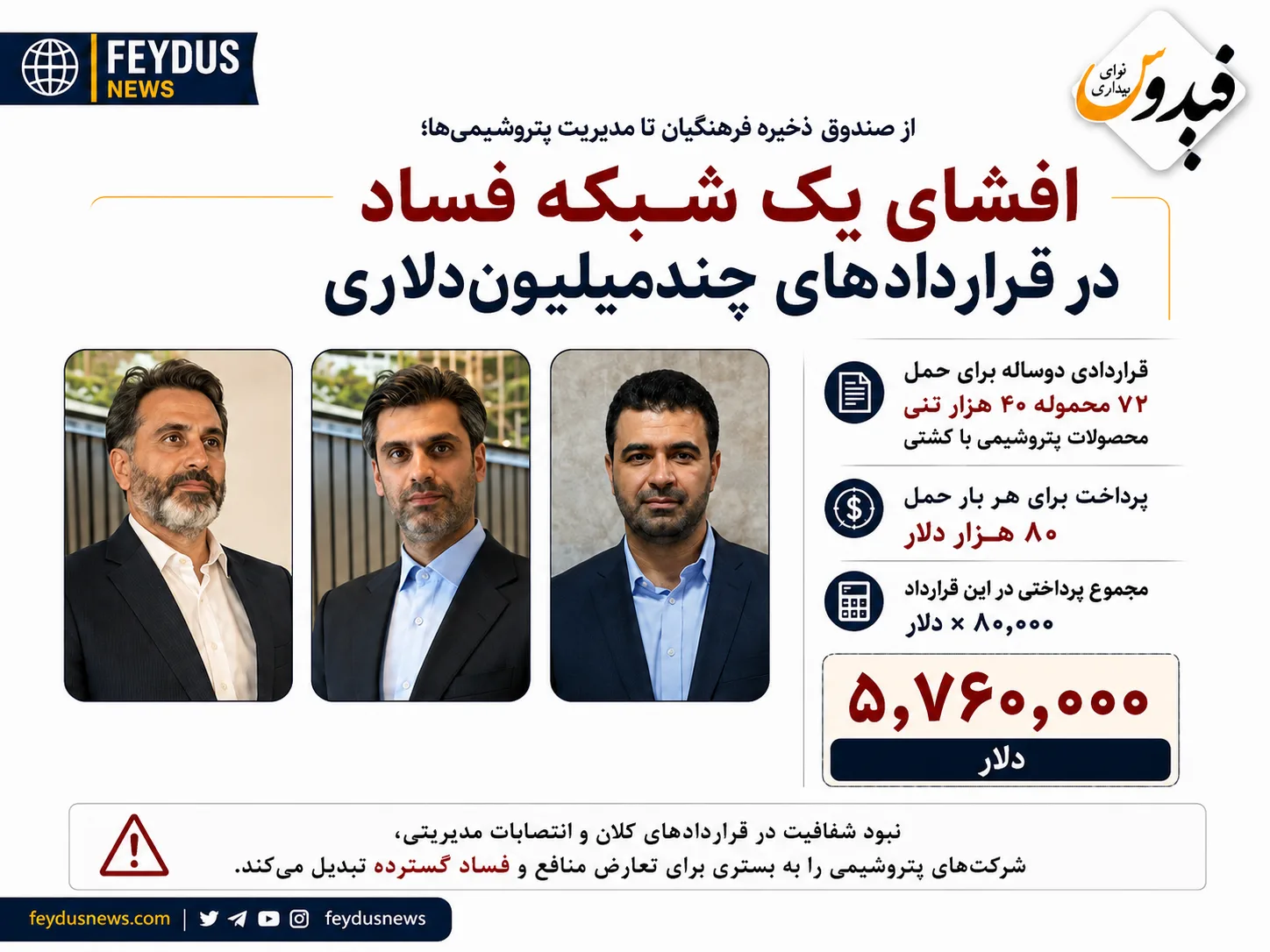

The release of information about the backgrounds of three current petrochemical industry managers and their previous roles in entities affiliated with the Teachers' Reserve Fund has raised serious questions about past contracts and how these managers were transferred to the top of petrochemical companies in Asaluyeh.
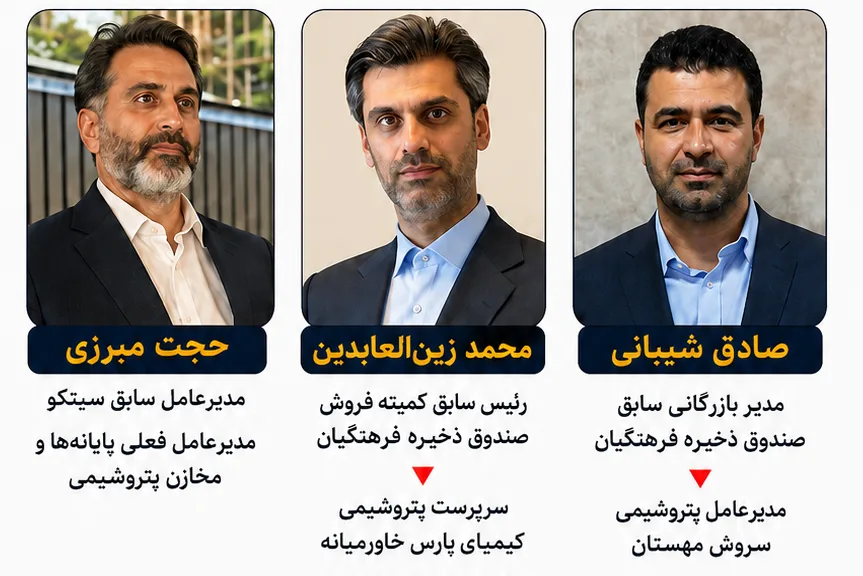
These three figures now hold significant managerial positions in the petrochemical industry. Hojjat Moberzi, the former CEO of SITCO, is now the CEO of Petrochemical Terminals and Tanks; Mohammad Zeyn al-Abidin, the former head of the Teachers' Reserve Fund Sales Committee, is the acting head of Pars Kimia Middle East Petrochemical, and Sadegh Sheibani, the former commercial manager of the fund, is the CEO of Soroush Mehestan Petrochemical.
Multi-Million Dollar Contracts
According to published information, during the tenure of these managers in entities related to the Teachers' Reserve Fund, a two-year contract was signed to transport 72 shipments of 40,000 tons of petrochemical products by ship, with each shipment reportedly costing $80,000. The multiplication of these two figures results in a significant amount of $5,760,000. Clarifying the nature of these payments, the receiving parties, the contractor selection process, and the contract approval method requires the release of documents and accountability from the related managers.
The Need for Transparency and Oversight
This case once again highlights the need to review the mechanisms of appointments and the circulation of managers among holding companies and parent companies in the petrochemical industry. Critics have long warned about the impact of managerial lobbies, non-transparent relationships, and influence networks on contracts and appointments in some large economic entities. In such a structure, if major contracts and managerial appointments lack effective oversight and sufficient transparency, parent companies and petrochemical subsidiaries can become a breeding ground for conflicts of interest and widespread corruption. Accountability for the $5.76 million contract and the publication of related documents can be the first step in clarifying the dimensions of this case.