
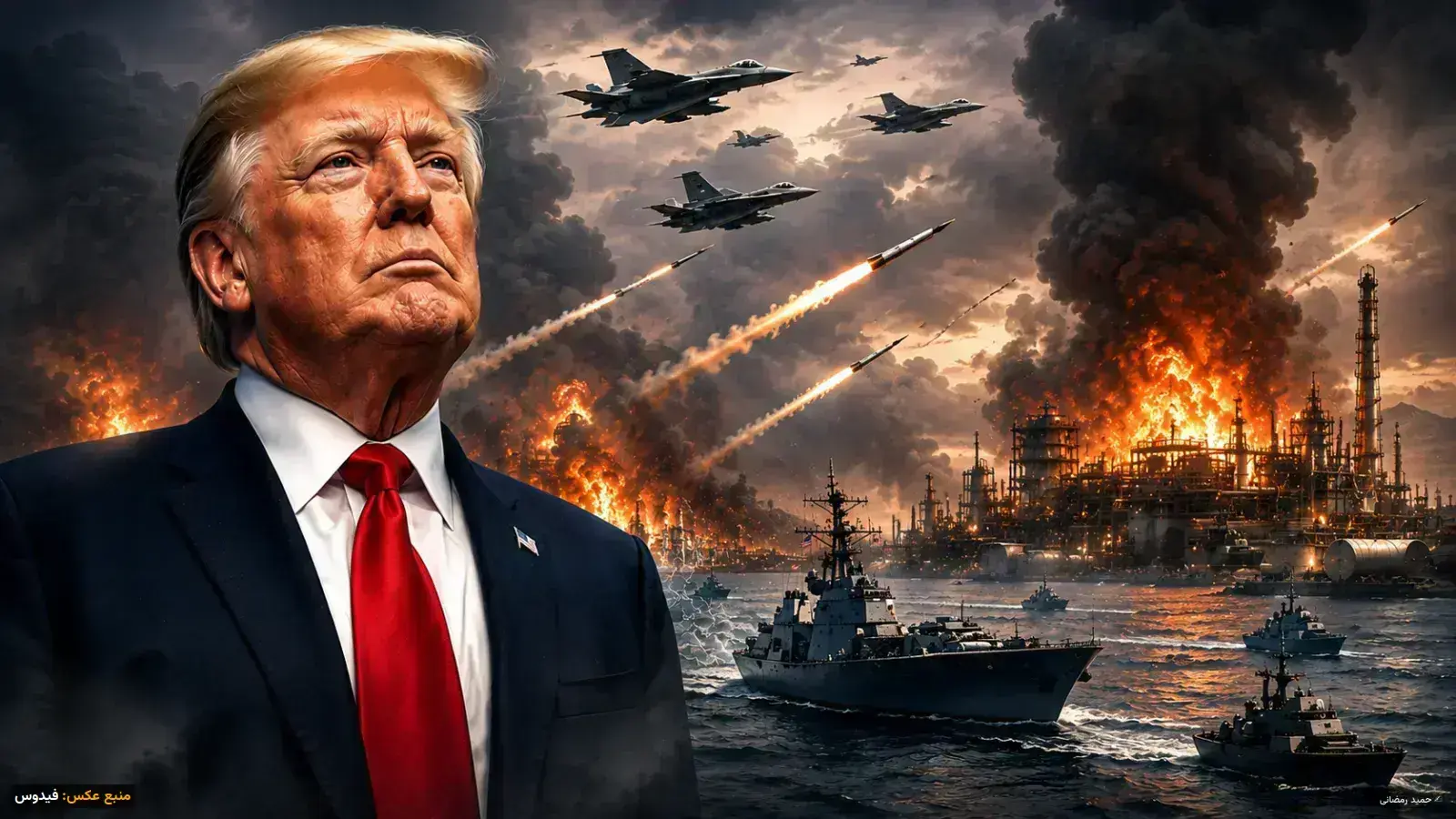
Recent statements by Donald Trump, the President of the United States, regarding the possibility of a larger attack against Iran, coinciding with the start of a new wave of U.S. military operations in southern Iran, have increased concerns about the war entering a more intense phase.
Trump emphasized continuing attacks in the Strait of Hormuz and dismissed the agreement with Tehran as worthless, saying it is not even worth the paper it is written on.
He warned that if Iran responds, much heavier attacks will occur. In response, the Revolutionary Guards have also announced a broad response to the new U.S. operations. Simultaneously, reports of explosions in Asaluyeh and attacks on Qeshm have been published, which, if confirmed to hit industrial facilities, could indicate an expansion of U.S. targets from military and naval positions to economic and energy infrastructures.

Some Iranian news channels report the firing of missiles by the Revolutionary Guards, which, considering tonight's threat by the American President, means nothing but the continuation of attacks with a broader range than before.
Trump has announced that the United States is targeting positions near the Strait of Hormuz and described these attacks as "widespread and fierce." He claimed that U.S. operations were in response to two Iranian actions: first, a failed attempt to lay naval mines in the Strait of Hormuz, and second, the firing of eight missiles at a U.S. military base in Jordan, all of which he claimed were intercepted.
The U.S. President also claimed that Iran was rebuilding its radars and that the U.S. military, aware of this, was waiting for their completion to target them again.
Threat of Main Attack
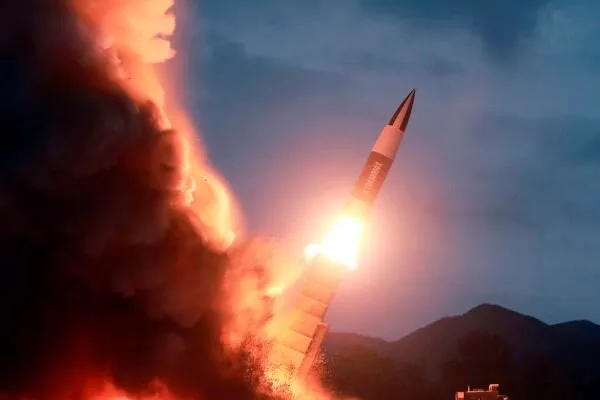
The more significant part of Trump's remarks relates to his threat about the next stages of operations. He stated that if Iran responds to the ongoing attacks, it will face "much more severe and heavier" strikes and then warned that the current operation will not be the largest attack and that the "main attack" is yet to come.
Trump's recent threat strengthens the speculation that the White House is reducing the weight of the diplomatic option and preparing the political space for increased military pressure. However, these statements alone are not enough to conclude definitively about Washington's decision to launch a broader operation, but Trump's tone clearly indicates the possibility of escalating conflict.
On the other hand, a spokesperson for the Revolutionary Guards also announced that Iran will respond to the new U.S. attacks. The realization of this threat and then the implementation of Trump's promise for a more severe response could lead both sides into a new cycle of attack and counterattack; a cycle in which each stage may have a greater geographical scope and intensity than the previous one.
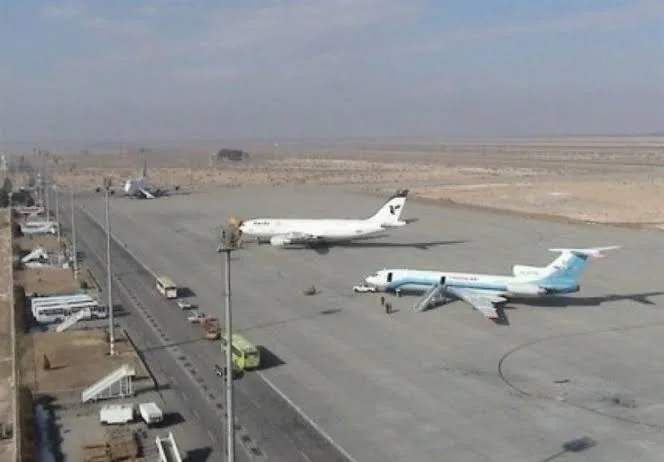
Iranian officials and sources have also claimed that some targets attacked in the recent operation had been targeted before and that the extent of the damage was not extensive. An independent and comprehensive assessment of the damage from the new operation has not yet been published, and information about some of the attacked points remains contradictory. However, recent news indicates that Jiroft Airport has been targeted, which contradicts this claim by Iranian officials.
Reports of Explosions in Asaluyeh
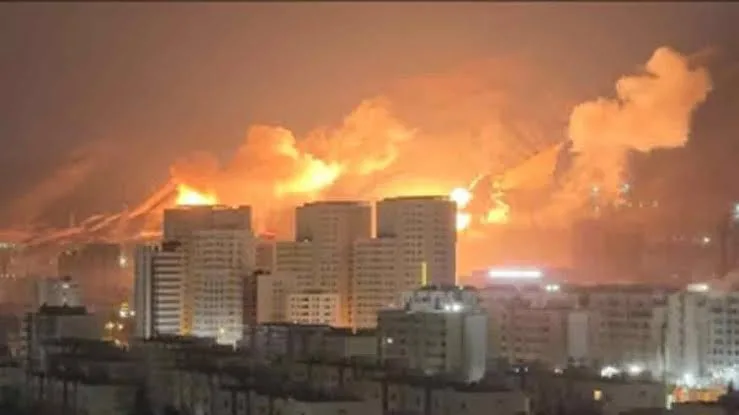
Meanwhile, reports of explosions being heard in the Asaluyeh area have been published. It is still unclear whether these explosions were directly caused by U.S. attacks or if the region's industrial and energy facilities were targeted. However, confirmation of an attack on Asaluyeh industries could be considered a significant development in the course of the war.
Asaluyeh is one of Iran's main centers for gas production and petrochemical industries, and a direct attack on its facilities, if confirmed, could mean the entry of a new wave of operations into economic and energy infrastructures; a development whose effects will extend beyond the military field.
Simultaneously, reports of a U.S. attack on a fish powder factory in Qeshm have been published. The exact details of this attack, the intended target, and the extent of its damage still require further investigation and confirmation. The series of reports published from Qeshm, around the Strait of Hormuz, and Asaluyeh, along with operations in other parts of southern Iran, show that the geographical focus of the new wave of attacks has so far been on the southern coasts and islands.
In such an atmosphere, the U.S. State Department has also asked American citizens to leave Iran immediately. The issuance of such a warning simultaneously with military operations and the U.S. President's threat of a larger attack has heightened concerns about increasing the intensity of the conflict.
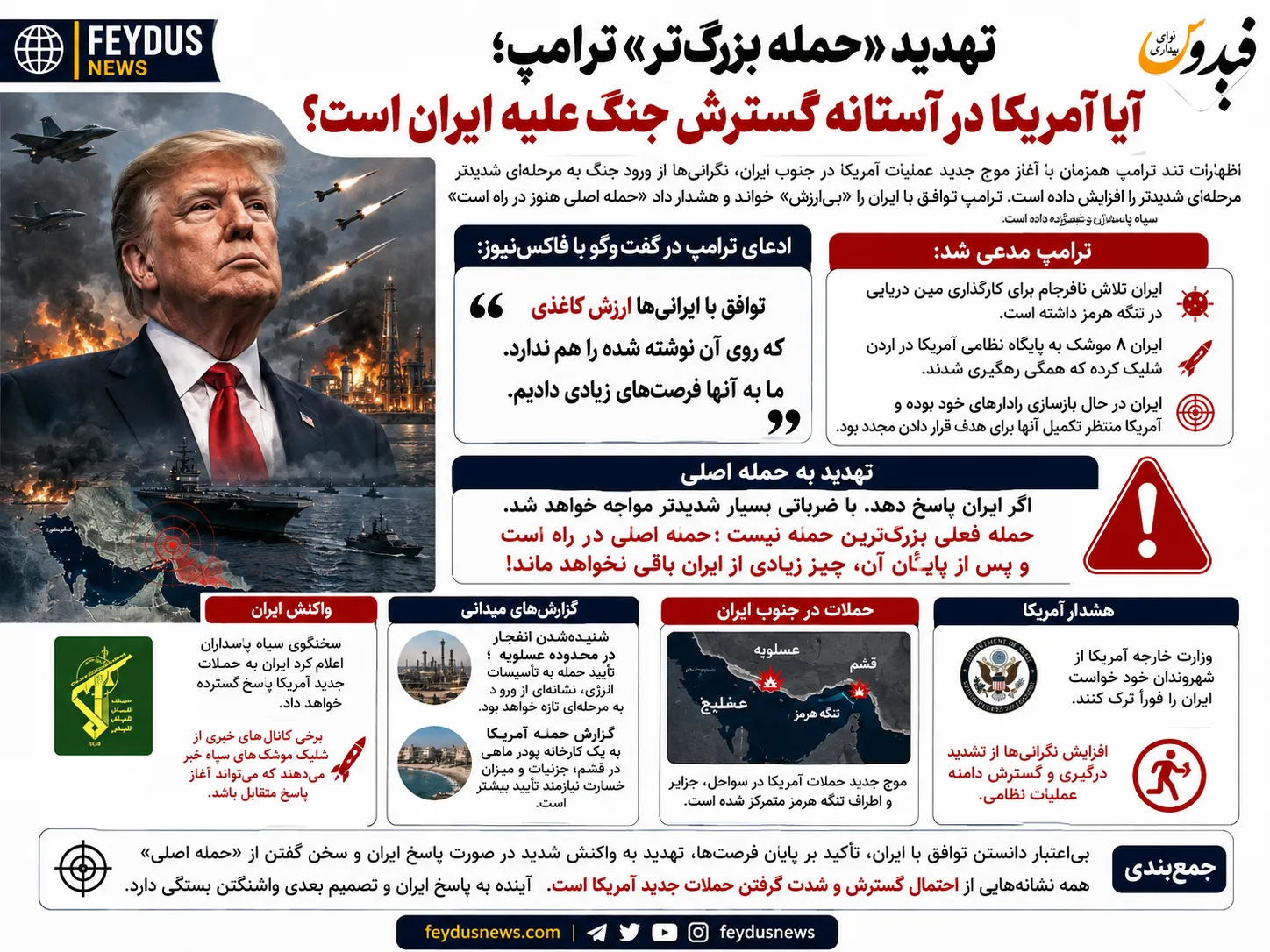
From this perspective, Trump's recent remarks cannot be considered merely a verbal threat; especially since these statements were made simultaneously with the execution of military operations. Discrediting the agreement with Iran, emphasizing the end of Tehran's opportunities, threatening severe retaliation if responded to, and talking about the "main attack" that is yet to come, along with reports of the geographical expansion of attacks, could indicate the possibility of increasing the intensity and scope of the next wave of U.S. operations; although determining whether this threat will turn into a broader military operation or is part of Washington's psychological warfare depends on developments in the coming hours and days.