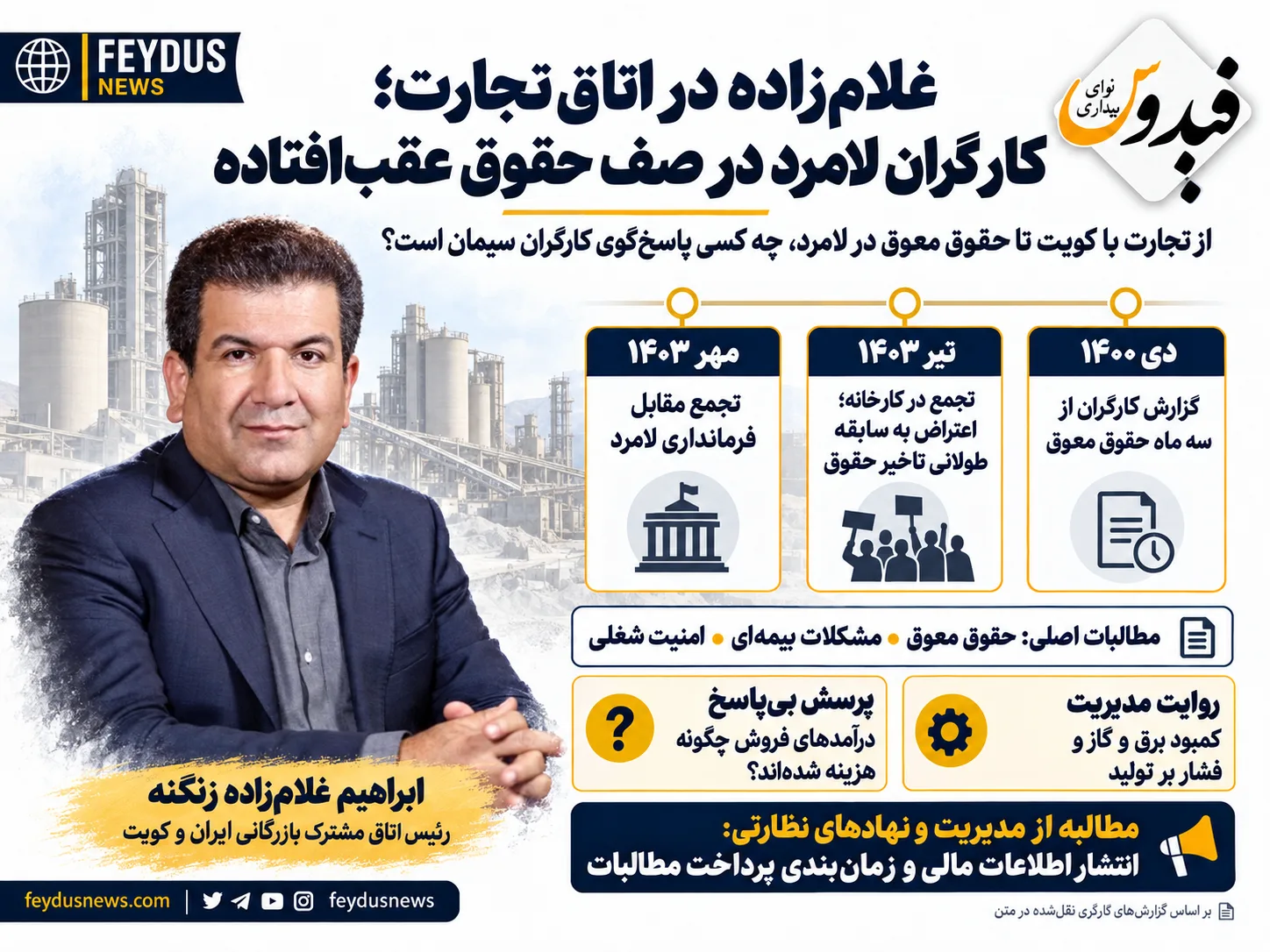
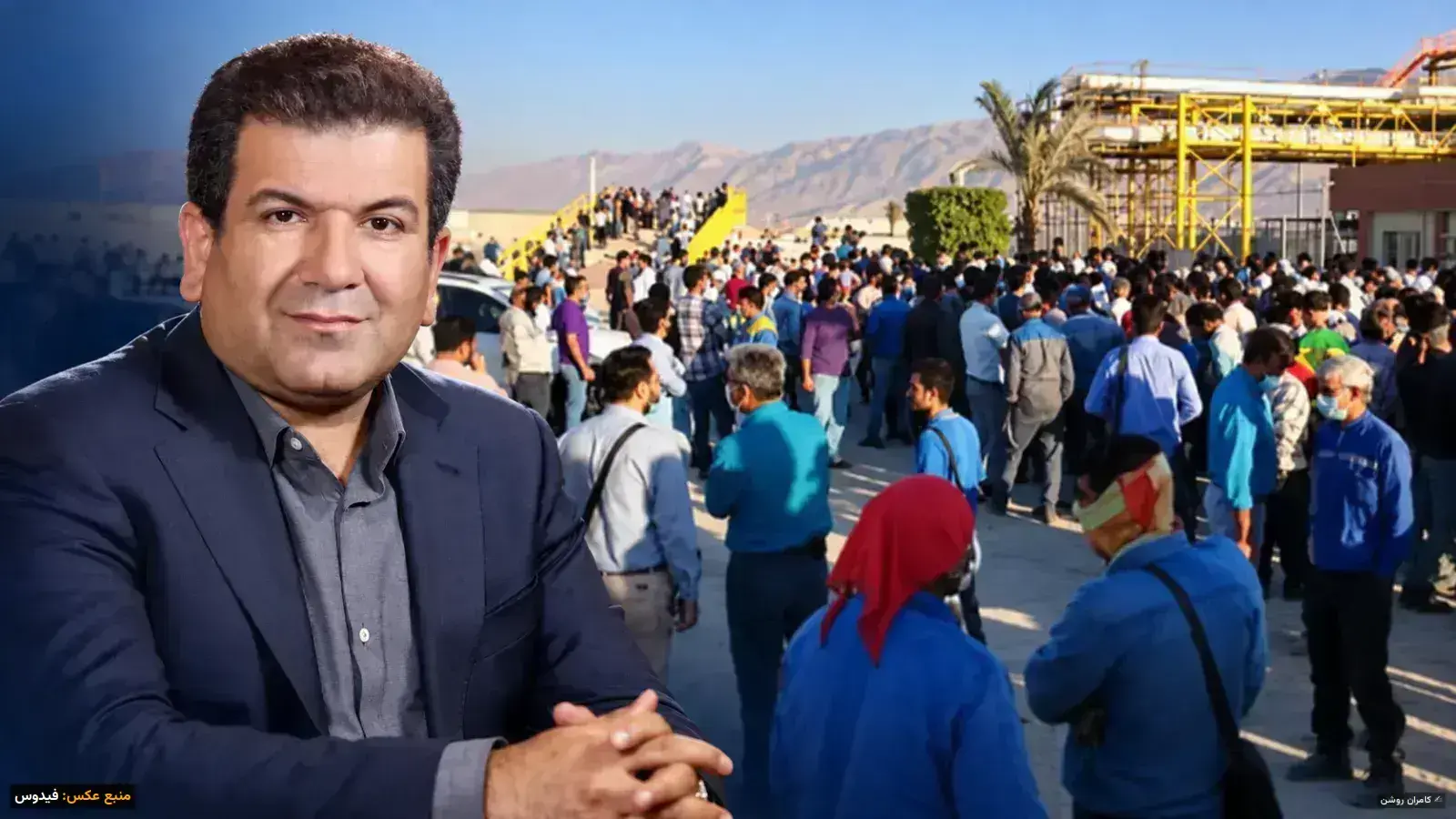
In southern Iran, the Lamerd Cement Factory, which has been among the active units in this industry for years, has repeatedly been the scene of worker protests over wage arrears, insurance issues, and job insecurity. These protests have been repeated while the CEO of this complex, Ebrahim Gholamzadeh Zangeneh, is simultaneously the head of the Iran-Kuwait Joint Chamber of Commerce, in the field of exports and foreign trade. The gap between the commercial position of managers and the living conditions of employees raises a clear question: Why is the provision of the most basic right of workers, namely timely wage payment, sacrificed due to Gholamzadeh's inefficiency in Lamerd and his focus on brokerage in the Iran-Kuwait Chamber of Commerce?
The continuation of dissatisfaction over the years shows that the issue of Lamerd Cement cannot be reduced to a temporary delay in wage payments. What needs to be examined is the way the factory is managed, how employee demands are addressed, and the performance of the bodies responsible for protecting workers' rights; bodies that must explain why this crisis has been reproduced despite repeated protests.
Recurring Protests; From the Factory Premises to the Governor's Office
The first reports from labor media about the protests of Lamerd Cement employees date back to December 2021, when workers spoke of three months of unpaid wages and threats against protesters. These reports presented a picture of a problem whose consequences went beyond the factory's accounts and affected the lives of hundreds of worker families. Wage delays, for a family whose daily expenses depend on that income, mean postponing essential needs and accumulating debt.
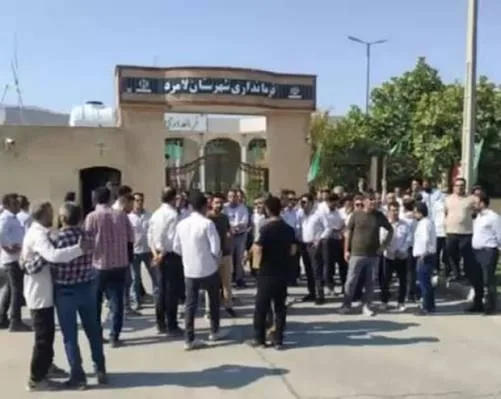
In July 2024, workers once again gathered in the factory premises. The public relations of the complex attributed the financial problems to electricity and gas shortages; however, employees responded by stating that the delay in wage payments has a "long history" and cannot be merely a product of the energy crisis of that year. This response highlighted the main difference between the management's narrative and the workers' experience: managers spoke of production constraints, while employees spoke of a demand that had previously gone unanswered.
A few months later, in October 2024, the protests moved from the factory to in front of the Lamerd Governor's Office. Videos released from the gathering showed workers reaching out to local officials outside the workplace to make their voices heard. The transfer of the protest to the Governor's Office can be seen as a sign of distrust in the results of previous investigations; especially when demands are repeated but no sustainable solution is found.
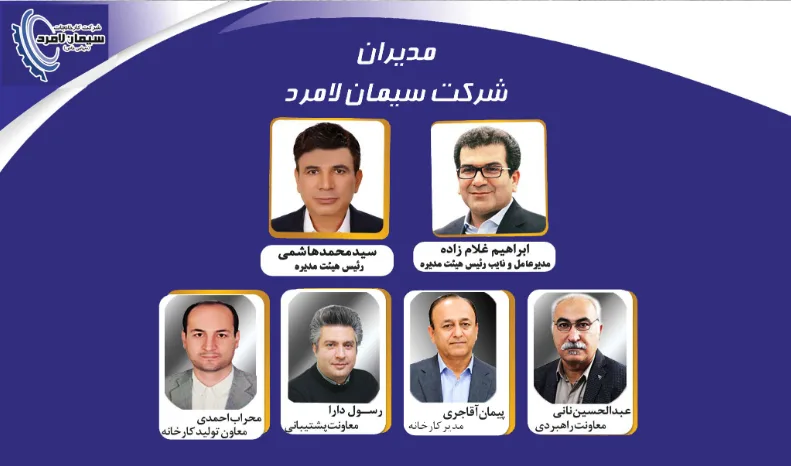
Ebrahim Gholamzadeh at the Center of Questions
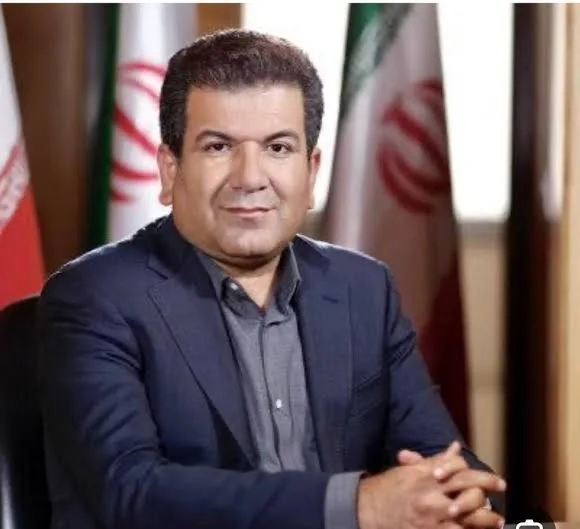
Ebrahim Gholamzadeh's name appears in the management records of both Lamerd Cement and Estahban Cement. These records, including his chairmanship of the board of Lamerd Cement and subsequently his CEO position and chairmanship of the board of Estahban Cement, indicate his involvement in complexes that have each seen worker dissatisfaction and records of brokerage and corruption. Gholamzadeh also chairs the Iran-Kuwait Joint Chamber of Commerce; an institution tasked with expanding trade relations and aiding in the development of foreign trade.
Holding such positions makes the responsibility to respond about the status of employees in related complexes more prominent. Workers who have gathered multiple times to receive their wages have the right to know what role managerial decisions have played in the continuation of this situation and what effective measures have been taken to end it. The repetition of the crisis calls into question both the management's performance and the effectiveness of the Islamic Republic's oversight bodies.
Sales, Exports, and Energy Crisis; How Have the Revenues Been Managed?
Lamerd Cement has been active in domestic and export markets, but its workers have repeatedly protested to receive overdue wages. Dissatisfaction has reached a point where even the interim Friday prayer leader of Lamerd has demanded answers from managers regarding employee demands.
In contrast, Gholamzadeh, emphasizing a greater share of domestic sales, has rejected the narratives about the factory's exports. The dispute over the amount and share of exports does not resolve the main question: how has the income from the factory's activities been managed that wage payments have repeatedly been delayed? Answering this question requires the release of financial information and an explanation of payment priorities.
In May 2026, Gholamzadeh, in an interview with Tasnim, identified the energy crisis as the main threat to the cement industry. Electricity and gas limitations can put pressure on the production and income of an industrial unit; however, this explanation alone is not sufficient to clarify the cause of wage arrears, especially given the long history of protests.
Until the actual statistics of production, sales, revenues, and debts of the factory are published, it is not possible to separate the share of the energy crisis from the share of financial problems and managerial decisions. Management must show what effect reduced production has had on the factory's resources, how existing resources have been spent, and what plan it has for paying employee demands. Workers, in the face of unpaid wages, need a clear and actionable response.
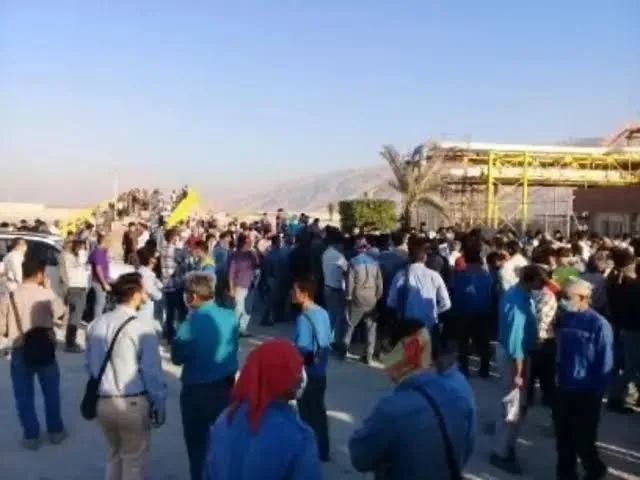
Workers on the Sidelines of Decision-Making, at the Center of Consequences
Wage arrears are not just a discrepancy in the company's accounts; they are a livelihood crisis that reduces families' ability to cover essential costs, increases personal debt, and erodes employees' economic security. When wages are not paid on time and there is concern about insurance and continued employment, workers are forced to endure the consequences of decisions in which they had no role.
Within the framework of labor law enforcement oversight, the Ministry of Labor and dispute resolution authorities have responsibilities. However, the recurrence of Lamerd Cement protests over several years calls into question the effectiveness of these mechanisms and strengthens the suspicion of collusion with management. If the investigations were effective, why have the same demands become the subject of gatherings again? If there were obstacles to implementing decisions, the responsible bodies must explain them.
Accountability in this case is not only the duty of the factory managers. Oversight bodies and local officials must also clarify what they have done to collect employee demands, address insurance issues, and prevent the recurrence of the crisis. Referring workers from one authority to another without tangible results means the continuation of their uncertainty.
Questions Management and Oversight Bodies Must Answer
Gholamzadeh's insistence and that of other Lamerd managers on ignoring performance weaknesses cannot prevent key questions from being raised to the administrators of this factory. What has been the actual amount of Lamerd Cement's wage arrears in recent years? How much of these demands have been paid and how much remains? How have the factory's revenues, especially during periods of export activity, been spent? What is the status of employees' insurance issues, and what actions have oversight bodies taken to prevent the recurrence of this crisis?
These questions must be answered with statistics, documents, and a specific timeline. Until management provides a clear explanation of the factory's financial resources and unpaid employee wages and the demands are met, the grounds for dissatisfaction and protest will remain. Ebrahim Gholamzadeh and other related managers must be accountable for their performance; the oversight bodies of the Islamic Republic must also explain why the years-long protests of workers have not yet led to a sustainable solution.