One of the less visible consequences of sanctions, political crises, and investment restrictions in Iran's energy industry is the country's increased loss of benefit from shared oil and gas fields. While the development of many of Iran's oil and gas projects has faced delays or restrictions, neighboring countries have exploited shared resources more rapidly.
Neighboring Countries' Revenue from Shared Fields
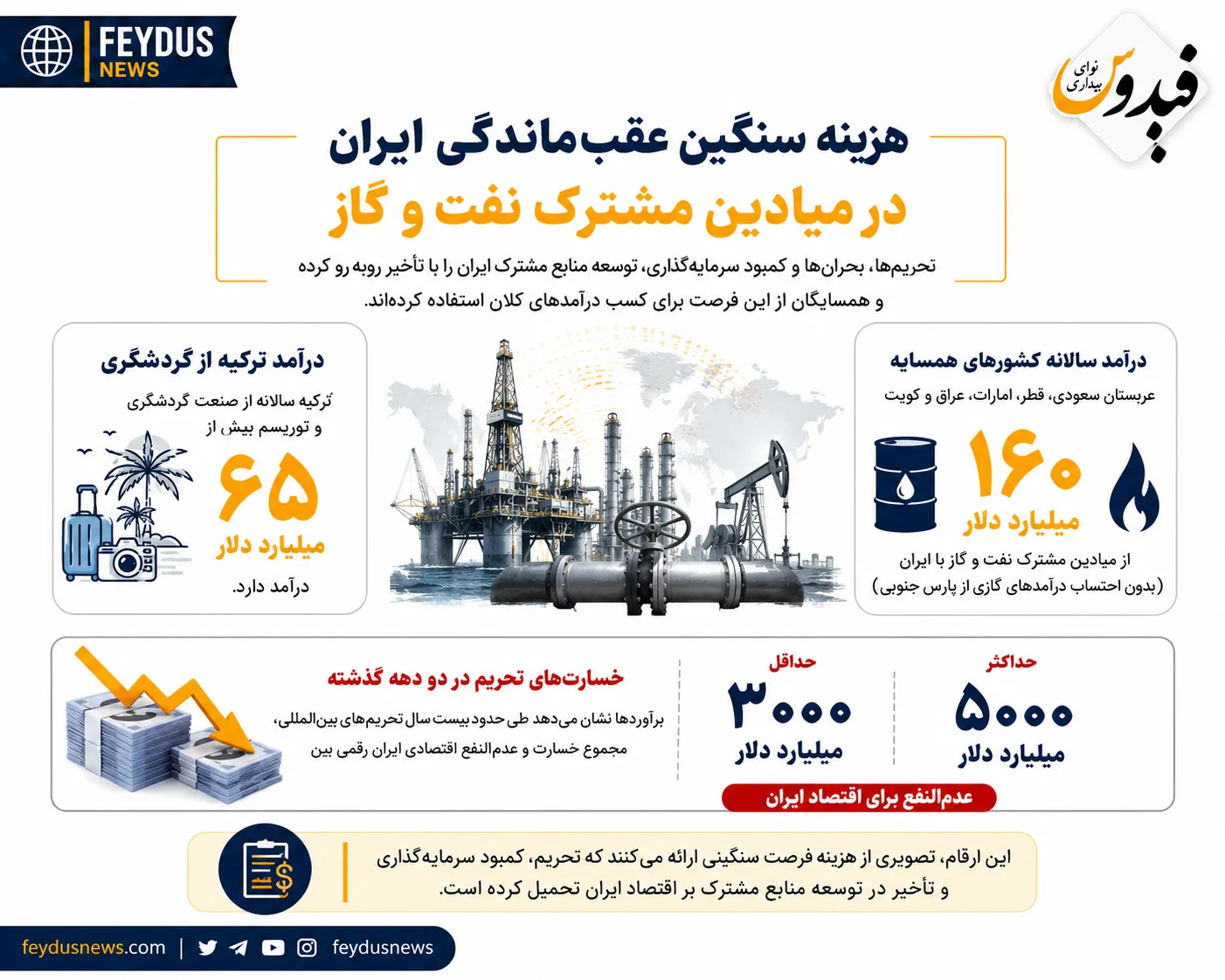
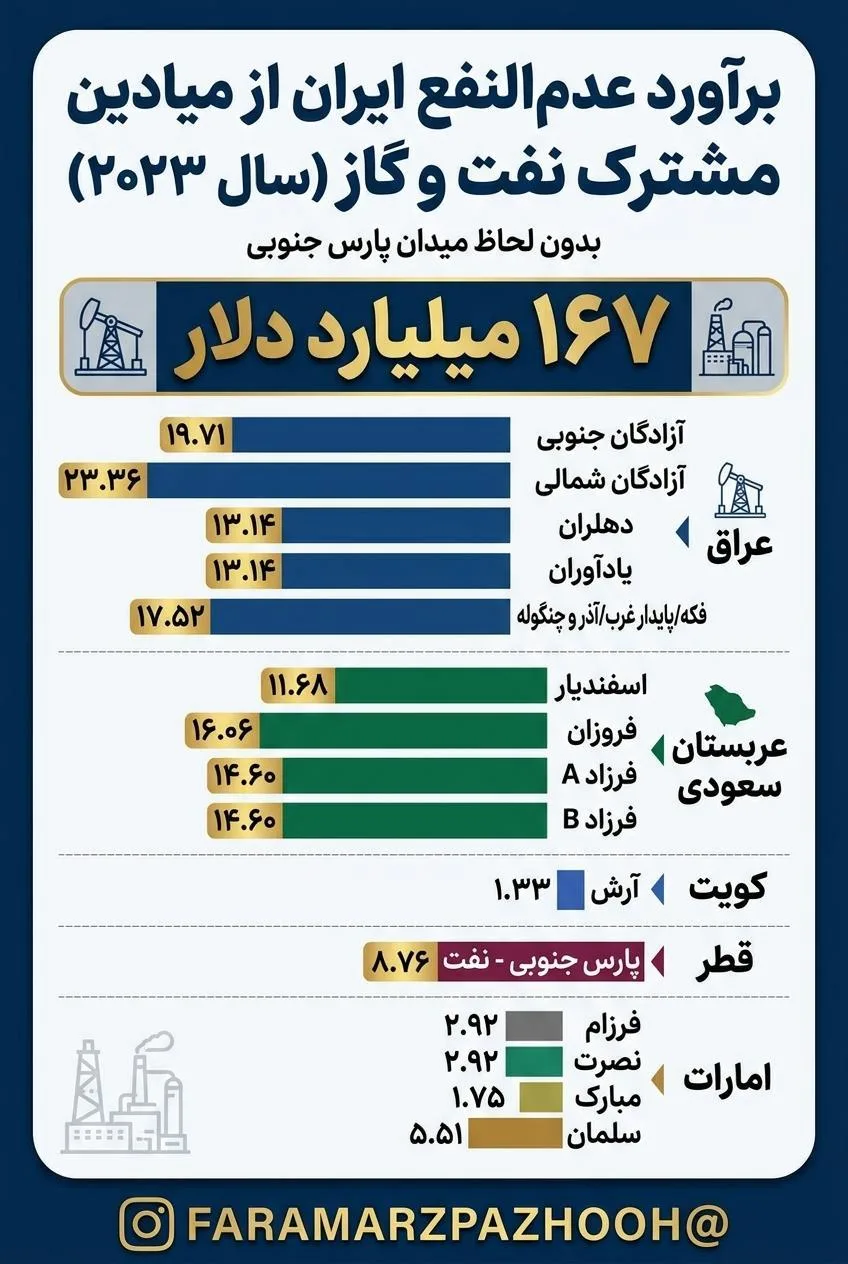
According to estimates, countries like Saudi Arabia, Qatar, the UAE, Iraq, and Kuwait earn significant annual revenue from oil and gas fields, some of which are shared with Iran. According to the figures provided, the total revenue of these countries from these resources, even without calculating the gas revenues from the shared South Pars field, is stated to exceed 160 billion dollars annually.
Among these, Qatar is one of the most notable examples; a country that has prioritized extensive development of the gas sector shared with Iran and has made significant investments in recent years to increase gas production and export capacity.
Economic and Political Impact on Iran
Meanwhile, some other countries in the region have also benefited from Iran's economic and political conditions in various fields. Turkey, for example, has managed to turn its tourism industry into a significant source of foreign exchange revenue, reportedly earning about 65 billion dollars annually from this sector.
In such circumstances, the main issue for Iran is not only the current oil and gas revenue but also the lost revenues that must be included in economic calculations. The estimate provided in this regard shows that over approximately two decades of international sanctions, the total economic damage and loss of benefit to Iran could be between 3 to 5 trillion dollars.
These figures, if confirmed by official sources, present a picture of the heavy opportunity cost that sanctions, lack of investment, and delays in developing shared resources have imposed on Iran's economy.