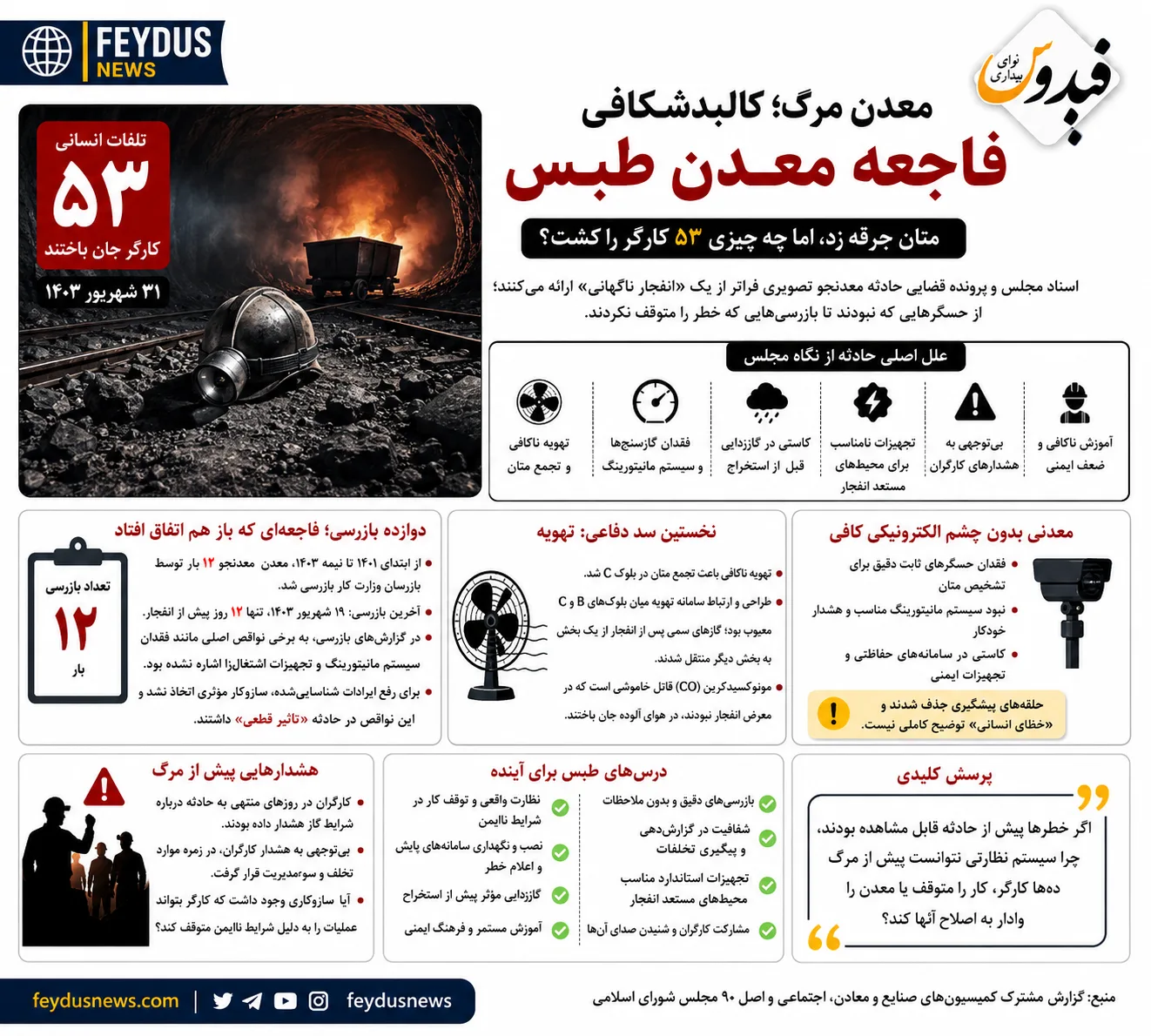
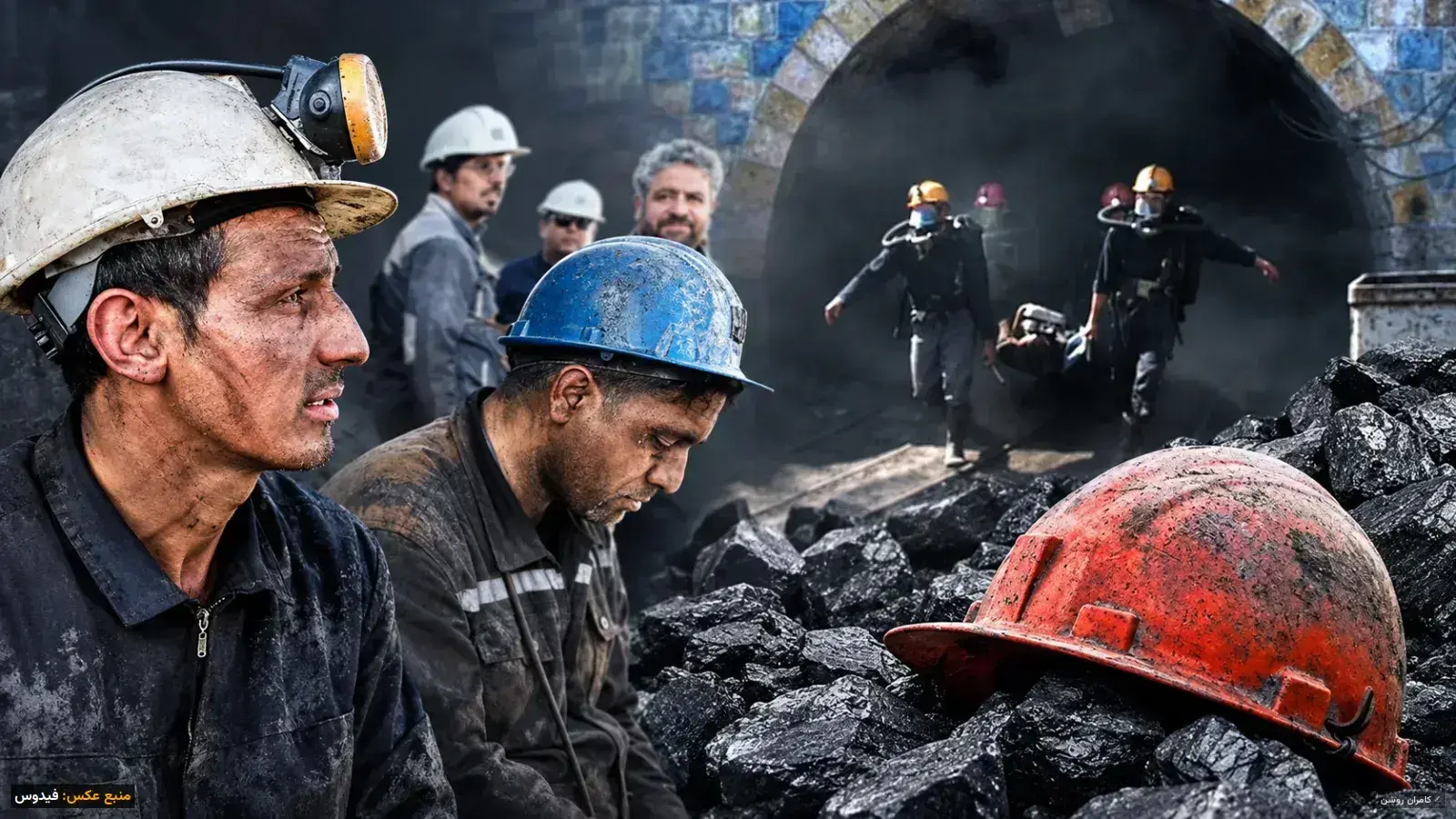
From sensors that were absent to inspections that did not stop the danger Parliament documents and the judicial case of the incident provide a picture beyond a "sudden explosion" in the coal mine, methane is an invisible enemy; it has no color or smell, but when it accumulates in the confined space of a tunnel, it only needs to reach a dangerous concentration and a spark source to turn the work environment into a scene of explosion within moments.
That is why in modern underground mining, safety against methane is not based on a single action; ventilation must dilute and remove the gas, gas detectors must detect the increase in concentration, fixed sensors and monitoring systems must continuously record changes in conditions, warnings must be issued before the situation reaches a critical stage, and electrical equipment must be suitable for explosion-prone environments.
In the Tabas
coal mine, some of these defensive layers either did not exist or failed to
prevent the disaster. The explosion on the evening of 31 Shahrivar 1403 ultimately claimed the lives of 53 workers, but what distinguishes this incident
from a mere industrial accident is not just the number of victims.
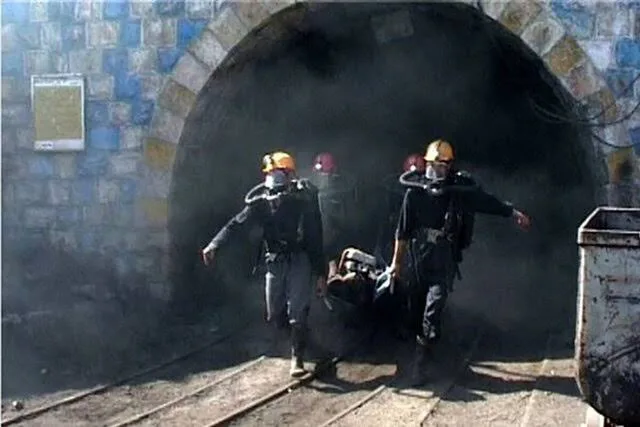
The joint report of three committees of the Islamic Republic's Parliament Industries and Mines, Social, and Article 90 discusses a series of technical failures, lack of supervision, previous warnings, and safety shortcomings, some of which were identifiable before the incident. The parliamentary report lists issues such as lack of effective oversight of ventilation maps, failure to perform necessary degassing, weak inspections, disregard for worker warnings, and inadequate training as "violations, mismanagement, and failure to fulfill legal duties".
This set of documents raises a question beyond the cause of the explosion: If the dangers were visible before the incident, why couldn't the supervisory system stop the work or force the mine to correct them before the death of dozens of workers?
Twelve Inspections; A Disaster That Happened Again
One of the most shocking numbers in the parliamentary report is neither the amount of methane nor the number of victims; it is the number 12. According to the parliamentary report, from the beginning of 1401 until the middle of 1403, the Madanjoo mine was inspected 12 times by inspectors from the Ministry of Cooperatives, Labor, and Social Welfare. The last inspection took place on 19 Shahrivar 1403, just 12 days before the explosion. Despite this, the parliament says that the inspection reports did not mention some of the main deficiencies, including the lack of a monitoring system and requirements related to equipment suitable for explosion-prone environments.
In two inspection reports, issues related to degassing and special ventilation regulations for coal mines were noted, but the main issue lies in the next sentence of the report: according to the parliament, no effective mechanism was adopted to permanently resolve the identified issues, and these deficiencies had a "decisive impact" on the course of the incident.
As a result,
the Tabas case is not just the story of an employer and a mine; this case is
simultaneously a test for the system responsible for inspection, supervision,
and enforcement of safety regulations. Inspections were carried out, reports
were written, some problems were identified, but work continued, and 12 days after the last inspection, the mine turned into a
killing ground for dozens of workers.
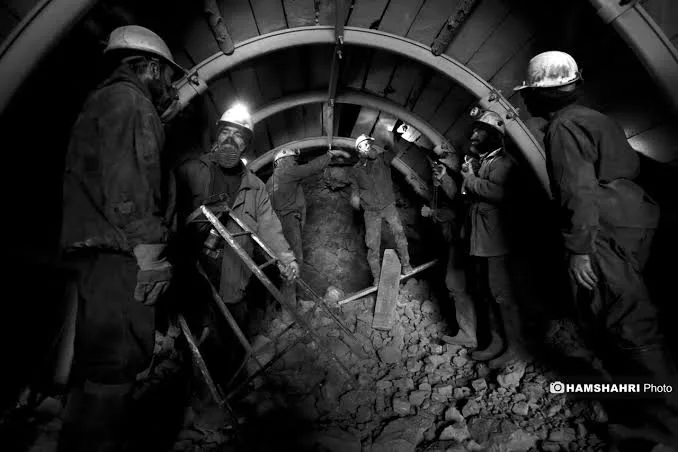
The First Line of Defense: Ventilation
In coal mines,
ventilation is not a luxury; it is part of the mine's vital system. The
parliamentary report places inadequate ventilation in the chain of causes of
the incident. The gradual accumulation of methane in block C was linked to the inefficiency of the ventilation system and
the conditions created during extraction operations.
However, the issue was not limited to the block where the explosion began. Parliamentary investigations showed that the design and connection of the ventilation system between blocks B and C were also problematic; a path that could transfer toxic gases from one part of the mine to another.
This distinction is important for understanding the dimensions of the disaster. In underground incidents, the explosion is the first danger, but after the explosion, carbon monoxide can become a silent killer. This gas, by binding to hemoglobin, disrupts the blood's capacity to transport oxygen. A worker who was not even directly exposed to the flame or explosion wave may lose consciousness and die in a CO-contaminated environment.
For this
reason, the design of the ventilation network is not just about airflow; it
can determine where combustion products and toxic gases are transferred after
an incident. In Tabas, this issue became a central part of the question about
the casualties.
A Mine Without Sufficient Electronic Eyes
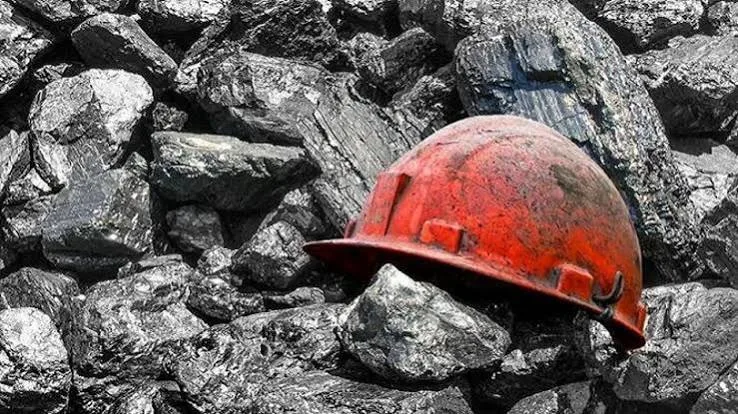
Methane is not visible, so safety cannot rely on human senses. One of the most important findings of the parliamentary report was the lack of precise fixed sensors, an adequate monitoring system, and automatic warning. A system that could have detected the increase in gas concentration earlier. The parliamentary report also mentioned shortcomings related to protective systems and safety equipment.
This issue has
fundamental technical importance. A gas monitoring system in a mine is not
like a fire alarm in a building that merely sounds after a danger occurs. Its
function should be part of a prevention chain: measurement, warning, operational
response, evacuation, and, if necessary, shutting down potentially dangerous
equipment. When links in this chain are removed, "human error" is no
longer a complete explanation for the incident.
Warnings Before Death
Perhaps the
most political part of the Tabas case, without being inherently political, is
this: the danger apparently did not appear without prior warning. The
parliamentary report states that workers had warned about gas conditions in the
days leading up to the incident, and ignoring worker warnings is also listed as
violations and mismanagement.
This issue defines the boundary between an "unpredictable incident" and an "unmanaged risk." An incident with no signs is not the same as one where employees have warned about danger signs from an organizational responsibility perspective.
In the second
case, the fundamental question is whether there was a mechanism for a worker to
stop operations due to unsafe conditions without fear? Who was responsible for
reviewing the warning? Who had the authority to shut down the workshop? And why
was the danger not eliminated before continuing extraction? The parliamentary
report does not answer all these questions, but the existence of these
questions is the result of the same official findings.
Regulations on Paper
The legal framework of the Islamic Republic, at least on paper, defines responsibilities relatively clearly. Article 55 of the Executive Regulations of the Mines Law considers non-compliance with the Mines Safety Regulations and the destruction and depletion of mineral reserves as violations that can lead to damage, fines, or disqualification of the license holder.
Article 100 of the same regulations includes the supervision of the
Ministry of Industry, Mines, and Trade over the health and safety of employees,
compliance with the approved plan, control of the technical manager's
performance, and protection of reserves. Article 103 also obliges the license holder to comply with the Mines
Safety Regulations. Even the regulations of the Mining Engineering System
recognize "non-compliance with the technical principles of mining
activities" and related technical standards as professional violations.
Part of that
gap between the Islamic Republic's own rules and the implementation of those
rules is.
From Tabas to Zemestan-Yurt; When the Pattern Repeats
Seven years before Tabas, on 13 Ordibehesht 1396, an explosion at the Zemestan-Yurt mine in Azadshahr killed 43 workers. The report of the Parliamentary Committee on Industries and Mines regarding Yurt also raised serious safety and ventilation issues. One of the controversial findings of the report was that the tunnel ventilator and loader were not present at the mine at the time of the incident and were brought to the site after the incident. Two incidents several years apart, two different mines, and dozens of victims, but the vocabulary that reappears in the documents is familiar: ventilation, gas, supervision, equipment, inspection, warning.
Tazareh; The Third Link in the Chain
Between
Zemestan-Yurt and Tabas, another name has repeatedly appeared in reports of
mining incidents in Iran: Tazareh Damghan. In Shahrivar 1402, the accumulation and explosion of gas in the western
Razmjoo tunnel of the Tazareh mine killed six workers. This time, the case did
not end with just an expert report.
The Sistan and Baluchestan Court of Appeal found the employer's negligence evident. The employer was convicted of involuntary manslaughter due to a work accident and negligence, and the Eastern Alborz Coal Company was also sentenced to pay compensation.
Before that,
workers had spoken about ventilation conditions. Published reports quoted
workers and experts pointing to the lack of continuous gas monitoring and
ventilation problems. Now three names are placed side by side: Zemestan-Yurt,
Tazareh, Madanjoo.
The similarity
of elements recorded in these cases makes questioning the structural nature of
supervision over coal mine safety in Iran inevitable.
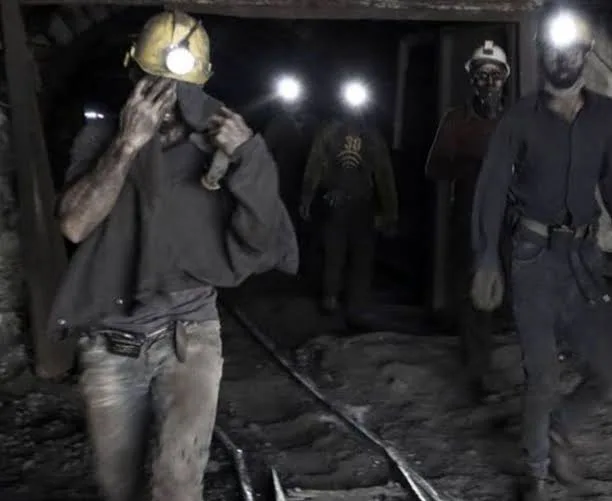
When "Incident" Is No Longer a Sufficient Explanation
In industrial
safety literature, major disasters are usually not the result of a single
mistake. An explosion may have an immediate trigger, but widespread casualties
usually occur when several defensive layers fail simultaneously.
Ventilation is one layer, gas detection is another, monitoring and warning are the next layer, as well as appropriate equipment, training, self-rescue, emergency management, inspection, and the authority of the supervisory body to stop operations are other layers.
In Tabas, the
parliamentary report recorded a series of failures in several layers. For this
reason, reducing the story to the phrase "explosion due to gas leak"
can hide a more important part of the story. Methane explains what exploded,
but it does not explain why the safety system did not prevent it before the
explosion.
A Case That Entered the Court
After the
incident, responsibility moved from the level of political and expert discussion
to the judicial system. In the preliminary court, five defendants were
sentenced to three years of imprisonment from the public aspect of the crime,
and one of the defendants was sentenced to pay the equivalent of 20 percent of full compensation. However, parts of the
punishments were suspended, and the case went to the appeal stage. Reports
published in 1404 emphasized that the final verdict had not yet been
issued.
This legal
distinction is important. The existence of an indictment or even a preliminary
court ruling should not be equated with a final conviction, but the entry of
the case into this stage shows that the examination of responsibility in Tabas
has not remained merely at the level of media criticism or expert disagreement,
but in the judicial system, cases have remained frozen.
"Technical Corruption" or Institutional Failure?
To describe such a case, the use of the term "technical corruption" is appealing, which usually involves elements like bribery, collusion, personal benefit, forgery, deliberate concealment, or conflict of interest. The lack of ventilation or sensors is more like an accumulation of negligence, violations, supervisory weaknesses, and technical and safety deficiencies.
If the official
bodies of the Islamic Republic themselves have set safety regulations, carried
out inspections, recorded some deficiencies, and ultimately the parliament
itself has spoken of the weakness of the supervisory system of the Ministry of
Industry, Mines, and Trade and the lack of an effective mechanism to address
the issues, the problem is no longer the absence of law; the problem is the
government's capacity to enforce its own law.
53 Lives and a Question That Remained
After every
industrial disaster, the administrative machine starts moving. Committees are
formed, experts go to the site, officials speak, reports are written, courts
are held, and promises of reform are made.
But the real test of a safety system is not the quality of its response after workers die, but its ability to prevent their deaths. Zemestan-Yurt in 1396, Tazareh in 1402, and Madanjoo Tabas in 1403, three cases with not entirely identical conditions should not be considered the same without independent technical study.
However, the recurrence of issues related to gas, ventilation, equipment, warning, supervision, and employer responsibility in the documents related to these incidents raises the question for the Islamic Republic's institutions of why the lessons of one disaster have not been turned into mandatory standards and effective implementation before the next disaster arrives.
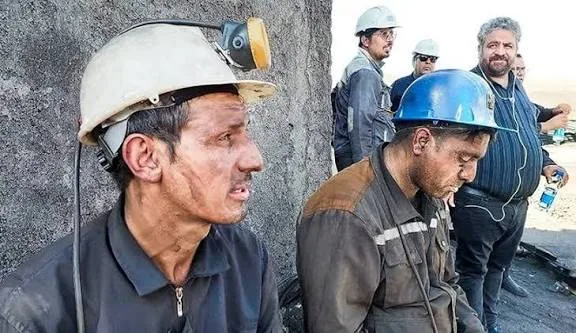
In Tabas, the answer to this question is more difficult because the mine had been seen before the explosion, inspectors had gone there, some deficiencies had been recorded, workers had warned, the law existed, the supervisory body existed, and yet the work continued, then 53 workers did not return home.
In such a
case, the main question is no longer whether methane was present in the mine or
not; the question is how a collection of companies, managers, technical
responsibles, inspectors, and government agencies that were supposed to create
a barrier between a known danger and the lives of workers failed to break this
chain before that night arrived.
This is a
question that the report of the Islamic Republic's Parliament, perhaps
unintentionally, has made bigger than the incident itself.