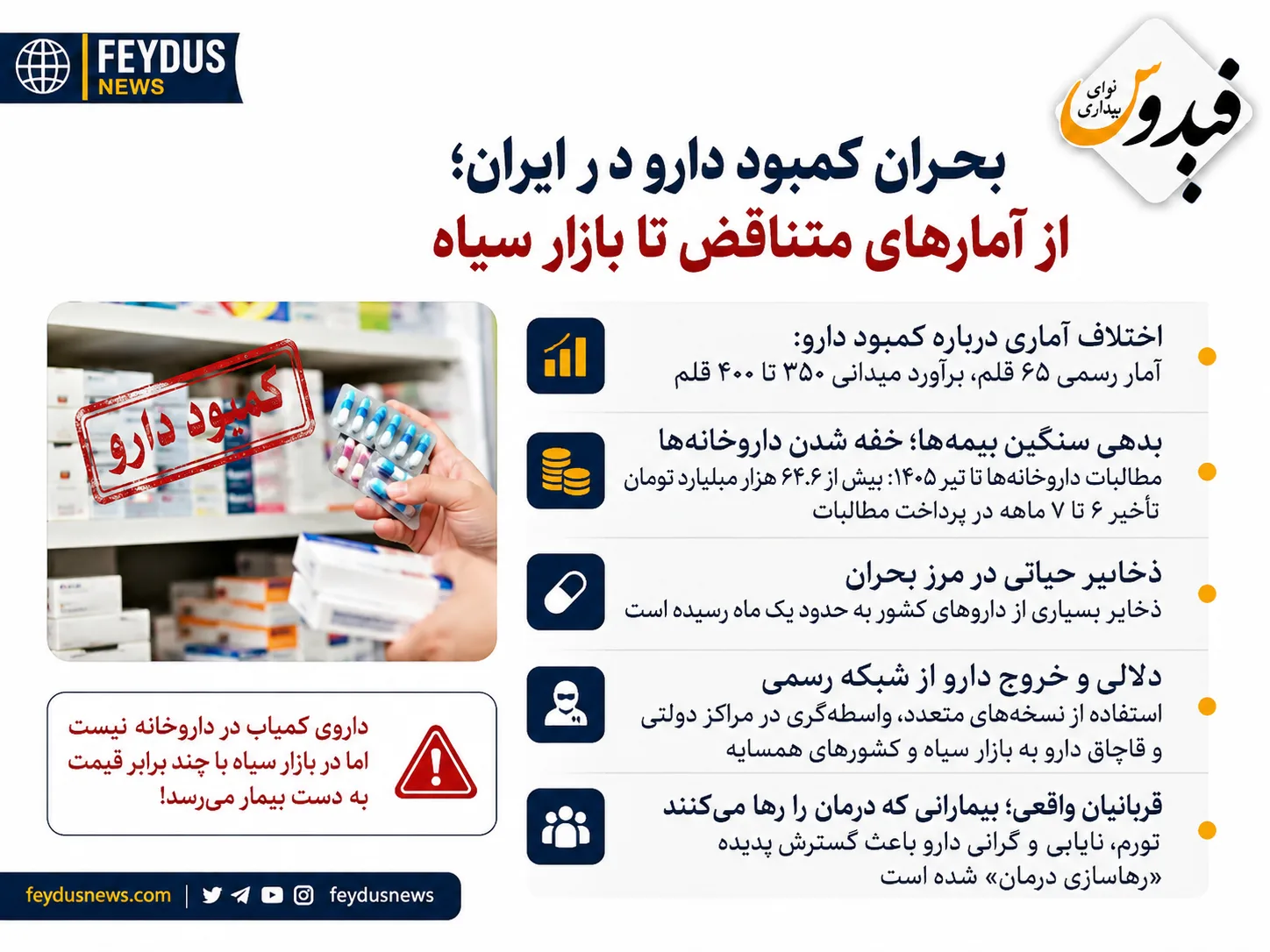
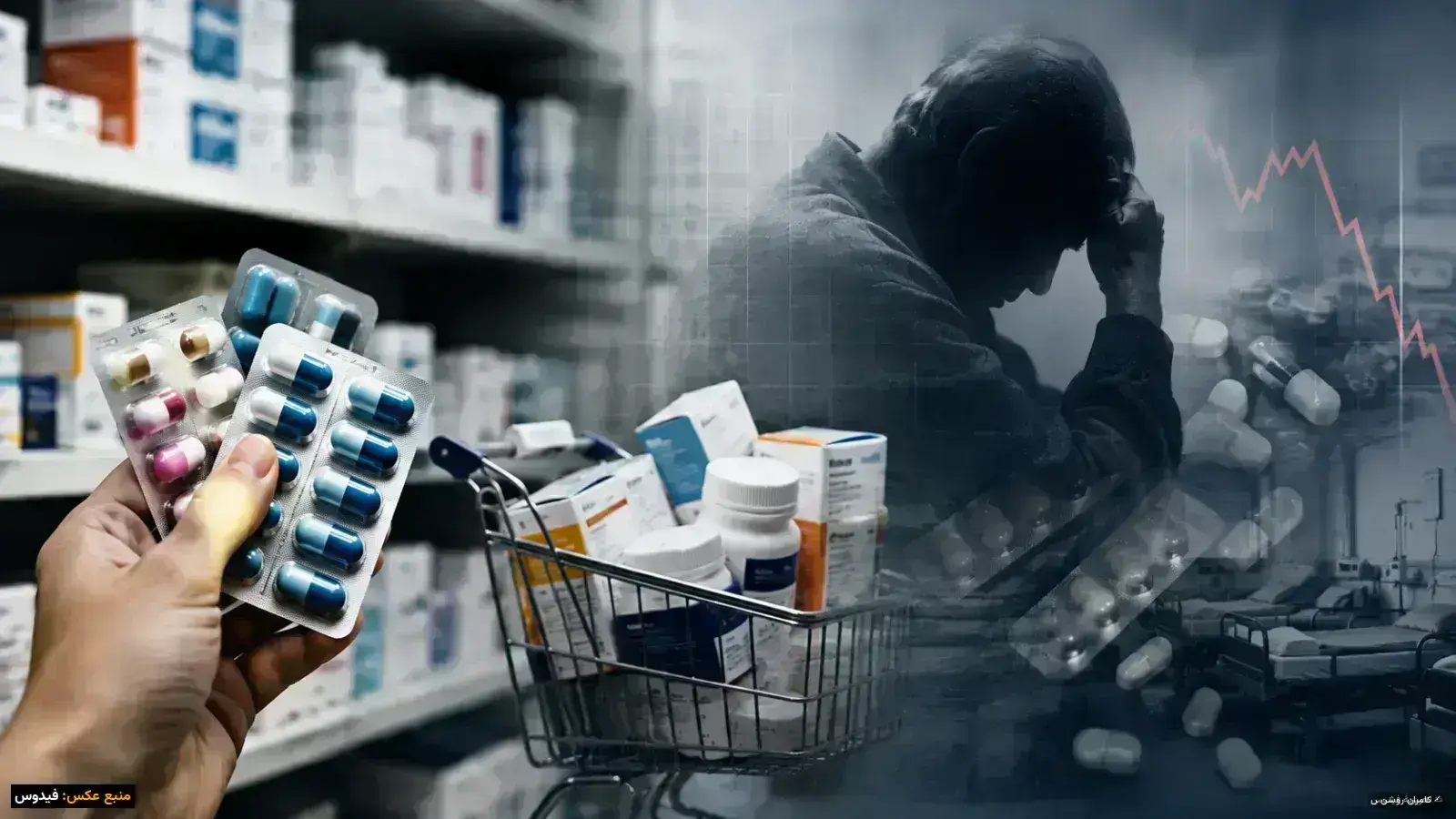
The drug shortage in Iran has become an issue beyond the scarcity of a few specific items. Official and field reports in 2026 indicate a multifaceted crisis; a crisis linked to factors such as disruptions in currency and raw material supply, insurance debts, liquidity shortages for manufacturers and pharmacies, and weak oversight and distribution, which have expanded brokerage and the black market.
Differences in Drug Shortage Statistics
Even regarding the dimensions of the shortage, there is no unified statistic. The head of the Food and Drug Administration announced on July 25 that the number of essential drugs in shortage had decreased from 341 to 65 items. However, the Secretary-General of the Red Crescent Society spoke a few days later of a shortage of about 350 to 400 drugs based on field observations. Part of this discrepancy is due to the calculation method; in official statistics, if a drug molecule is available under another brand, the shortage of one brand is not necessarily recorded as a drug shortage. For the patient, however, the criterion is simpler: is the medication prescribed by the doctor available or not?
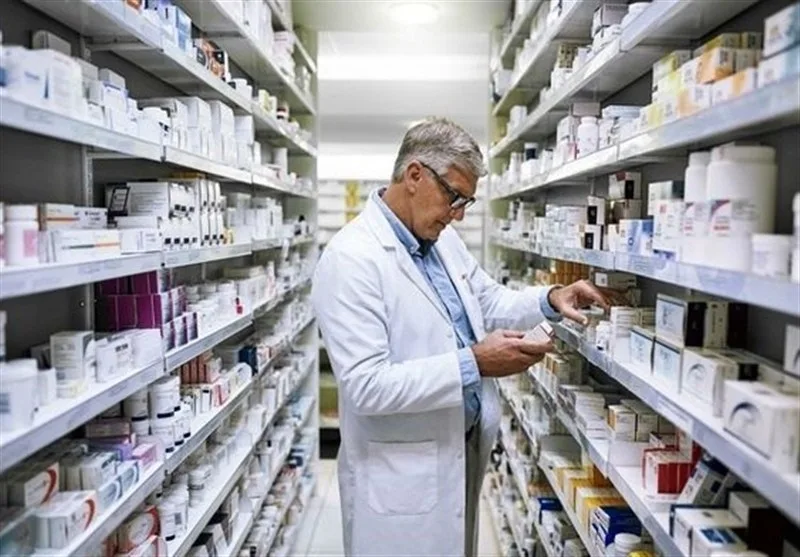
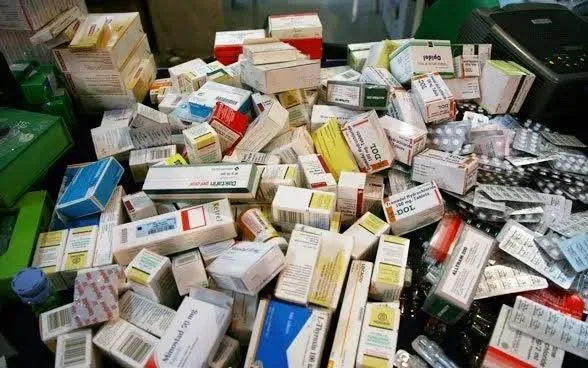
Field experience from around Naser Khosrow Street, pharmacies distributing special drugs, and government drug distribution centers clearly show the dominance of the black market for drugs. Medications that are not available in pharmacies despite doctors' prescriptions can be obtained from street vendors at ten times the price right in front of those pharmacies.
Some estimates indicate that the government can only supply about 70% of the market, leaving the remaining 30% with no choice but to turn to unofficial centers and the black market. Field reports suggest that the issue has extended from special disease drugs to medications for neurological, migraine, heart, and gastrointestinal problems, with drugs like ergotamine, crucial for acute migraine patients, only available on the black market.
Alongside the supply problem, the liquidity crisis has also pressured the drug chain. Pharmacy claims from insurance and the drug currency share were announced to exceed 64.6 trillion tomans by the end of July, with some pharmacies reporting six to seven-month delays in receiving claims. The result of such a cycle is a reduced purchasing power for pharmacies and intensified shortages in the official network. Simultaneously, reports have emerged about some drug reserves dropping to a one-month supply.
The Black Market and Drug Mafia
But the more concerning part of the story is the presence of those same scarce drugs in the unofficial market. Reports of intermediaries operating around special disease drug distribution centers, purchasing drugs using prescriptions, and transferring items from the official network to the black market have been published. Even judicial officials have spoken about the exit of some produced and imported drugs from the official network and their smuggling inside or to neighboring countries. In social media, examples have been reported where a drug with an official price of about 12 million tomans is offered for up to 55 million tomans.
The narrative from law enforcement about the repeated discovery of smuggled drug warehouses has not helped improve the situation, and the main question remains: who is behind filling these warehouses with drugs that should typically be distributed only by official government centers? In one of the latest examples, Mehdi Afshari, head of Tehran's Economic Security Police, announced: Following special actions by the Economic Security Police officers, it was determined that a company in the Naser Khosrow area was storing and distributing foreign medical and beauty products using fake documents, and the investigation of the matter was prioritized.
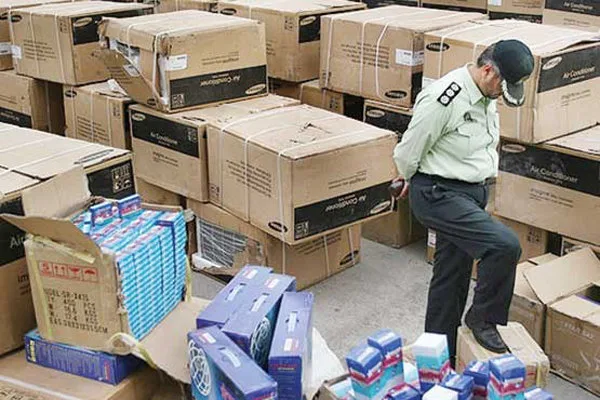
All these conditions indicate that what is referred to as the "drug mafia" is more than just a single network; it is the result of a collection of oversight gaps, brokerage, suspicious prescriptions, drug exit from the official chain, and smuggling.
The ultimate consequence of this crisis directly affects patients. Price increases, drug unavailability, and insufficient insurance coverage have made the phenomenon of "treatment abandonment" more serious; meaning the patient stops treatment not due to recovery, but due to financial inability or not finding the drug. In such conditions, the main issue is no longer just the number of items in shortage; the important question is how much of the produced or imported drug actually reaches the patient in a timely manner and at an affordable price.