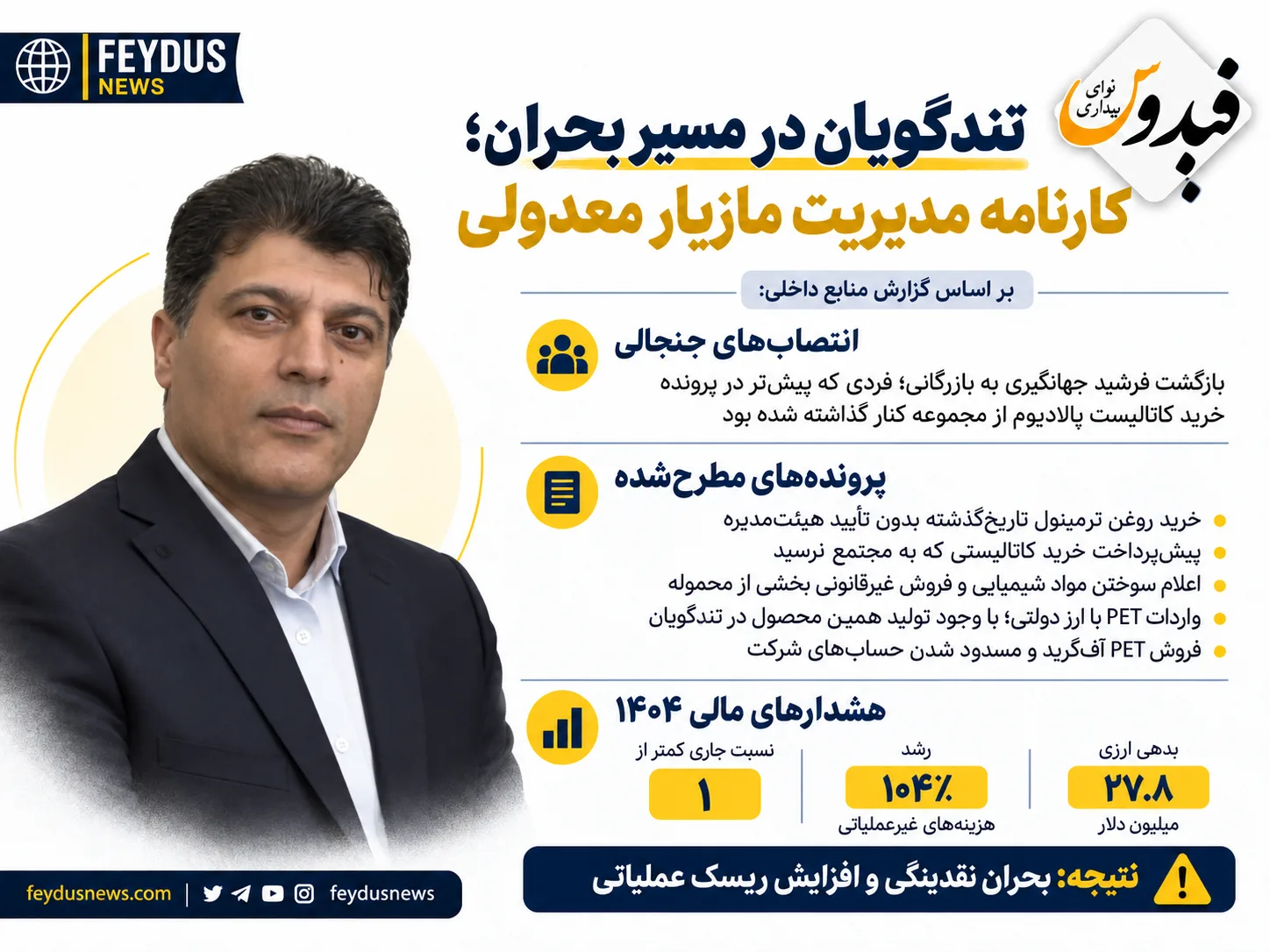
Tandgouyan Petrochemical, one of the most important PET producers in Iran, is currently at the center of a managerial and financial crisis rooted in the appointment of Maziar Madooli as CEO, an appointment made under heavy pressure and lobbying by Shariati, the former governor of Khuzestan. This appointment initiated a wave of return of managers with criminal records, multi-layered embezzlements, illegal purchases, currency corruption, and the closure of company accounts, a crisis that has now placed Tandgouyan in a liquidity warning and operational risk status.
Madooli's Appointment; The Starting Point of a Corruption Network
After Maziar Madooli took office as CEO, his first action was appointing "Farshid Jahangiri" as the head of commerce, a person previously dismissed due to misconduct in the purchase of palladium catalyst from the same company. Jahangiri's return was not just a managerial decision but an opening of the gates for individuals with criminal records to enter the heart of Tandgouyan's commercial system.
Jahangiri immediately brought the following individuals into the commercial structure: Hojjat Mohseni, Ali Bahrampour, Ebrahim Faraji, Abbas Moradi, whose entry initiated several heavy embezzlement cases now being discussed at the complex and supervisory bodies.
Silent Security; Albonaim's Silence in the Face of Corruption
While it was expected that Albonaim, the head of Tandgouyan's security, would react to this wave of corruption, reports indicate that he remained silent in coordination with the intelligence department of the upper management, a silence that, according to employee testimonies, stemmed from receiving interest-free and non-repayable loans from Madooli. This security silence effectively paved the way for the expansion of organized corruption and disabled internal oversight.
Heavy Cases; From Expired Oil to Unreceived Catalysts
The purchase of expired terminal oil was one of the first violations, buying expired terminal oil without board approval. This oil was illegally brought into the complex and did not go through any quality control or official approval stages. In the second case, Jahangiri made a heavy prepayment to the company Atra Oxin for the purchase of a catalyst that never entered the complex and is now open as an embezzlement case.
False Declaration of Chemical Material Burning in Bandar Abbas
In the third case, Ali Bahrampour and Ebrahim Faraji claimed that part of the chemical materials had burned in Bandar Abbas. However, investigations showed half of the container was completely intact, and these materials were illegally sold. Despite this violation, Tandgouyan paid the container damage costs, meaning the company lost both its materials and bore the damage costs.
Imported PET; Currency Violation in a Producing Company
One of the strangest cases is the import of PET with government currency by Tandgouyan, while this company itself is a PET producer. Due to severe price discrepancies, this import has not yet been cleared of currency obligations and is considered a currency violation at the national level. This action, in addition to creating financial risk, indicates the misuse of government currency and the conversion of currency resources into opaque profits.
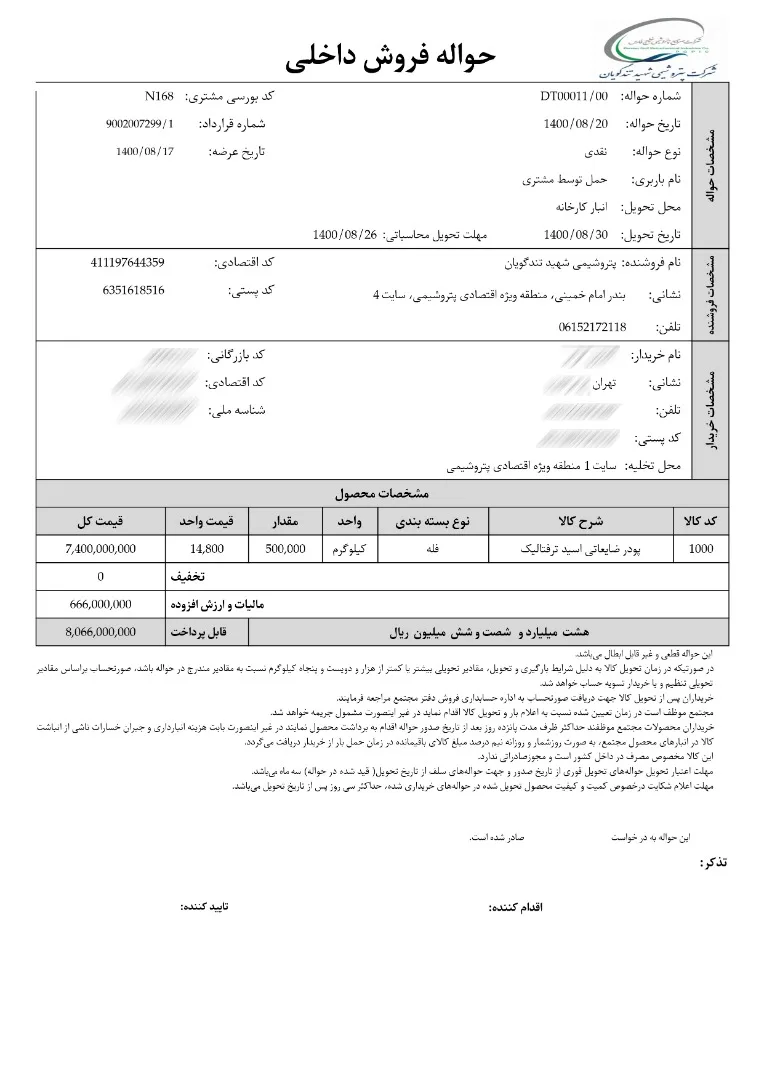
In another violation, Jahangiri sold off-grade PET to several companies. However, with the onset of the recent war and disruption in the supply chain, Tandgouyan could not deliver the product. The purchasing companies, which had previously paid Jahangiri's bribe, reacted to the non-delivery by closing Tandgouyan's accounts. This event placed Tandgouyan in a liquidity crisis.

Tandgouyan; An Example of Oversight Collapse in Iran's Petrochemical Industry
In 2025, despite apparent profit growth, Tandgouyan was in a fragile liquidity situation: a current ratio of less than 1 and a 104% increase in non-operational costs alongside a heavy dependence on profit from currency fluctuations resulted in a $27.8 million currency debt. This data shows that the recent managerial corruption is not only a moral crisis but a threat to the company's financial survival.
The Tandgouyan case provides a clear picture of structural corruption in Iran's petrochemical industry, corruption that began with a political appointment and, with the entry of managers with criminal records, silent security, illegal purchases, currency violations, and multi-layered embezzlements, has now reached a financial and operational crisis. It shows how political lobbying can turn an industrial complex from a path of production and development into a hub of organized corruption and insider trading, which, in the absence of effective oversight, puts national resources at risk of destruction.