The Case of
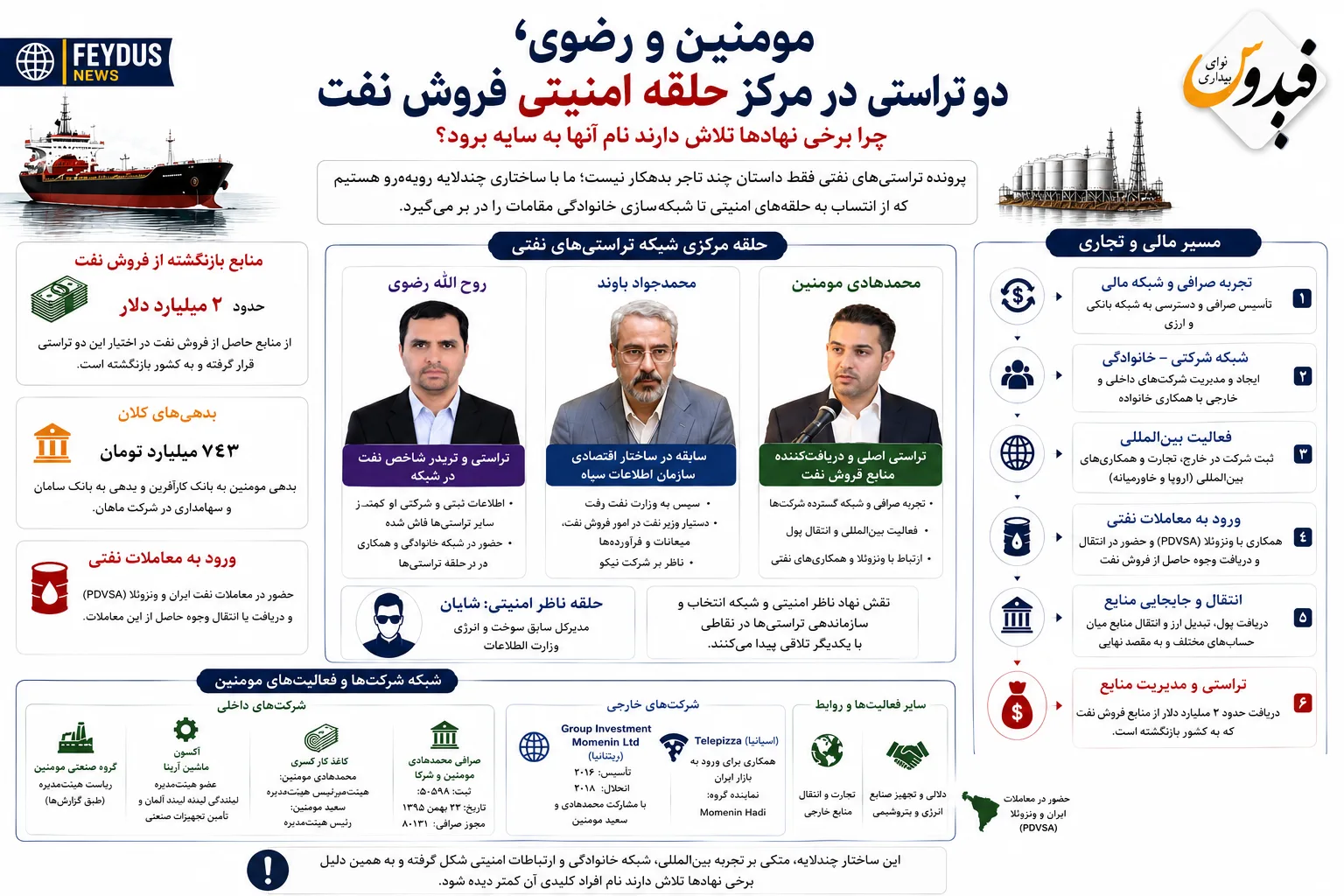
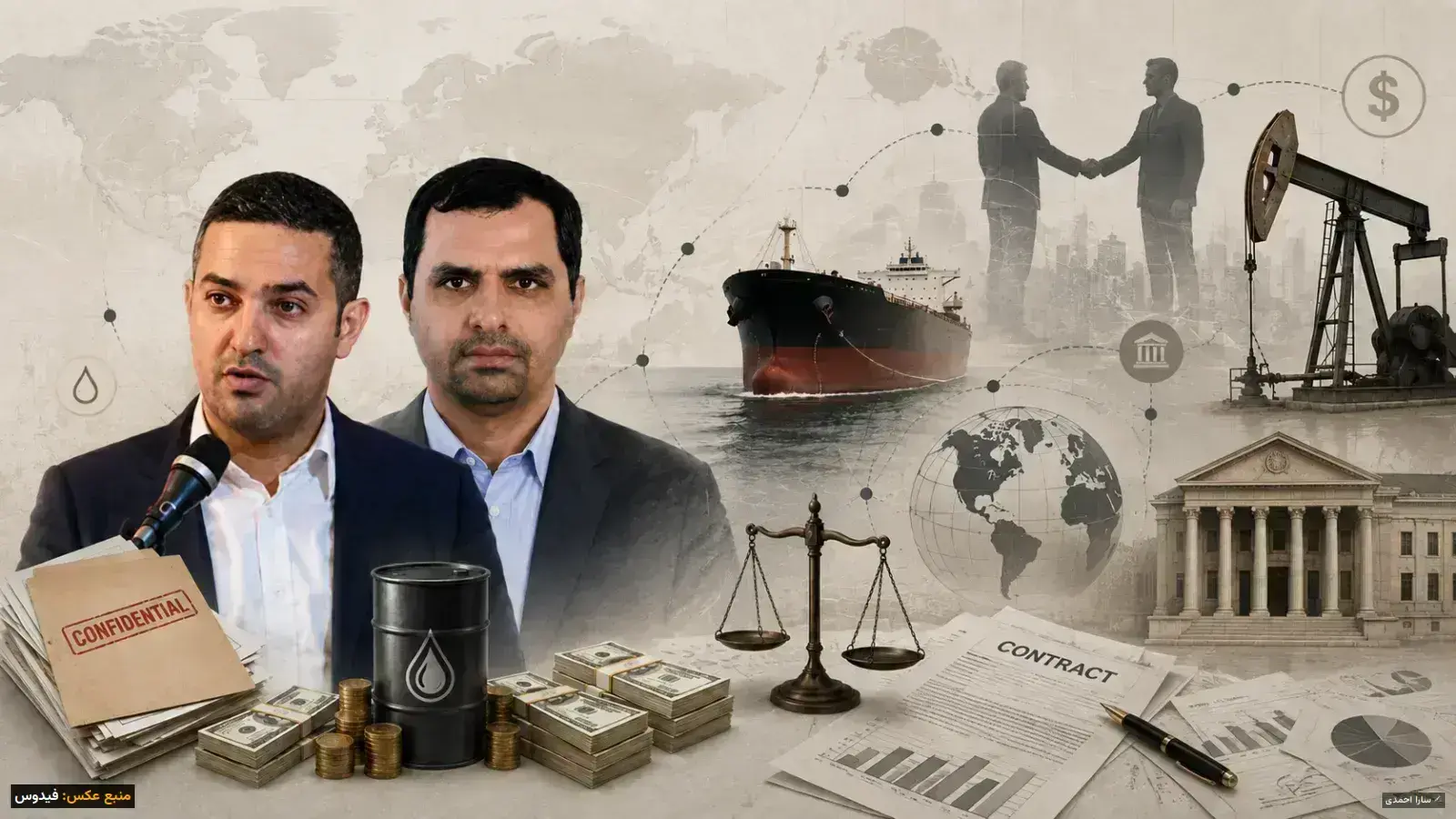
Oil Trusts has recently made headlines mainly with the release of the names of debtors and billion-dollar figures of unreturned resources from oil sales. However, the information gathered about this case shows that reducing the matter to a few traders or intermediaries who received oil and did not return the money can conceal a more important part of the case: a network that, on one hand, reaches security and management structures related to oil sales and, on the other hand, is connected to a set of exchanges, domestic and foreign companies, and family and political connections.
At the center of this
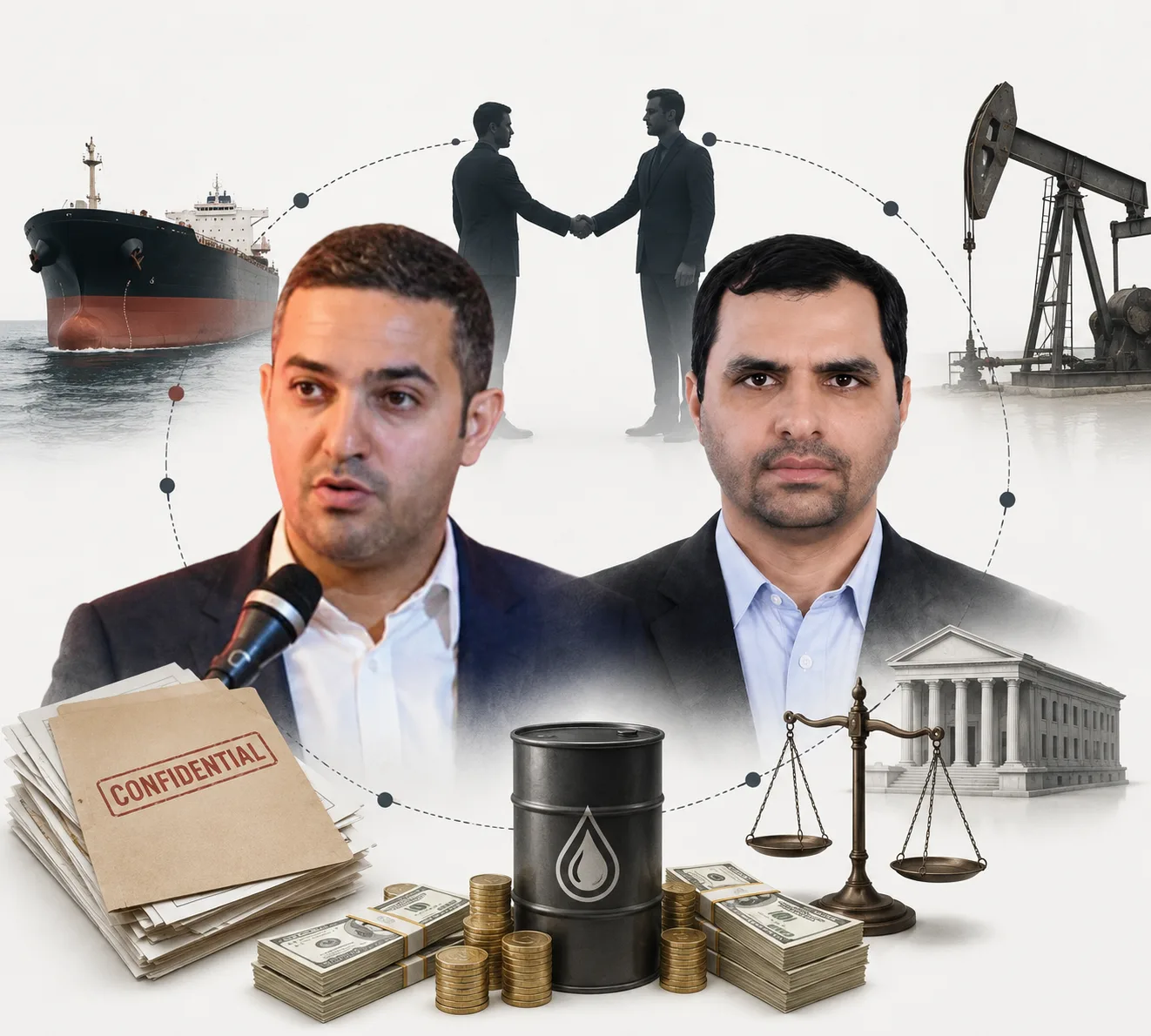
network are the names Mohammad Hadi Momenin
and Rouhollah Razavi; two figures who, according to the information in this case, were associated with the network known as "Shayan," the former director-general of fuel and energy at the Ministry of Intelligence. Alongside them, the name Mohammad Javad Bavand appears; a manager who, according to the report, has a background in the economic structure of the IRGC's Intelligence Organization and later joined the Ministry of Oil, serving as an assistant to the minister in oil sales, condensates, and products and overseeing the NICO company.
The juxtaposition of these four names raises a question beyond the debt of a few oil traders: how were the trusts selected, who trusted them, and what structure enabled their access to oil shipments and billion-dollar resources?
Mohammad Hadi Momenin; From Exchange and International Trade to Oil Deals
Mohammad Hadi
Momenin is significant among the mentioned trusts because part of his economic network is traceable in company records. According to the information gathered in this
case, about two billion dollars of
resources from oil sales were placed under Momenin's control and did not return to the country. However, his economic activities before his name was mentioned in the oil case covered areas that are crucial for a trust's activities: exchange, a network of domestic and foreign companies, and international trade.
One of the most important
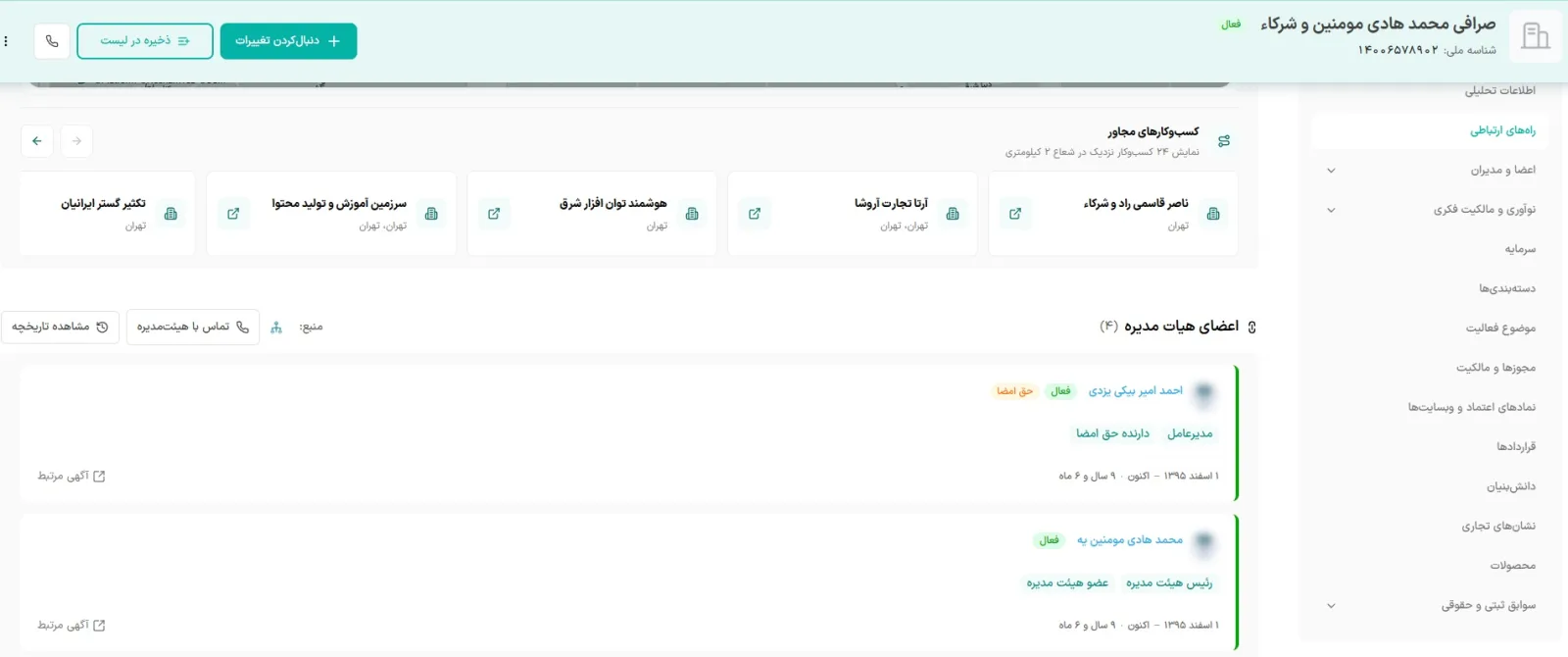
links is the company Mohammad Hadi Momenin and Partners Exchange in Tehran, which according to the report's information, was registered with registration number 505898 on February 23, 2017 and its activity license number 80131 is also mentioned. The importance of such infrastructure in the sanctioned oil trade is clear; a trust's activity is not just selling shipments, but receiving money, converting currency, transferring resources between different accounts, and the final transfer of funds are other important parts of this mechanism.
Momenin's footprint
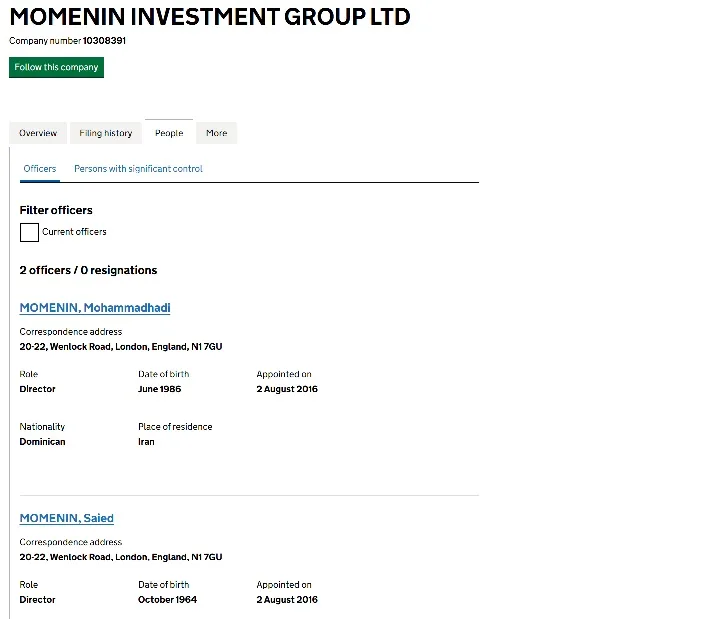
is also seen outside Iran. The company Group Investment Momenin Ltd was registered in the UK, and Mohammad Hadi Momenin and Saeed Momenin were involved in its management and ownership structure. Mohammad Hadi Momenin's name also appears in the company Cellpack Ltd ..
In Iran, Mohammad Hadi and Saeed Momenin were also involved in the structure of the company "Kaghaz Kar Kasra" ; Mohammad Hadi was a member and vice-chairman of the board of directors at times, and Saeed Momenin was the chairman of the board. This overlap reveals part of the family economic network surrounding Momenin.
In 2016, the Spanish company Telepizza collaborated with Group Investment Momenin to enter the Iranian market, and Mohammad Hadi Momenin was introduced as the representative of this group. In the gathered information, he is also mentioned as the chairman of the board of the Momenin Industrial Group and a board member of the company "Axon Machine Arena" ; a company that is reported to be associated with the representation of the German company Linde and the supply of related industrial equipment.
The next stage reaches the oil cooperation between Iran and Venezuela. According to the base report, Momenin's name has been mentioned in transactions related to Iran's cooperation with the Venezuelan state oil company, PDVSA, and his involvement in the process of receiving or transferring funds from these transactions has been discussed. In the same information, Momenin's name is mentioned with 743 billion tomans of debt to Karafarin Bank and reports of his debt to Saman Bank and shareholding in Mahan Company have been raised.
Rouhollah Razavi; Oil Trader, Political Circle, and the Competition to Eliminate Trusts
The second important figure in the case is Rouhollah Razavi ; an individual for whom public registration and company information is not as accessible as for some other trusts. In the reports referenced in this case, Razavi is mentioned as one of the prominent oil traders ..
One of the important connections mentioned about him is his family relationship with Majid Motaghifar. According to the report's information, Razavi is the son-in-law of Motaghifar, a member of the Central Council of the Front of Islamic Revolution Stability and the spokesperson of this political movement. Razavi and Momenin are also mentioned as financial supporters of the Stability Front's election activities. This connection, if independently confirmed, raises questions about the link between economic interests derived from sanctioned oil trade and political networks opposed to lifting sanctions.
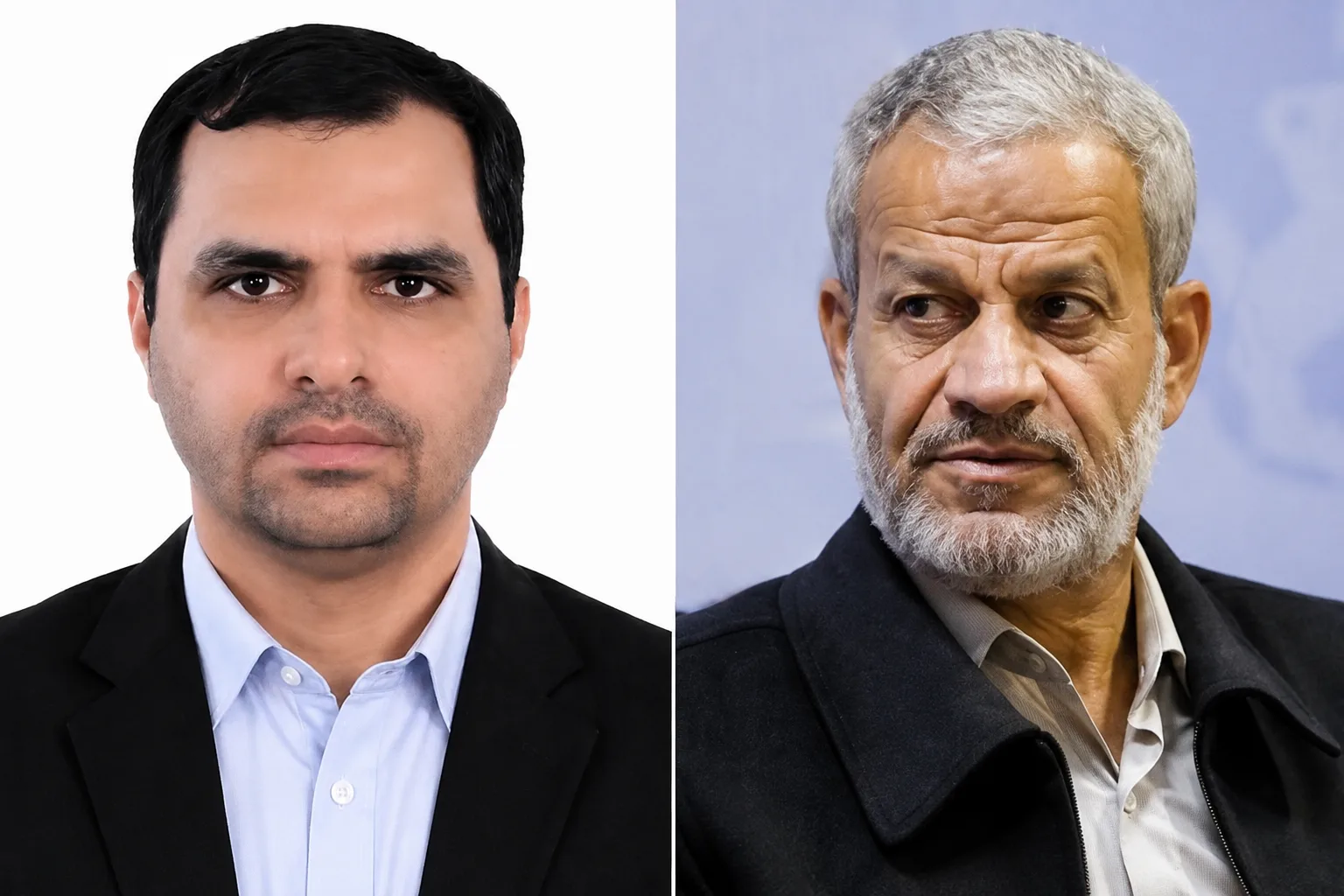
However, Razavi's role in this case is not limited to this family and political connection. The gathered information says he became one of Shayan's trusted individuals, and his office in Kamaraniyeh, Tehran was a place for connections and negotiations related to oil transactions. In these reports, the figure of over one billion dollars of unreturned oil resources is attributed to Razavi.
A more important part of the case relates to the competition among trusts. According to the narrative of the sources referenced in the report, Razavi has provided information about some rival trusts to the network over the past years so that they would be sidelined from the market and the scope of activities for him and Momenin would expand. If this narrative is substantiated, the issue is not merely the competition of a few commercial intermediaries; the fundamental question is where the information used to identify accounts, intermediary companies, and competitors' money transfer routes came from.
The consequence of such competition can also go beyond the elimination of a trust. The disclosure of accounts, intermediary companies, and resource transfer routes under sanctions can block the channels for returning money to Iran. The report in this section raises the names Momenin, Razavi, Niaz Azari, and Bavand and raises the question of whether the competition for a larger share of the oil trade has led to the destruction of routes that were used for currency transfer to Iran.
Thus, a key question arises: has the confidential information that supervisory bodies had about accounts, shipments, intermediary companies, and money transfer routes also been used in the competition among trusts?
Shayan, Bavand, Momenin, and Razavi; Who Selected the Trusts?
To understand the structure of this case, four names must be placed alongside each other: Shayan, Mohammad Javad Bavand, Mohammad Hadi Momenin, and Rouhollah Razavi.
Shayan, the former director-general of fuel and energy at the Ministry of Intelligence, operated in a structure that, according to its organizational duty, was supposed to play a security and supervisory role in the energy sector. The main axis of the information in this case is that this structure, according to the gathered data, at times distanced itself from merely being an observer and also played a role in selecting or organizing trusts.
On the other side,
Mohammad Javad Bavand is present. The report speaks of his background in the economic sector of the IRGC's Intelligence Organization; although it simultaneously raises the possibility that in such networks, some individuals may have created power and influence beyond their official position by highlighting security connections. Bavand later joined the Ministry of Oil, and his position as an assistant to the minister in oil sales, condensates, and products and overseeing NICO gave him a position in one of the most sensitive parts of Iran's foreign oil trade.
Momenin, in the private sector of this network, was a trader with an exchange, domestic and foreign companies, and international trade infrastructure, and Razavi was introduced as an oil trader and a trusted person of Shayan. The result is a structure consisting of a supervisory security circle, a manager with official access to the oil sales structure, and two private intermediaries with financial and commercial networks.
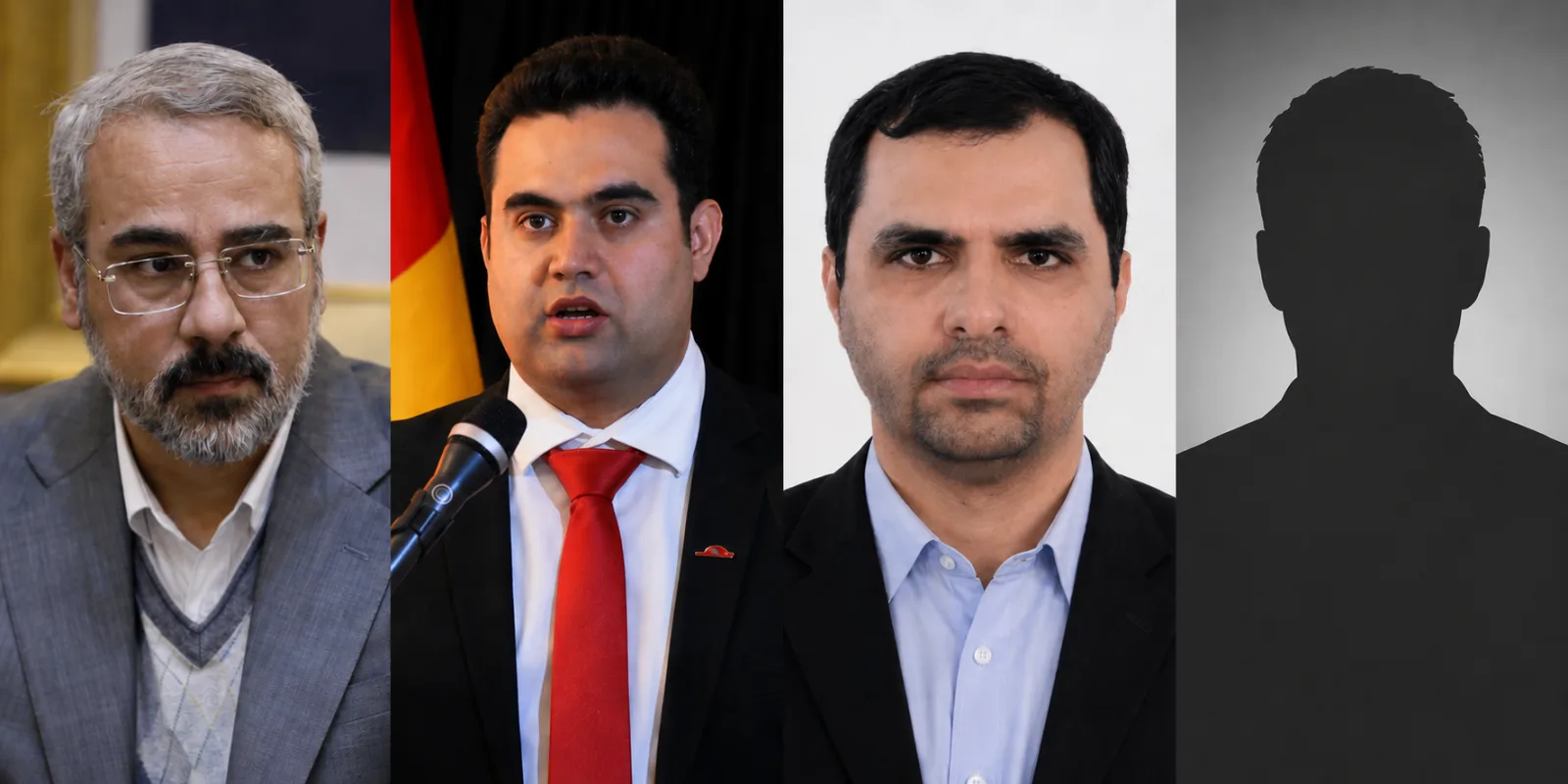
This image explains why focusing solely on the debt amount of one or several trusts is not enough to understand the case. The main question is not just who took the oil and did not return the money; the more important question is who selected him, which entity approved his qualification, what guarantees were received, and who decided to continue cooperation with him despite the accumulation of debt?
As long as the exact amount of delivered shipments, guarantees, each trust's debt, approving bodies, and officials who decided on continued cooperation are not clarified, it cannot be determined whether the trusts' case is merely the case of a few delinquent intermediaries or the product of a broader network that created, selected, and strengthened these intermediaries.
Focusing on one debtor creates a simple narrative: a trader took oil, did not return the money, and must be held accountable. But placing the names of Momenin and Razavi alongside Bavand, Shayan, and Niaz Azari takes the case to another level; a level where the main issue is not just the fate of billions of dollars of oil revenue, but the mechanism of distributing access to Iranian oil during the sanctions era.